


The Value of Face to Face Therapy in the UK
By Therapy-with-Ben
When you picture therapy, what comes to mind? For many, it's two people sitting in a comfortable room, talking. That's the essence of face-to-face therapy: you and a therapist, meeting in person, in the same physical space.
It’s a simple concept, but incredibly powerful. This direct, human interaction sets aside a dedicated time and place just for you—a space for healing, completely free from the pings and pressures of your digital life.
The Human Connection at the Heart of Healing

In our increasingly fast-paced and digital world, the space for genuine human connection seems to be shrinking. While online options offer undeniable convenience, there’s an irreplaceable value in face-to-face therapy. It’s all about its ability to build a strong, supportive bond between you and your therapist.
This unique connection is what we call the 'therapeutic alliance', and honestly, it’s the bedrock of any successful therapy. Being physically present in a room together adds layers to communication that go far beyond words. You can learn more about what makes a therapeutic relationship key to therapy success in our detailed guide.
The Power of Being Present
Think about all the things we communicate without saying a word. A reassuring nod, a subtle shift in posture, or the empathy you can see in someone’s eyes – these non-verbal cues are so much clearer when you’re sharing a physical space.
These small, yet significant, interactions build trust and help you feel truly seen and understood. They create a supportive atmosphere where it feels safe to be vulnerable.
The therapy room is more than just four walls; it’s a safe, confidential sanctuary designed for healing and growth. It offers a dedicated space away from the responsibilities and distractions of everyday life, allowing you to focus entirely on your wellbeing.
This dedicated environment is crucial, especially when you need to explore difficult or painful feelings.
Why In-Person Therapy Remains a Popular Choice
Even with the rise of digital alternatives, many people in the UK still choose to see a therapist in person. Recent surveys show that while video therapy is growing, face-to-face remains a leading choice. It highlights just how important that shared experience is, particularly when tackling issues like loneliness and anxiety.
The shared physical presence in face-to-face therapy sessions plays a massive role in building the robust therapeutic alliance needed for meaningful, lasting change. It's a testament to the enduring power of human connection.
Getting to Grips with Face-to-Face Therapy
Wondering what actually happens when you sit down in a room with a therapist? It can feel a bit like a mystery, but the reality is refreshingly straightforward and human.
Think of it like learning to play the guitar. You could watch endless videos online, and you'd probably learn a few chords. But having a teacher right there with you is a different game entirely. They can see how you're holding the instrument, notice the slight hesitation in your fingers, and offer that immediate, gentle correction that makes all the difference. In-person therapy shares that same immediate, personal quality.
It’s a protected slice of time, just for you, in a room that’s been set up to feel calm and allow for reflection.
A Safe, Neutral Space to Unwind
One of the most powerful things about meeting in person is the room itself. It’s a neutral ‘third space’—it’s not your home, it’s not your office, so it’s completely free from the usual distractions and emotional baggage that those places carry.
That separation is more important than you might think. It creates a bit of mental and emotional breathing room, making it so much easier to take a step back from the day-to-day grind and really explore what’s on your mind without being interrupted. This feeling of safety and containment is a cornerstone of good therapy.
Within this confidential setting, you are free to speak openly. The physical presence of a therapist provides a grounding and reassuring anchor, making it feel safer to discuss difficult or painful experiences.
This unique environment helps you focus in a way that's hard to replicate anywhere else. It’s a space where you can be totally present with your feelings, supported by a professional who is right there with you, fully present too.
The Unspoken Power of Body Language
So much of how we communicate isn’t in our words at all, and this is where face-to-face therapy really shines. Those subtle shifts in posture, a fleeting facial expression, or even a change in your tone of voice can say so much—details that are often lost over a screen.
A therapist can pick up on these non-verbal cues to get a much richer understanding of how you’re really feeling, especially when you can’t quite find the right words yourself. They might notice you tense up when talking about your boss, for example, and can then gently explore that physical reaction with you.
Being in the same room just strengthens that human connection, building a deeper level of empathy and understanding between you both.
What Does a Typical Session Look Like?
While every session is tailored to you, there’s usually a gentle, predictable flow. We’ll often start with a check-in, giving you a chance to talk about what’s been on your mind since we last met. From there, we’ll explore whatever topics you feel are most important that day.
Don't worry, there’s absolutely no pressure to have everything figured out before you walk in. My role is to help guide the conversation with thoughtful questions and reflections, helping you find clarity and see things from a new angle. For a more detailed look at the general structure, you might find it helpful to read our guide on what happens in counselling sessions.
We'll usually wrap up the session by pulling together any key insights and thinking about the week ahead.
By Therapy-with-Ben
The Unique Benefits of In-Person Therapy Sessions
There's something uniquely powerful about meeting your therapist in person, something that's difficult to truly capture through a screen. While digital therapy certainly has its place, the dynamic of face to face therapy creates a special kind of environment for connection and real, lasting change.
Sharing the same physical space enriches communication in ways you might not expect. It allows for a depth of understanding that goes far beyond just the words we say, building a solid and trusting foundation for your therapeutic journey.
The infographic below touches on some of the subtle, yet powerful, interactions that are so much clearer when you're in the same room.
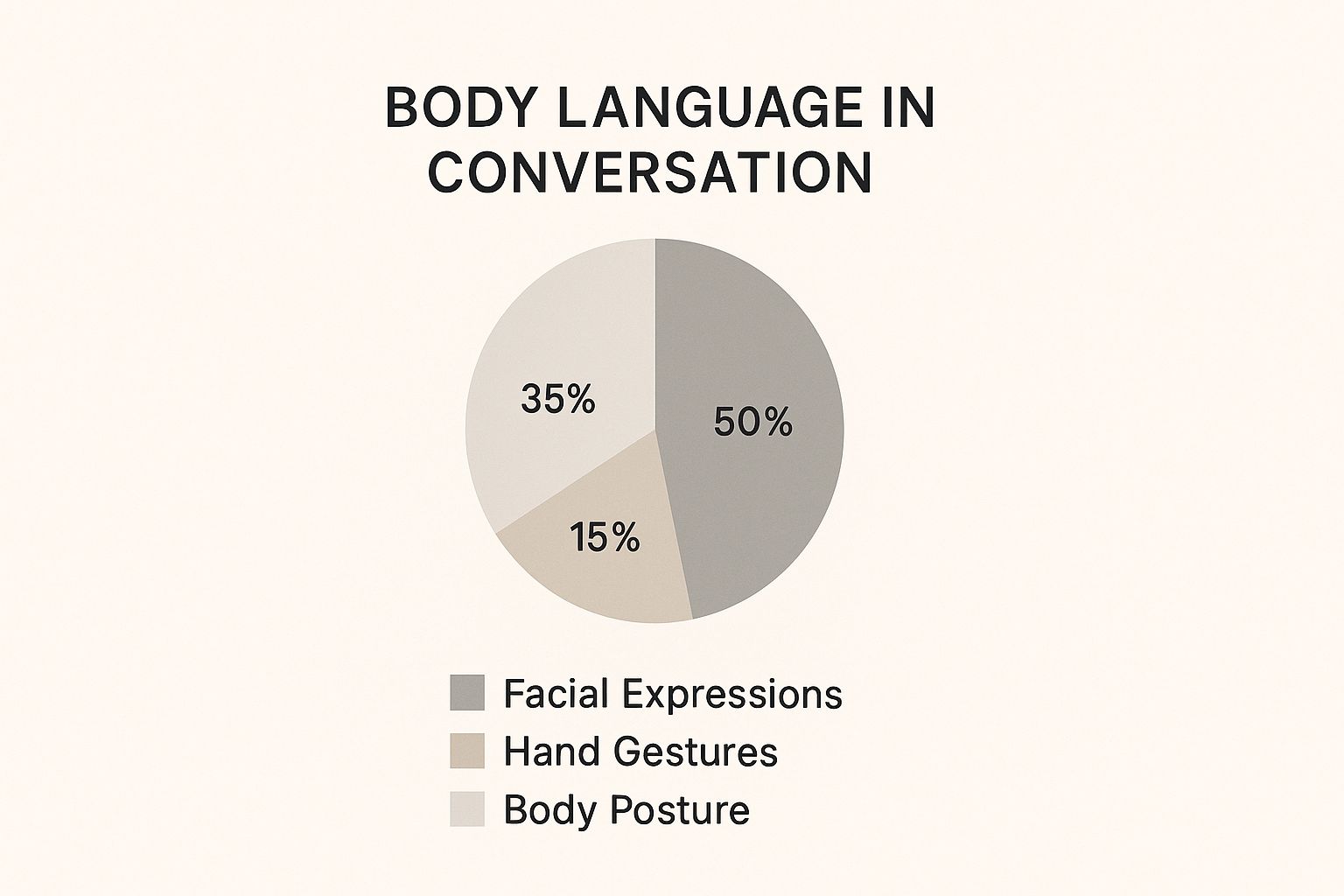
This really gets to the heart of it. When a therapist can tune into those tiny shifts in your body language and tone of voice, it fosters a much deeper sense of trust and genuine connection.
The Power of Non-Verbal Communication
A huge chunk of how we communicate isn't verbal at all. Think about it – a reassuring glance, a slight shift in posture, the warmth in someone's voice. These are all vital bits of information that can easily get flattened or completely lost through a screen.
In face to face therapy, these non-verbal cues provide priceless insight for both of us. They help build that all-important rapport and create a feeling of being truly heard and understood on a much deeper level. That real-time, unfiltered feedback is something a virtual session just can't fully replicate.
For instance, I might notice a client unconsciously clenching their fists when talking about a difficult subject. This small physical observation can gently open up an important conversation about underlying anger or tension they might not have even realised was there.
Creating a Dedicated Safe Space
One of the most underrated benefits of coming to a session in person is the physical space itself. The therapy room acts as a neutral, safe sanctuary, completely separate from the pressures and demands of your home and work life.
Stepping into this dedicated environment can be a mental and emotional reset. By leaving your usual surroundings behind, you're creating a psychological boundary that lets you focus entirely on yourself, without the risk of interruptions from family, pets, or pinging notifications.
The simple act of travelling to and from a therapy session also gives you crucial time for reflection. The journey there can be a time to mentally prepare, and the journey home offers a space to process the insights gained during the session.
This transition time is surprisingly important, helping you to integrate what you’ve worked on back into your everyday life more effectively.
A Welcome Break from Screen Fatigue
Let's be honest, many of us spend hours every single day staring at screens for work, socialising, and everything in between. Screen fatigue is a very real thing. Adding another video call to the list, even for something as important as therapy, can sometimes feel more draining than restorative.
Engaging in face to face therapy offers a much-needed break from our digital lives. It allows for a more grounded, human-to-human connection that feels far more natural and less like a performance than interacting through a camera. This can reduce mental strain, helping you to be more present and engaged in your session. By choosing an in-person appointment, you’re actively prioritising a different kind of interaction – one rooted in shared physical presence and focused attention.
To make the differences clearer, it can be helpful to see them side-by-side.
Comparing Therapy Modalities: In-Person vs Remote
Feature | Face to Face Therapy | Remote Therapy (Video/Phone) |
|---|---|---|
Communication | Full spectrum of verbal and non-verbal cues (body language, tone). | Primarily verbal; non-verbal cues are limited or absent. |
Environment | Dedicated, neutral, and confidential therapeutic space. | Client's own environment (home, office), potential for distractions. |
Connection | Fosters a strong sense of presence and interpersonal connection. | Can feel less personal; technology can sometimes be a barrier. |
Convenience | Requires travel to a specific location. | Highly accessible from anywhere with an internet connection. |
Focus | Easier to stay present and focused without digital distractions. | Risk of multitasking or interruptions from the home environment. |
Screen Time | Provides a break from screens, reducing digital fatigue. | Adds to daily screen time, which can be draining for some. |
Ultimately, the choice between in-person and remote therapy is a personal one. Both have their merits, but it’s worth considering which environment you feel will best support your personal journey of growth and healing.
By Therapy-with-Ben
Navigating the Current UK Mental Health Landscape
If you're thinking about therapy, it helps to get a feel for what’s happening with mental health services here in the UK. The good news is that we've seen a massive, positive shift in recent years. More people than ever are recognising how vital mental wellbeing is and are actively looking for support.
This growing awareness is brilliant, but it’s also putting a huge amount of pressure on the services we have. The simple truth is that demand for professional support, including face to face therapy, is climbing faster than the system can keep up. If you've found it hard to get help, you’re definitely not alone.
The Scale of the Challenge
Recent figures really bring home the scale of this demand. We're seeing a steady rise in common mental health issues among adults, and it's even more noticeable in children and young people. In just one year, NHS mental health services received a record 5.2 million referrals. That’s a staggering 37.9% increase since 2019 alone, as highlighted in this BMA mental health pressures analysis.
With such a surge in need, it's no surprise that waiting times have got longer. While more people are getting treatment than in past decades, services are stretched thin trying to keep pace. It can be incredibly frustrating when you need support right now.
This isn't a story of failure, but one of overwhelming demand. The fact that so many are reaching out is a positive sign that the stigma around mental health is finally breaking down.
The current situation just confirms the very real difficulties many people face when trying to find timely help through public services.
Where Private Practice Fits In
This is where qualified private therapists come in, playing a crucial part in the UK's wider mental health picture. Private therapy, including face to face therapy, offers an essential and accessible alternative. It helps to bridge the gap, making sure people can get the support they need without facing long delays.
Choosing to see a private therapist isn’t about sidestepping the NHS; it’s about making a proactive choice for your own wellbeing. It gives you a direct route to professional support, putting you in control and allowing you to start your journey towards healing and growth as soon as you feel ready.
By understanding this wider context, you can feel more informed and confident as you explore all the options available to you. Reaching out for help is a sign of strength, and finding the right support in this complex landscape is a powerful first step.
By Therapy-with-Ben
What to Expect in Your First Therapy Session

Walking into your first face-to-face therapy session can feel a bit like the first day of school – a jumble of nerves, hope, and not really knowing where to sit or what to say. If you’re feeling that way, please know it’s completely normal.
The good news is, that initial meeting is all about easing in. The goal isn't to immediately plunge into your deepest secrets. Far from it. It's simply about us getting to know one another, making sure you feel at ease in the room, and figuring out if we’re a good fit. Think of it less as an interview and more as a relaxed, two-way chat.
Getting the Foundations Right: The 'Contracting' Phase
A really important part of our first session is something we call ‘contracting’. It sounds a bit formal and stuffy, but it’s just a straightforward chat to lay the groundwork for our time together. It’s our opportunity to get on the same page and make sure you feel safe, informed, and respected from the very start.
During this part of the session, we'll cover a few key things:
Confidentiality: We’ll talk about how everything you say stays between us. We'll also be upfront about the rare, specific situations where a therapist has a legal duty to break that confidentiality to ensure someone's safety.
Session Timings: We'll sort out the practicals. We'll confirm the length of our sessions (usually 50 minutes), find a regular day and time that works for you, and go over the cancellation policy.
Your Goals: We'll gently touch upon what’s brought you to therapy. You absolutely don’t need to have it all figured out. Just having a starting point is more than enough to get us going.
Having this conversation is vital for building trust. It sets clear expectations and builds a secure frame around our sessions, so you always know exactly what to expect from our face-to-face therapy.
Remember, this first session is a trial run for both of us. It’s just as important for you to feel that I’m the right therapist for you as it is for me to feel I can help. There’s never any pressure to continue if it doesn’t feel right.
There's No Pressure to Share Everything at Once
One of the biggest anxieties people have is feeling like they have to pour out their entire life story in the first hour. I want to reassure you that this isn't the case at all. You are always in the driver’s seat, in complete control of what you share and when you choose to share it.
That first meeting is about gently exploring the landscape, not excavating it. We’ll move at your pace, allowing trust to build naturally over time. My job is to listen, ask thoughtful questions, and create a calm, non-judgemental space where you feel safe enough to eventually open up when you're ready.
Taking this first step is a brave one. My hope is that you’ll leave our initial session feeling heard, respected, and maybe even a little hopeful about the path ahead. It's your chance to feel empowered in taking this important step for yourself.
By Therapy-with-Ben
How to Begin Your Therapy Journey
Taking that first step towards face to face therapy is a massive act of self-care. It’s a quiet decision you make for yourself, one that says you’re ready to put your wellbeing first. I want you to know that my commitment is to create a space for you that feels supportive, completely non-judgemental, and of course, confidential.
I’ve made the process of getting started as straightforward and comfortable as I can. It all begins with a simple action, letting you move at your own pace so you can feel confident and secure in your choice.
Your Initial Consultation
Your journey with me starts with an initial consultation. Think of this first meeting as our chance to get to know one another, talk about what’s on your mind, and simply see if we’re a good fit. There's absolutely no pressure; it’s just a conversation.
You can book this first session easily through my website. You don’t need to prepare anything special at all, just bring yourself. I work using an integrative approach, which just means I draw from different therapeutic models to find what works best for you and your unique circumstances.
Seeking support is a real sign of strength, and you really don't have to navigate life's challenges alone. There is a safe, in-person environment available right here in Cheltenham, ready to help you find a bit of clarity and move forward.
Taking the Next Step
When you feel ready, reaching out is simple. My goal is to make starting face to face therapy as accessible as possible, removing any barriers that might be standing in your way. I know taking that step can feel daunting, but it’s often the very beginning of a positive change.
For a bit more guidance on the different ways to access support, you might find our article on how to get therapy in the UK helpful. It offers some practical information that can help you feel more prepared for the journey ahead.
By Therapy-with-Ben
A Few Common Questions About Face to Face Therapy
Thinking about starting therapy is a big step, and it's completely natural to have questions buzzing around your mind. I've put together some straightforward answers to the queries I hear most often from people considering face to face therapy, hoping it will help you feel more comfortable and confident about the journey ahead.
How Do I Know if Face to Face Therapy Is Right for Me?
That's a really personal decision, and there’s no single right answer. Often, face to face therapy is a great fit if you're someone who really values the connection that comes from being in the same room. So much of our communication is non-verbal – a subtle shift in posture, a reassuring glance – and in-person sessions capture all of that.
It's also ideal if you need a dedicated space that's entirely separate from your home or work life, a place where you can feel truly focused and safe. If you find yourself drained by video calls or worry about being overheard at home, having that physical sanctuary can make all the difference. Many people just find the simple presence of a therapist in the room incredibly grounding.
Is Everything I Say Completely Confidential?
Confidentiality is the absolute bedrock of therapy. The trust we build together relies on you knowing that what you share in our sessions stays between us. It’s your space to be completely open.
That said, there are a few very specific legal and ethical limits. As a therapist, I have a duty of care. This means I'm required by law to break confidentiality if there's an immediate and serious risk of harm to you or someone else, or if child protection issues come to light. These aren't hidden rules; we'll talk about them openly in our first session so you know exactly where the boundaries lie.
It's completely normal to feel a bit awkward or unsure what to talk about in your first few sessions. There's absolutely no pressure to 'perform'. A good therapist knows how to gently guide the conversation and help you explore what’s on your mind at a pace that feels right for you.
As you start your therapy journey, you might also think about other approaches to wellbeing that can work alongside it. Some people find practices like exploring acupuncture for stress and anxiety to be a helpful complement to their talking therapy.
What if I Don’t Click with My Therapist?
This is such an important question, and a very valid concern. The relationship you have with your therapist – what we call the 'therapeutic alliance' – is one of the biggest predictors of whether therapy will be helpful. If after a session or two, you feel that we’re just not the right fit, that is perfectly okay.
It's vital that you feel understood, respected, and comfortable. I always encourage open and honest feedback. If it feels like I'm not the right person to help you, I'll fully support you in finding another therapist who might be a better match. Your wellbeing is always the priority, and finding the right person is a key part of that process.
Ready to take the next step in a supportive, in-person setting? Therapy with Ben offers a confidential and non-judgemental space in Cheltenham to explore your challenges. Learn more about getting started by visiting https://www.therapy-with-ben.co.uk. or indeed go to the bookings page at: https://www.therapy-with-ben.co.uk/bookings-counselling-therapy
Comments