


Why is anxiety worse in the morning: Causes & quick calm
If you've ever woken up with a knot of dread in your stomach, you're not alone. The simple answer to why anxiety is worse in the morning often comes down to your body's natural chemistry. A hormone called cortisol spikes to wake you up, but for those of us prone to anxiety, this jolt can feel less like a gentle nudge and more like your system is instantly revving into overdrive.
Understanding the Biological Triggers of Morning Anxiety
Waking up with a racing heart and a churning stomach can be deeply unsettling, leaving you feeling overwhelmed before the day has even properly begun. It’s easy to feel like you’re already failing. However, understanding the science behind this common experience can help normalise it and, importantly, empower you to take back a bit of control.
It’s not just “all in your head”; there are clear, physical reasons your anxiety often peaks at dawn. Think of your body as a car that’s been parked overnight. In the morning, it needs a jolt to get going, and that jolt comes from a perfectly normal process called the Cortisol Awakening Response (CAR).
The Cortisol Awakening Response
Cortisol often gets a bad rap as the "stress hormone," but its main job in the morning is simply to increase alertness and energy. It’s the natural mechanism that pulls you out of sleep and prepares you for the day's demands. For most people, this hormonal surge is helpful.
But, if you already have a sensitised nervous system due to ongoing anxiety, this sudden spike can feel threatening. Your body misinterprets this physiological "wake-up call" as a sign of genuine danger, triggering the classic fight-or-flight response. While stress and anxiety are related, it's helpful to understand the key differences between stress and anxiety to better identify what you're feeling.
The Role of Blood Sugar and Dehydration
On top of the cortisol surge, other biological factors can create a perfect storm for morning anxiety.
After fasting all night, your blood sugar (glucose) levels are at their lowest. This can cause symptoms like shakiness, irritability, and light-headedness—sensations that closely mimic and can easily amplify feelings of anxiety.
Dehydration plays a part, too. Even mild dehydration overnight can impact your mood and how well your brain functions, making you feel more on edge. These physical stressors stack up, making you more vulnerable to anxious thoughts and feelings.
To make these concepts a bit clearer, here's a quick summary of how these biological factors contribute to that morning dread.
Biological Factors of Morning Anxiety at a Glance
Biological Factor | Effect on Morning Anxiety |
|---|---|
Cortisol Awakening Response (CAR) | A natural spike in the "stress hormone" cortisol wakes you up, but for anxious individuals, it can trigger a fight-or-flight response, leading to a racing heart and dread. |
Low Blood Sugar (Hypoglycaemia) | After fasting overnight, low glucose levels can cause symptoms like shakiness, dizziness, and irritability, which are easily mistaken for or can worsen anxiety. |
Dehydration | Not drinking water all night can lead to mild dehydration, which is linked to increased anxiety, poor mood, and difficulty concentrating upon waking. |
Seeing it laid out like this really highlights how your body's physical state directly feeds into your emotional one first thing in the morning.
According to NHS data, anxiety symptoms are often most severe in the morning, with cortisol levels typically peaking between 6 a.m. and 8 a.m., which directly coincides with this heightened sense of unease.
This diagram shows how these key triggers—a cortisol spike, low blood sugar, and dehydration—work together to fuel morning anxiety.
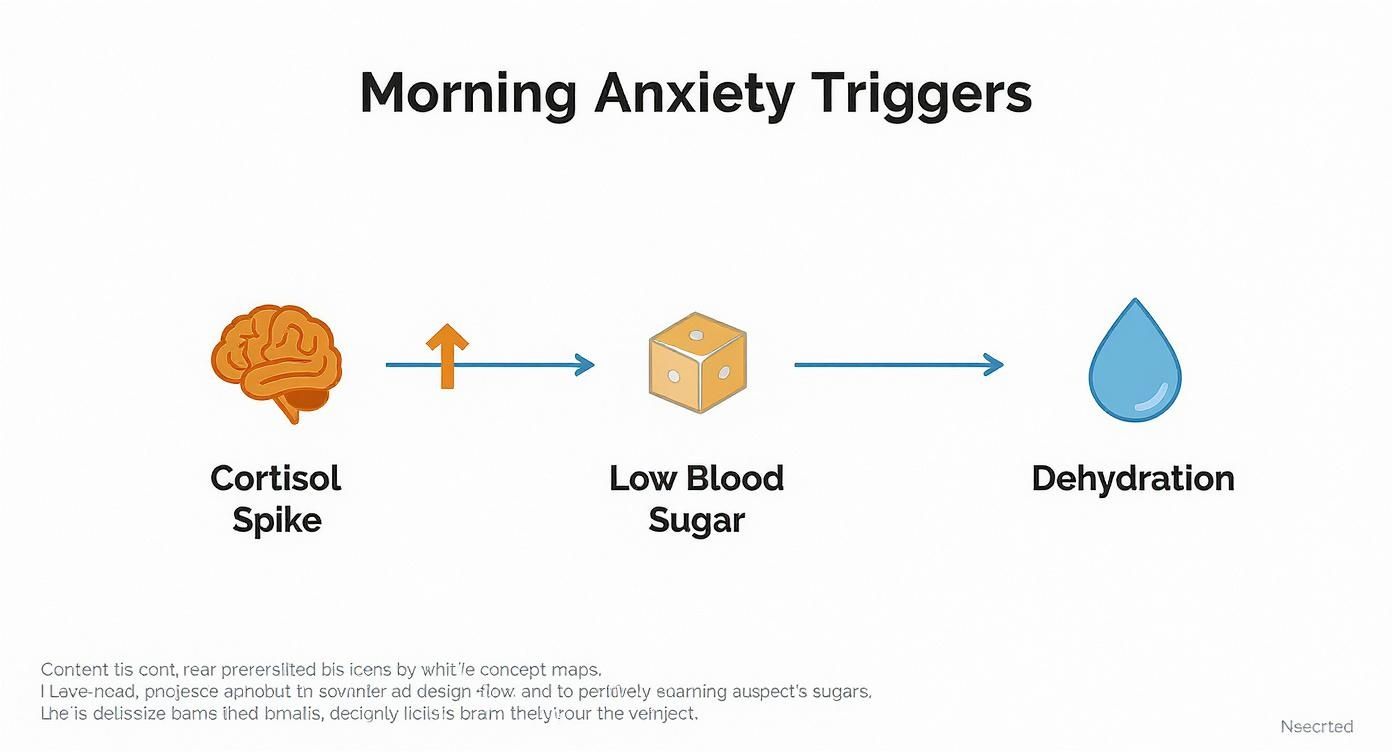
The visualisation makes it clear that your morning experience is shaped by a chain reaction of biological events, not a personal failing. It's your body's chemistry setting the stage, which is actually good news—because it means there are practical steps you can take to change the performance.
How Poor Sleep Fuels Morning Anxiety

It’s no surprise that a restless night often leads to a rough morning. The connection between how we sleep and how we feel when the alarm goes off is incredibly strong, especially when we’re trying to understand why anxiety feels so much worse in the morning for so many of us. This isn't just about being tired; poor sleep actively throws the very systems that regulate our mood into disarray.
Our bodies run on an internal 24-hour clock called the circadian rhythm. This isn't just about making you feel sleepy or alert; it’s a complex biological process that also manages the release of hormones, including the ones that govern our mood, like cortisol and serotonin.
When sleep is broken or you just don't get enough, this delicate rhythm gets knocked off-kilter. As a result, your body might struggle to handle that natural morning cortisol surge, turning what should be a gentle wake-up call into a jolt of panic.
The Vicious Cycle of Anxiety and Insomnia
For many, this becomes a frustrating and utterly exhausting loop. Anxious thoughts about the day ahead—or replaying worries from the day before—can keep you tossing and turning for hours. Your mind just won't switch off, racing through conversations or catastrophising what might happen, making it impossible to get the deep, restorative rest your brain desperately needs.
This creates a self-perpetuating cycle that’s tough to break:
Anxiety Prevents Sleep: Worry and a sense of being on high alert make it difficult to fall asleep and, just as importantly, stay asleep.
Poor Sleep Worsens Anxiety: A sleep-deprived brain is a less resilient one. The amygdala, which you can think of as the brain's fear centre, becomes much more reactive, leaving you far more vulnerable to anxious feelings the next day.
This cycle can feel inescapable. When you haven't slept well, your ability to regulate your emotions is compromised, which makes it even harder to cope with the very anxiety that’s keeping you awake. Breaking this pattern is absolutely crucial.
Beyond Just Getting More Sleep
The common advice to simply "get more sleep" often misses the real point. It’s the quality of your rest that matters just as much as the quantity. Waking up frequently, having intense nightmares, or spending most of the night in light sleep can leave you feeling just as drained and on edge as only getting a few hours.
Taking a moment to identify how your specific sleep patterns are affecting your mornings is a vital first step. Think about it: does a night of vivid, unsettling dreams leave you on edge? Do you often jolt awake in the early hours with your heart racing? Recognising these connections helps you see that prioritising restful, high-quality sleep isn't a luxury—it’s a non-negotiable part of managing morning anxiety effectively.
The Mental Habits That Magnify Morning Dread
While our biology definitely sets the stage for morning anxiety, it’s often our own thoughts that grab the spotlight and direct the whole show. Your mind plays a huge part in turning a potentially calm morning into a stressful one, especially in those first few groggy moments after waking up when your mental defences are at their lowest.
One of the most common psychological triggers I see is anticipatory anxiety. It’s that heavy feeling of dreading the day before it’s even properly begun. Your mind leaps ahead, creating a mental checklist of everything that could go wrong: a difficult meeting, that endless to-do list, or a tricky conversation you’ve been putting off.
This mental rehearsal of future problems floods your system with stress hormones just as effectively as if the events were actually happening right now. It’s like your brain is playing a horror film trailer of your day, putting you on high alert from the moment you open your eyes.
Getting Trapped in Negative Thought Loops
When your mind is still waking up, it's incredibly easy to get tangled in unhelpful, negative thought loops. The quiet of the early morning, free from the usual distractions of the day, can become a perfect echo chamber for anxious thoughts to bounce around and get louder.
Two common patterns really amplify that morning dread:
Catastrophising: This is where your mind immediately jumps to the absolute worst-case scenario. An upcoming presentation isn't just a bit nerve-wracking; it's a vision of total public failure. A minor worry about a bill balloons into a fear of financial ruin.
Overthinking: In the stillness of the morning, your brain can latch onto a single worry and turn it over and over, analysing it from every angle without ever finding a resolution. This mental churning doesn't solve anything; it just deepens the groove of anxiety.
Learning how to step out of that whirlwind is a key skill in managing these mental habits. If you find your thoughts spiralling, our guide on how to stop overthinking everything offers practical tips to find calm.
Waking up with a mind that is already racing puts you on the back foot. It's not the events of the day that are causing the immediate stress, but the story your mind is telling you about them.
Just recognising these unhelpful mental patterns is the first real step towards feeling more in control. When you understand why your mind is so vulnerable to worry right after waking, you can begin to gently challenge these thoughts and rewrite your morning script, shifting it from one of dread to one of calm. This awareness allows you to separate yourself from the thoughts, observing them without getting swept away.
How Your Lifestyle Choices Shape Your Mornings

It’s often surprising to realise that the anxiety you’re feeling at 7 a.m. might have its roots in what you did at 7 p.m. the night before. We tend to overlook the subtle but powerful ways our daily habits shape our mornings, but they really do play a huge part in setting our emotional baseline for the day.
What you put into your body is a massive factor. That late-night coffee might seem like a good idea at the time, but caffeine can hang around in your system for hours, getting in the way of the deep sleep your brain needs to process stress. The same goes for an evening glass of wine. While it might help you unwind initially, as your body metabolises the alcohol, it can cause a rebound effect that actually spikes your anxiety levels – something people often call ‘hangxiety’.
Your Morning Routine as a Trigger
It’s not just your evening habits, though. What you do the moment you wake up can be a primary trigger. For so many of us, the first thing we do is reach for our phone. This is one of the most common culprits.
Instantly you’re scrolling through stressful news headlines, work emails that feel urgent, or the curated, often unrealistic, perfection of social media. This floods your system with adrenaline and cortisol before you’ve even had a chance to properly wake up. Your mind is jolted straight from rest into a state of high alert, reinforcing that feeling of being behind or under threat before your feet have even touched the floor.
The first few moments of your day are incredibly formative. By immediately engaging with external stressors, you are essentially programming your nervous system for a day of reactivity and unease, making it much harder to find a sense of calm.
Who Is Most Affected by Morning Anxiety?
Here in the UK, morning anxiety is also linked to wider issues like disruptions to our internal body clock and stress-related health inequalities. Looking at the data from England’s national mental health surveys, there are persistent disparities. Women consistently report higher anxiety prevalence, and it’s young women aged 16-24 who have the highest rates of common mental health problems.
It’s thought these groups may experience more pronounced morning anxiety due to a combination of hormonal fluctuations, societal pressures, and sleep disturbances. You can explore more mental health facts and statistics from Mind to get a clearer picture of these trends.
Connecting these dots—linking your evening choices and morning rituals to how you feel—is the first, crucial step. Once you start to see these patterns for yourself, you can begin making small, deliberate changes that protect your peace and create a calmer start to your day.
Practical Steps to Reclaim Your Mornings From Anxiety
Knowing what’s behind your morning anxiety—the biology and the mental habits—is the first real step towards getting a handle on it. But knowing is only half the battle. The next, and arguably most important, part is taking deliberate, practical steps to change the pattern. This section is all about actionable strategies you can start using right away to turn down the volume on that morning dread and build a routine that feels calm, not chaotic.
The trick is to start thinking about your morning the night before it even happens. By getting a few things sorted before you go to sleep, you remove a lot of the decision-making and potential stress points from those first waking hours, creating a much smoother runway into your day.
Prepare the Night Before for a Calmer Morning
A peaceful morning really does begin with a thoughtful evening. Making just a few small tweaks to your nightly routine can massively reduce the friction you feel when you wake up, making it that much easier to cope with any initial anxiety.
Here are a few simple but incredibly effective things you can do:
Do a 'Brain Dump': Take five minutes before bed to scribble down everything that's on your mind or worrying you. Physically getting those thoughts out of your head and onto a piece of paper can stop them from swirling around your mind the second you wake up.
Set Out Your Things: Lay out your clothes for the next day. Pack your work bag. These seem like tiny things, but they eliminate small, stressful decisions in the morning when your ability to cope is already at a low ebb.
Tidy Your Space: A calm environment really can help promote a calm mind. Just spending a couple of minutes tidying your bedroom can make waking up feel significantly less overwhelming.
Many people also find practical tools can help set them up for a better morning. For instance, things like weighted blankets for anxiety can make a real difference to sleep quality, which in turn reduces overall stress and gives you a better starting point for the day.
Act in the Morning to Set a Positive Tone
Once that alarm goes off, the first 30 minutes are absolutely crucial. Instead of letting anxiety grab the steering wheel, you can intentionally choose simple actions that ground your nervous system and shift your mind from a state of threat to one of safety.
Remember, the goal isn't to magically erase every anxious feeling. It's about how you respond to them. By responding with intention and care, you're teaching your brain that you are safe and you are in control.
Think of this as a toolkit of morning actions you can pick and choose from:
Ground Yourself Before Your Feet Hit the Floor: As soon as you wake up, before you even think about getting out of bed, place a hand on your stomach. Take five slow, deep breaths. This simple act helps to activate your body’s parasympathetic nervous system—its natural ‘rest and digest’ mode—to counteract that cortisol surge.
Hydrate Immediately: Drink a full glass of water. After a whole night without fluids, your body is dehydrated, a state which can actually make anxiety feel worse. Rehydrating is good for your brain and your mood.
Avoid Your Phone for 30 Minutes: This might be the single most powerful habit you can build. Resisting that urge to immediately check emails, the news, or social media shields your mind from a sudden flood of external demands and stressors before it's ready to handle them.
Practise a Short Mindfulness Exercise: Mindfulness is a brilliant tool for anchoring yourself in the present moment, rather than being swept away by worries about the future. If you're new to this, getting a sense of what mindfulness in therapy is and how it works can give you a really solid foundation to start from.
Gentle Movement: You don't need a full workout. Just a few simple stretches or a short, gentle walk can help burn off that excess adrenaline and cortisol, releasing physical tension from your body and signalling to your brain that any perceived 'danger' has passed.
The key is to create a small, personalised toolkit that works for you. Start small—just pick one or two of these strategies and try them out. When it comes to managing anxiety, consistency is always more important than perfection.
When to Seek Professional Support for Morning Anxiety

While building a calmer morning routine and trying out different self-help strategies can make a real difference, sometimes it’s just not enough. Recognising that you might need more support isn’t a sign of weakness; it's a powerful act of self-care and a massive step towards finding lasting relief.
It might be time to think about professional support if your morning anxiety feels relentless. If that feeling of dread has become your daily default, and it’s starting to chip away at your work, your relationships, or just your general enjoyment of life, then talking to a professional can help you get to the root of what's going on.
You don't have to wait for a full-blown crisis to seek help. If morning anxiety is consistently stealing your peace and stopping you from living the life you want, that's more than enough reason to reach out.
Talking to a therapist isn't just about managing the symptoms on the surface; it’s about understanding what’s driving them in the first place. It provides a safe, non-judgemental space to explore the underlying causes of your anxiety and develop personalised ways of coping that actually work for you.
How Therapy Can Help
Therapy offers structured, proven approaches to untangle the thought patterns and behaviours that keep you feeling stuck. For anyone exploring professional support, it can also be incredibly helpful to distinguish between anxiety and other conditions like ADHD, as some symptoms can overlap, and getting the right diagnosis is key to finding the right path forward.
A couple of effective approaches for anxiety include:
Cognitive Behavioural Therapy (CBT): This is a very effective, evidence-based therapy that helps you spot and challenge the negative thought patterns that fuel anxiety. You learn practical skills to reframe your thinking and, over time, change how you respond to those anxious feelings.
Walk and Talk Therapy: This is a unique approach we offer here in Cheltenham. It combines the benefits of traditional counselling with the calming effects of being in nature and gentle physical movement. For many, this can feel less intense than a formal office setting and helps to lower those cortisol levels naturally.
Making the decision to seek help is a genuinely positive step towards reclaiming not just your mornings, but your entire sense of well-being. It’s an investment in yourself and your future.
By Therapy-with-Ben
At Therapy with Ben, I offer compassionate, expert support to help you understand and overcome morning anxiety. Whether through online sessions or our unique Walk and Talk therapy in Cheltenham, we can work together to build a calmer, more confident you. Find out more at https://www.therapy-with-ben.co.uk.


Comments