


A Guide to Cope With Pet Loss and Begin Healing
Losing a pet is a unique and deeply personal kind of grief. The first, most important thing you can do is give yourself permission to feel everything that comes up, without judging yourself for it. That profound sadness you're feeling? That sense of emptiness? It’s a completely normal and justified response to losing a member of your family.
Your Grief Is Real and You Are Not Alone
The bond we have with our animal companions is unlike any other. They’re woven into the very fabric of our days, offering a quiet, constant presence and unconditional love. When they’re gone, the silence they leave behind can be deafening. It creates a hole that feels impossible to fill.
This pain is real and it matters. The problem is, society doesn't always make space for it. Well-meaning friends or family might not get the depth of your loss, sometimes saying things like, "it was just a pet." Comments like that can make you feel incredibly alone, as if your sadness is an overreaction.
Understanding Disenfranchised Grief
There’s actually a name for this experience. It’s crucial to understand that your grief is valid, especially if you’re dealing with what’s known as disenfranchised grief. This is grief that isn’t always acknowledged or supported by others, which can make the whole process of healing feel so much harder.
When your loss isn't recognised by your social circle, it can make you feel ashamed or like you have to hide how you really feel. That’s a heavy burden to carry on top of the pain you're already in.
Simply giving yourself permission to grieve is the most powerful first step. As you navigate this, it might also be helpful to explore what self-compassion is and how to practise kinder thinking.
The connection we have with our pets is one of the purest forms of love. Acknowledging the depth of that bond is not a sign of weakness; it is a testament to your capacity to love deeply. Your grief is a direct reflection of that love.
Why Pet Loss Hurts So Much
If you feel this way, you are far from alone. In fact, a UK survey revealed a staggering statistic: 46% of people over 16 have experienced the death of a pet. This makes it the most common form of bereavement reported—even more than losing a parent.
That number is powerful. It shows just how many of us go through this, even if we don't always talk about it.
For the vast majority (over 99%), pets are seen as family, best friends, or cherished companions. Yet, so many feel they have to hide their pain. The same survey found that 87% of people don't feel understood by others after their loss.
The emptiness, the disruption to your routine, the sheer sadness—it’s all part of a legitimate grieving process. Your feelings are not only normal; they are shared by millions. This space is for you to begin that process, free from judgement and with a full understanding of the love and loss you're navigating.
Making Sense of the Emotional and Physical Pain
When you lose a pet, the silence they leave behind can be deafening. It’s not just the quiet house that feels heavy; it's the sudden, jarring disruption to your daily life. That empty space on the bed, the untouched food bowl, the door you walk through without a wagging tail to greet you—each one is a small, sharp reminder of what you've lost.
This is because they were woven into the very fabric of your routine. Their absence isn't a single event; it's a constant series of tiny heartbreaks throughout the day.
The sheer force of this grief often catches people completely off guard. In fact, research from the RSPCA found that two-thirds (67%) of UK pet owners who’ve been through it were stunned by the intensity. A staggering 93% felt heartbroken, while 60% wrestled with guilt and 55% with loneliness. The physical side of it is just as real: 73% found their daily routine shattered, 70% couldn't concentrate, and 66% struggled with sleep. You can explore the full RSPCA survey findings on pet bereavement to see just how common these experiences are.
The Emotional Landscape of Loss
The feelings that come up after losing a pet are complicated and often feel contradictory. It's completely normal to find yourself swinging between different emotions, and one of the most important things you can do is give yourself permission to feel them without judgement.
You’ll likely encounter some of these:
Intense Sadness: This is usually the first and most powerful wave—a deep, aching sorrow that can feel like it's never going to lift.
Loneliness: Our pets are constant companions. Their absence can leave a profound void, making your own home feel isolating and empty.
Anger: You might find yourself angry at the illness, the vet, or even at yourself. It’s a natural response when you’re trying to process the unfairness of it all.
Guilt: This one is particularly tough. It's so easy to get stuck replaying their final days, wondering if you should have done more or if you made the right calls about their care.
Those feelings of guilt can be incredibly persistent. If you're finding it hard to shake them, it might be helpful to read our guide on how to manage guilt and move forward, which has practical steps for finding a bit more self-compassion.
How Grief Affects Your Body
Grief isn’t just in your head; it’s a full-body experience. The emotional toll of losing a pet can have a very real, and often surprising, impact on you physically.
You might feel utterly exhausted but unable to sleep, or perhaps your appetite has disappeared completely. Many people I've worked with describe feeling like they're walking through a fog, finding it impossible to focus on work or even simple daily tasks. This isn't you being dramatic; it’s your body's way of responding to deep emotional distress.
The statistics below really show how widely these feelings are shared, and how many people feel like others just don't get it.
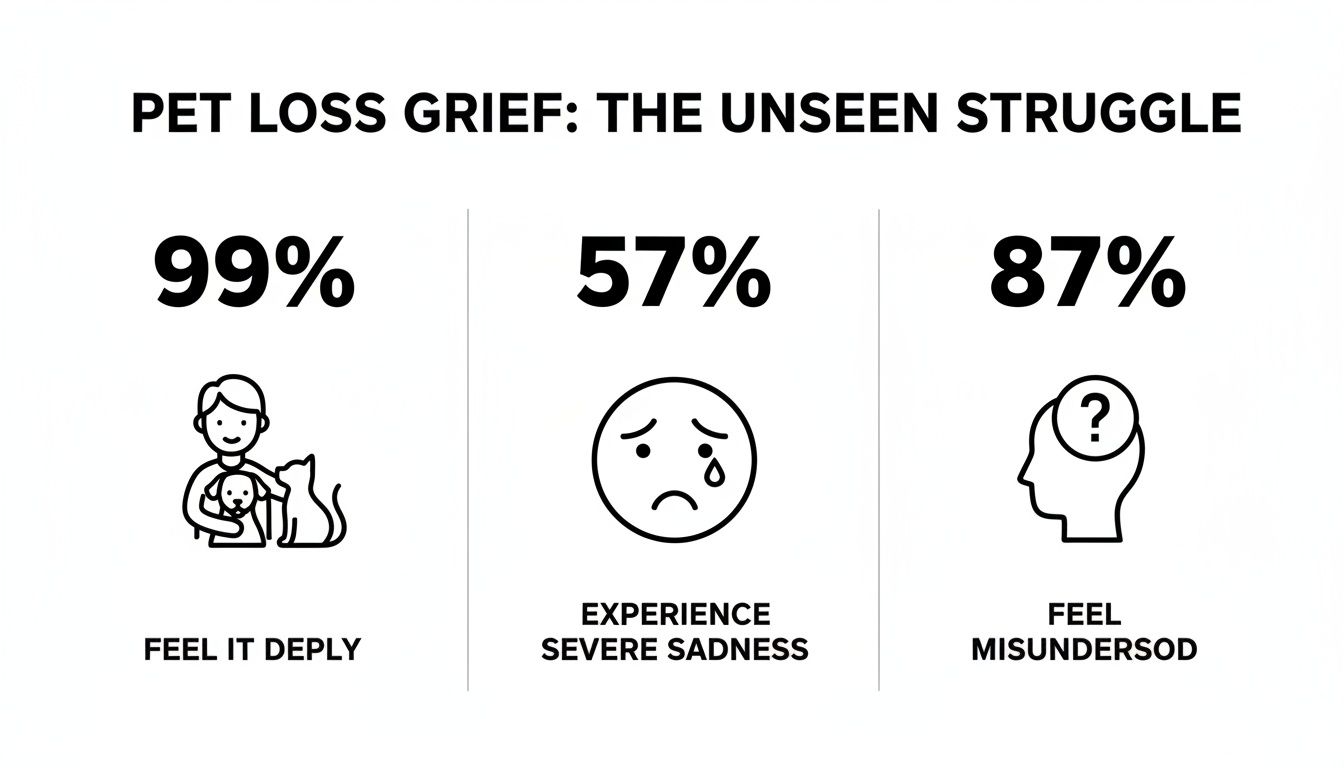
While almost everyone sees their pet as part of the family, a huge number of us feel misunderstood when we're grieving for them.
Please remember, the physical symptoms you’re experiencing—the sleepless nights, the brain fog, the fatigue—are not a sign of weakness. They are a normal physiological reaction to a significant emotional trauma. Be as kind and patient with your body as you would be if you were recovering from an illness or injury.
Just understanding that these emotional and physical responses are a natural part of how we cope with pet loss can help. It can make the path ahead feel a little less overwhelming. What you're going through is real, it's valid, and you absolutely deserve the time and space you need to heal.
Finding Your Footing in the First Few Weeks
The first few days and weeks without your companion are often just plain awful. The house is too quiet, the familiar rhythms of your day are gone, and the ache of their absence can feel completely overwhelming. Right now, the goal isn't to 'fix' your grief, but to find gentle, practical ways to simply get through each day.
There's no manual for this part. Instead of forcing yourself into a rigid plan, think of these ideas as a menu. Pick and choose what feels manageable, or even possible, for you in this moment.

Create a Temporary Routine
Your pet was a huge part of your daily life—morning walks, feeding times, evening cuddles on the sofa. When they’re gone, it leaves gaping holes in your day, which can make you feel lost and untethered.
Try to create a gentle, temporary routine. This isn't about replacing them; it’s about giving your day a little bit of predictable structure when everything else feels chaotic and out of control.
Morning Structure: If you used to start the day with a dog walk, perhaps you could use that time to make a cup of tea and sit in the garden for ten minutes. Or maybe you still go for a short walk, but take a different route to avoid painful reminders.
Evening Anchor: If evenings feel particularly lonely and quiet, plan something simple. It could be listening to a specific podcast, doing a crossword puzzle, or calling a friend who you know will just listen.
The idea is to have a few small, reliable anchor points in your day. This can bring back a tiny sense of control when you need it most.
Handling Their Belongings Your Way
Deciding what to do with their bed, bowls, toys, and lead is an incredibly personal and often painful task. Don’t let anyone rush you or tell you what you should do. Your timeline is the only one that matters here.
Some people find it far too painful to see these items and need to put them away quickly. If that’s you, it’s perfectly okay to box them up and store them somewhere out of sight. You can always come back to them later when you feel a bit stronger.
Others find real comfort in keeping certain things close. Maybe sleeping with their favourite blanket brings a sense of connection, or seeing their collar hanging by the door is a comforting memory. There is no weakness in this; it’s about doing whatever helps you get through.
You are in control. There is no deadline for grieving. Allow yourself the grace to handle their belongings in a way that feels supportive, whether that means putting them away tomorrow or keeping their bed in its spot for months.
Communicating Your Needs to Others
One of the hardest parts of grieving a pet is trying to explain your pain to people who might not get it. Friends, family, and colleagues often mean well, but comments like "it was just a dog" can feel incredibly dismissive and hurtful.
Having a few simple, prepared phrases in your back pocket can help you communicate your needs without having to lay out the depths of your grief every single time.
Here are a few examples you can adapt:
To a well-meaning friend: "Thank you for checking in. I'm finding it really tough at the moment, and I'd appreciate it if we could just talk about something else for a bit."
To a colleague at work: "I'm having a difficult time after losing my pet, so I might be a bit distracted. I'd appreciate your patience with me."
Setting a boundary: "I know you mean well, but I'm not ready to think about getting another pet just yet. Right now, I just need some time."
Using statements like these helps protect your emotional energy and gets you the space or support you actually need. Remember, learning how to cope with pet loss involves being kind to yourself, and that includes setting boundaries that honour what you're feeling.
Honouring Your Companion with Meaningful Rituals
When you lose a pet, the silence they leave behind can feel immense. The grief is often shapeless and overwhelming, making it hard to know what to do with yourself. Creating a ritual or a memorial gives you a focus for those powerful emotions, turning a painful loss into a meaningful act of remembrance. These actions help us process what’s happened and, just as importantly, celebrate the unique bond we were so lucky to have.
A ritual doesn’t need to be grand or complicated. It's simply a conscious act of honouring your companion's memory. This process can offer a sense of closure and helps to create a lasting legacy of love, which is a vital part of learning how to cope with pet loss in a healthy way.
Creating a Tangible Connection
For many of us, having something physical to see and touch is incredibly comforting. It keeps their memory present in your home and your life, providing a real, tangible link to the love you shared.
Why not create a special place in your home just for them? It could be a small corner table or a shelf where you gather a few things that bring them to mind.
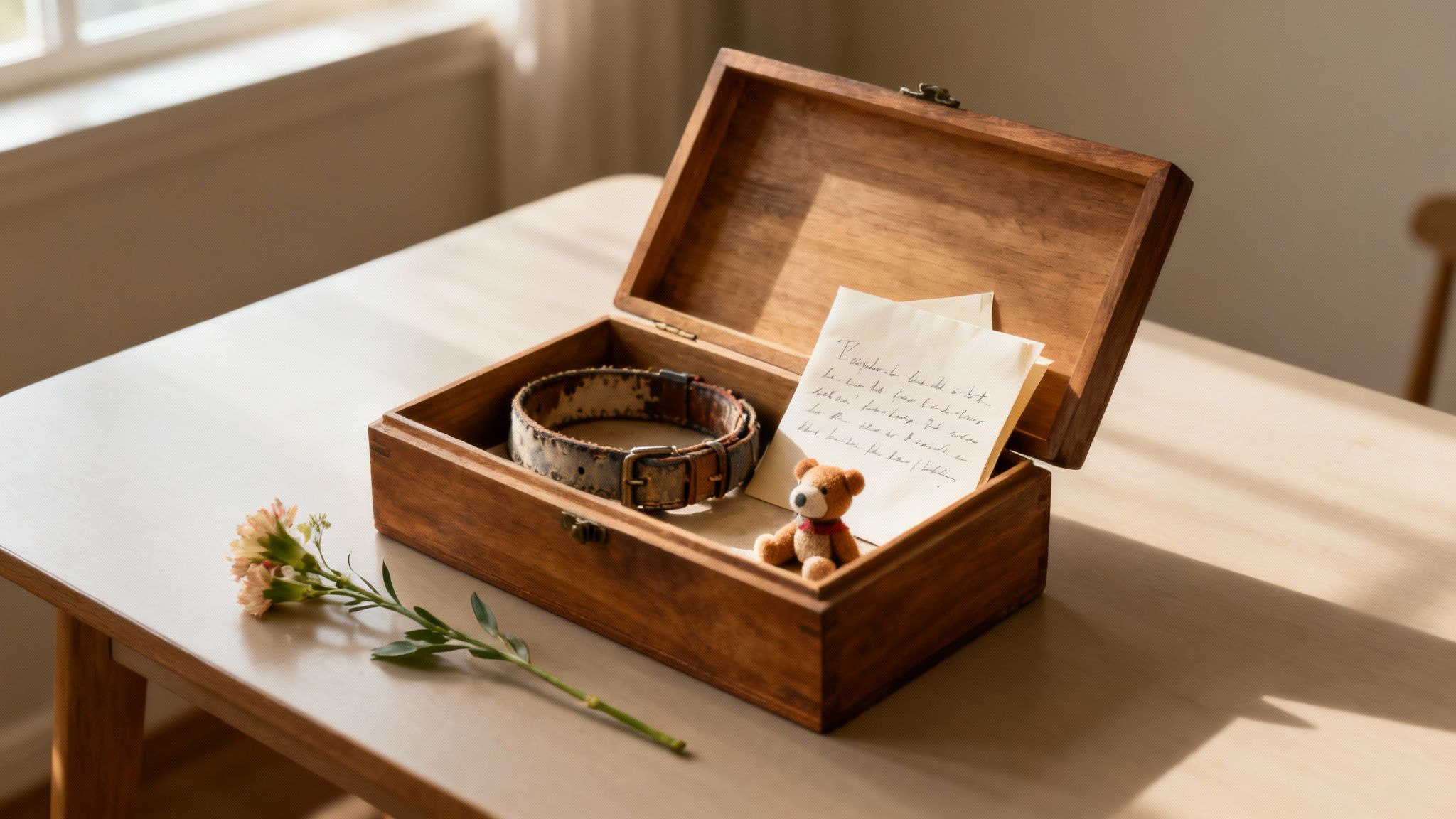
Memory Box: Find a beautiful box to hold their most precious belongings. This might be their collar and tag, a favourite well-chewed toy, their paw print cast, or a clipping of their fur.
Photo Album or Scrapbook: Gently go through your photos and videos when you feel ready. Compiling them into an album lets you tell their story from start to finish, focusing on all those happy moments and the unique personality you adored.
Commissioned Art: A portrait can be a beautiful and lasting tribute, capturing their spirit in a way you can cherish forever.
If you’re looking for ideas, you could also explore some thoughtful memorial gifts for pet loss that can offer comfort during this difficult time.
Acts of Remembrance and Legacy
Memorialising your pet can also extend beyond your home. Sometimes, taking an action that honours their spirit can be a powerful part of healing, creating a positive legacy that lives on.
These rituals can be private moments of reflection or more public gestures of love. The only rule is to choose something that feels right for you and the relationship you had.
"Humans have engaged in rituals around death and grieving since the beginning of time for good reason. They help us to process our loss. I’ve found that engaging with these in my own time has helped me to feel like I’m moving forward whilst still centring the sadness and the memories."
This insight really reminds us that rituals are a deeply human way to navigate loss.
Finding a Ritual That Resonates With You
There is no right or wrong way to remember your companion. The best approach is always the one that brings you a sense of peace and connection. Here are a few more ideas that others have found meaningful:
Planting a Tree or Garden: Choose a plant, tree, or flower that reminds you of your pet and find a special spot for it. As it grows, it can serve as a living memorial—a beautiful symbol of life continuing.
Writing a Letter: Sometimes, things are left unsaid. Writing a letter to your pet is a powerful way to express your feelings without judgement—your love, your sadness, even any guilt you might be holding onto. You can keep the letter, bury it, or read it aloud.
Making a Donation in Their Name: When you feel ready, supporting an animal charity can be a wonderful tribute. A donation to a local organisation like the Cheltenham Animal Shelter can help other animals in need, honouring your pet’s life by giving back.
Ultimately, these rituals are for you. They create space for your grief, celebrate an important life, and slowly help you begin to heal by keeping your companion’s memory alive in a positive and loving way. If you are interested in the different types of support we offer at Therapy with Ben, you can contact us through our website.
When to Seek Professional Grief Support
Most of the time, the sharp sting of losing a pet will eventually soften. With a bit of self-care, the support of people who get it, and simply the passing of time, the pain becomes more manageable. But that's not everyone's story.
For some, the grief remains incredibly heavy, making it a real struggle to just get through the day, long after the loss. Realising you might need a bit of extra support isn't a sign of weakness. In fact, it’s a profound act of self-care and a testament to how much your companion meant to you.
Learning to cope with pet loss is a journey, and there's absolutely no shame in asking for a guide to help you find your way. If your grief feels stuck, consuming your thoughts and stopping you from enjoying life, it might be time to think about professional help. This isn't about erasing the pain, but learning how to carry it in a way that allows you to start healing.
Recognising the Signs of Prolonged Grief
Prolonged grief, sometimes called complicated grief, is more than just deep sadness. It's when that initial, acute phase of grieving just doesn't seem to end, disrupting your ability to live your daily life. The feelings of loss stay just as raw and intense as they were in the first few days.
You might be experiencing prolonged grief if you notice these signs:
Intense and persistent longing: An overwhelming and constant ache for your pet that just doesn't seem to ease up over time.
Difficulty accepting the death: Feeling numb or stuck in a state of disbelief, finding it almost impossible to accept they’re really gone.
Feeling lost or purposeless: A sense that a part of you died with your pet, leaving you feeling empty and without direction.
Social withdrawal: You find yourself avoiding friends, family, or activities you used to love because nothing feels meaningful without your pet.
Persistent intrusive thoughts: Constantly replaying their final moments in your head or grappling with overwhelming feelings of guilt.
This isn't just a feeling; it's a recognised experience for many pet owners. A UK study actually highlighted that the loss of a pet can lead to prolonged grief disorder (PGD), a severe condition marked by intense despair. The study estimates that a staggering 1 in 12 UK PGD cases stem from losing a pet. You can read the full research about these pet loss findings to get a better sense of its profound impact.
How Therapy Can Help You Cope With Pet Loss
Therapy offers a safe, confidential space where your grief is taken seriously and validated without judgement. A good counsellor can help you untangle the complex web of emotions you're experiencing and develop strategies to process your loss in a healthy way.
Reaching out for professional support is an acknowledgement that your bond was significant and your grief is worthy of attention. It’s about honouring that love by giving yourself the care you need to heal.
There are different ways to approach therapy, and finding the right one really depends on what feels most comfortable and supportive for you personally.
Therapeutic Approaches for Pet Bereavement
There are various ways a therapist can support you. Here at Therapy with Ben, I find that offering flexibility helps people find what works for them, especially when dealing with something as sensitive as pet loss.
Here are a few options you could consider:
Online Counselling: This gives you the flexibility to have sessions from the comfort and privacy of your own home. It can be a real lifeline when you're feeling low on energy and the thought of leaving the house feels like too much to handle.
Walk and Talk Therapy: For those in and around Cheltenham, this is a unique approach that combines counselling with the gentle, restorative power of being outdoors. Sometimes, walking in a calm, natural space makes it that much easier to open up and work through difficult feelings.
Traditional Face-to-Face Sessions: There are times when sitting in a calm, dedicated therapy room provides the focused environment you need to explore your grief without distractions.
Deciding to start therapy is a big step, and finding someone you connect with is absolutely key. If you're considering this path, you might find our guide on how to choose a therapist and find the right fit for you helpful. Taking that first step is a powerful move towards healing.
Your Questions on Pet Loss and Grief, Answered
Working through the loss of a pet brings up so many questions, many of which can feel incredibly difficult to ask, let alone answer. It’s such a personal experience, and whatever you’re feeling right now is completely valid, even when the path ahead seems completely fogged over. Let’s walk through some of the most common worries together, hopefully offering a bit of clarity and kindness as you learn how to cope with pet loss.
How Long Does the Pain of Losing a Pet Last?
Honestly? There's no timetable for grief. Anyone who suggests there is simply doesn't get it. How long it takes is unique to you and the one-of-a-kind bond you shared with your animal companion. That initial, sharp, all-consuming pain will soften over time, but carrying the love for your pet with you forever is perfectly normal.
The goal isn't really to 'get over' it, but to find a way to live with the loss. That means being patient and kind to yourself. You’ll have good days and bad days, and that's just a natural part of healing. Eventually, the aim is to get to a place where the memories bring you more comfort than they do pain.
Should I Get a New Pet Straight Away?
This is a tough one, and there is absolutely no right or wrong answer. For some, bringing a new animal into their home is a balm for their heart, filling the profound silence. For others, the thought alone is unbearable. They need a good amount of time before they could even think about opening their heart again.
The key is to be truly honest with yourself. Are you emotionally and practically ready for a new companion, or are you just trying to plug a hole in your heart? It's so important that you don't try to 'replace' the pet you lost—every animal is their own unique soul. Give yourself permission to just grieve first. If and when you feel ready, you’ll know.
How Do I Explain Pet Loss to My Children?
When talking to children about losing a pet, honesty and simplicity are your best friends. Stick to clear, age-appropriate language and try to avoid confusing phrases like "gone to sleep" or "went away," as these can accidentally create fear around sleeping or people leaving.
You could gently explain that the pet was very old, or had an illness the vets couldn't fix, and that their body stopped working. And please, don't be afraid to show your own sadness. Seeing you grieve teaches them that it's a healthy and normal response to losing someone you love.
Here are a few ways you can support them:
Involve them in memorials. Let them draw pictures, write a story, or just share their favourite memories. It helps them actively process what’s happened.
Reassure them. It's so common for children to secretly worry they did something wrong. Make it clear to them that it wasn't their fault in any way.
Acknowledge their feelings. Let them know it's okay to feel sad, angry, confused, or even nothing at all. Whatever they're feeling is okay.
Letting your child see your grief in an open, honest way is a powerful lesson in emotional health. It shows them that love and loss are two sides of the same coin, and that mourning is just a natural expression of that love.
Is It Normal to Feel Guilty After a Pet Dies?
Yes, absolutely. It's incredibly normal to feel a sense of guilt, and in fact, it's one of the most common and painful parts of the whole process. You might find yourself replaying their final moments, questioning every decision you made about their care, and wondering, "Could I have done more?"
This guilt is often just a reflection of the deep love and responsibility you felt for them. Remind yourself, as often as you need to, that you made the best choices you could with the information you had at the time. You were always guided by love.
Talking about these feelings is a massive step towards finding some peace. Sharing what’s on your mind with a trusted friend, a support group, or a counsellor can help you work through the guilt and begin to forgive yourself. Acknowledging these difficult emotions without letting them take over is a key part of the path forward.
If you are struggling to cope with pet loss and feel you could benefit from a supportive, non-judgemental space to explore your grief, Therapy with Ben is here to help. Whether through online counselling, face-to-face sessions, or Walk and Talk Therapy in Cheltenham, support is available. Please visit the Therapy with Ben website to learn more.
Posted by: Therapy-with-Ben


Comments