


Walk and Talk Therapy: Outdoor Sessions for Anxiety and Depression
Updated: Feb 23
Author: Therapy-with-Ben
Picture this: a therapy session that doesn't take place inside four walls, but unfolds during a gentle walk through a Cheltenham park. That’s the heart of walk and talk therapy – a refreshing and effective take on traditional counselling. It blends the proven methods of psychotherapy with the very real mental and physical lift you get from light exercise and being in nature.
If you’re interested in trying Walk and Talk Therapy in Cheltenham, you can find out more or book a session on my Walk and Talk Therapy page.
Stepping Outside the Traditional Therapy Room
Does the idea of sitting face-to-face in a quiet, formal room ever feel a bit… intense? You’re not alone. For many people, the conventional therapy setup can feel a little clinical, even confrontational, which can make it harder to truly open up.
Walk and talk therapy completely changes that dynamic.
Instead of sitting opposite your counsellor, you’re walking alongside them. That simple shift can make conversations flow much more naturally, with less pressure. The physical act of moving forward often helps get thoughts and feelings unstuck, leading to a more collaborative and fluid session.
A New Therapeutic Landscape
This isn't just about getting some fresh air, though that’s a nice bonus. It’s a deliberate fusion of mind, body, and environment, using the natural world as a kind of co-therapist to create a space where you feel completely at ease. This powerful connection is a key part of what we explore in our guide on what is ecotherapy? your guide to nature-based mental health.
The benefits are often felt straight away:
It’s less intimidating: Walking side-by-side feels much less formal and can soothe the anxiety that sometimes comes with traditional therapy formats.
A mind-body link: Gentle movement releases endorphins – our natural mood elevators – which helps to calm the nervous system right down.
Breaking through barriers: The very act of walking forward can be a powerful metaphor for moving past mental blocks or tough emotions, which is brilliant for anyone feeling 'stuck'.
And just to be clear, the goal isn't a strenuous hike. It's always a gentle, mindful walk. You set the pace, making sure the focus stays right where it should be: on the conversation and your emotional wellbeing, not on getting a workout.
Who Is It For?
One of the best things about this approach is how adaptable it is. It's particularly useful for people dealing with anxiety, as the physical movement provides a great outlet for all that nervous energy. It’s also a powerful tool for those experiencing depression; the simple combination of sunlight, fresh air, and light exercise can give you a natural boost.
Many people who find office settings a bit overwhelming, including some neurodiverse individuals, often find the outdoor space less sensorily demanding and more grounding.
Ultimately, talk and walk therapy is for anyone in Cheltenham looking for a more active, grounded, and less conventional way to work on their mental wellness. It’s an invitation to start moving, both literally and emotionally, towards real, positive change.
The Science Behind Walking and Talking for Mental Health
Ever wonder why moving our bodies often helps to free our minds? The answer lies in a fascinating mix of psychology and physiology that makes something as simple as a talk and walk session so powerful. When we step outside, we're not just changing the scenery; we're changing our entire biochemical and mental state.
Walking gets the endorphins going—the body’s natural mood-lifters. At the same time, this gentle physical activity helps lower cortisol, our primary stress hormone. The result? A natural dip in anxiety and a gentle lift in your mood, which creates a much calmer, more open space for the therapeutic work to happen.
This is where the science of movement meets the art of therapy.
A New Perspective on Connection
Let's be honest, traditional therapy can feel a bit intense. Sitting face-to-face in a quiet room, with constant eye contact, can sometimes feel more like an interrogation than a supportive chat. For some, it makes opening up feel incredibly difficult.
Talk and walk therapy completely shifts this dynamic.
By walking side-by-side, the focus moves away from direct, potentially awkward eye contact and towards a shared sense of forward movement. It's a simple change, but it creates a more balanced, collaborative feel. The conversation can flow more naturally, broken up by the rhythm of our steps and the sights and sounds around us. This often makes it far easier to tackle difficult topics and explore vulnerable feelings.
For many people, especially those who find sustained eye contact a challenge, this side-by-side approach is a real game-changer. It removes a layer of social pressure, allowing for deeper honesty and a stronger connection with the therapy itself. You can find out more about this powerful link in my post on the mental health benefits of nature.
The forward motion of walking often mirrors our psychological progress. It’s a powerful, non-verbal metaphor for moving forward in life, breaking through old patterns, and leaving behind what no longer serves us.
Clinically Proven Results
This isn't just a "nice idea"—it's an approach backed by real-world evidence. Just imagine stepping out into the fresh air of a Cheltenham park, chatting with a therapist as you work through anxiety or depression. This is exactly what’s happening with walk and talk therapy, and it's proving its worth, particularly within NHS Talking Therapies.
In a pilot programme in the Midlands, qualified counsellors offered outdoor walking sessions to meet growing client demand. The results were striking. After just 8 to 12 sessions, 58% of clients achieved recovery. That figure surpasses the NHS benchmark of 50% for standard talking therapies. These results were measured using proper clinical tools like the PHQ-9 for depression and GAD-7 for anxiety, showing just how much combining movement with conversation can boost mental health. You can explore the full findings of this UK outdoor therapy programme.
This visual comparison below highlights some of the key differences between a traditional office setting and an outdoor therapy session.
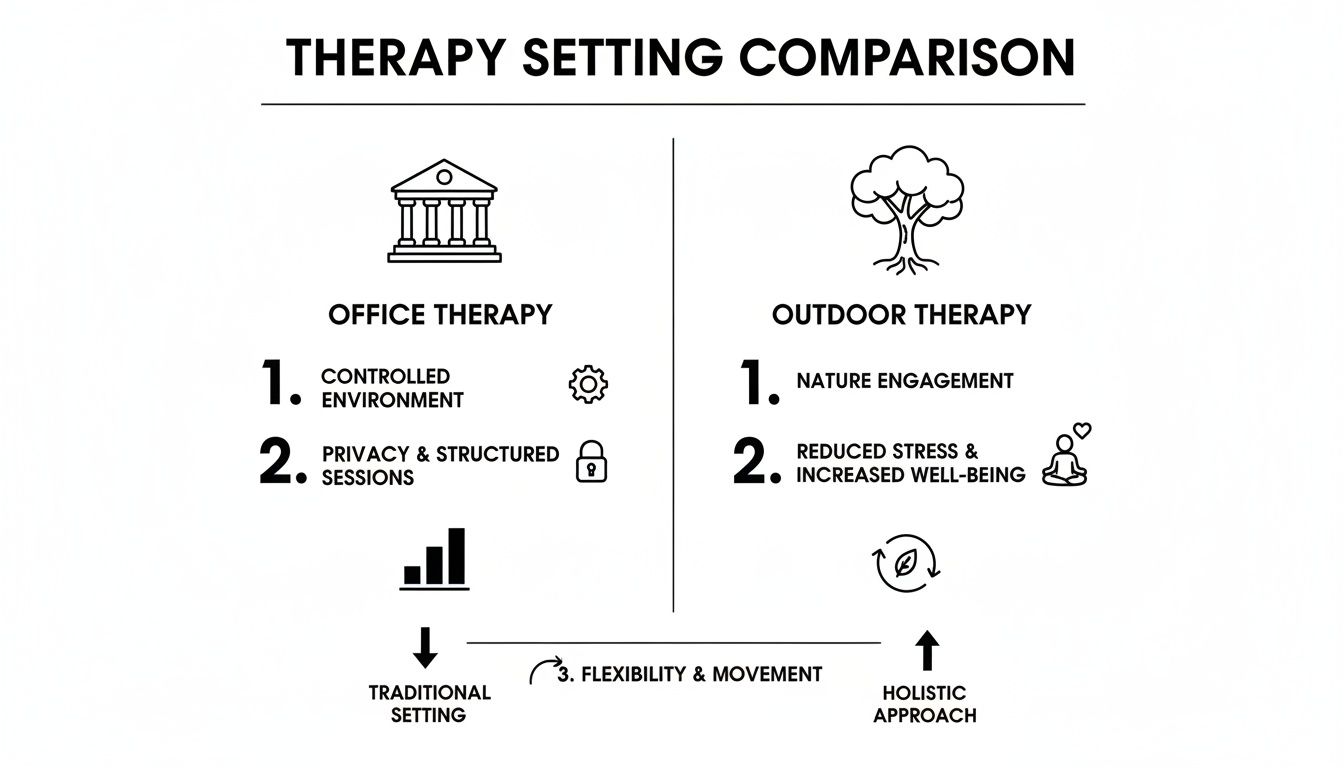
As the infographic shows, moving therapy outdoors brings in elements like natural light, physical movement, and a less formal atmosphere, all of which can seriously improve the therapeutic experience. It’s a clear demonstration of how the environment itself becomes an active part of the healing process.
Right, let's get into who really clicks with walk-and-talk therapy.
While getting outdoors is a refreshing change from the usual therapy room, it's the sheer flexibility of this approach that makes it a great fit for so many people. It’s certainly not a magic bullet, but for some, it just works. It can feel less like therapy and more like a supportive, forward-moving chat, bridging the gap for anyone who finds the stillness of an office setting a bit too intense.
This way of working often resonates with people who feel physically and emotionally stuck. The simple act of walking can unlock thoughts and feelings that have been jammed for ages, making it a powerful option for anyone ready to try a different path.
A Natural Fit for Managing Anxiety
If you wrestle with anxiety, you'll know that sitting still can sometimes make things feel a whole lot worse. Your mind races, nervous energy builds up, and there's simply nowhere for it to go. Walk-and-talk therapy offers an immediate, practical outlet.
The gentle, rhythmic movement of walking helps to soothe the nervous system and grounds you in the here and now. Instead of getting tangled up in anxious thoughts, your focus naturally shifts to your footsteps, your breathing, and the world around you. This physical release allows for a calmer mind, making it easier to actually engage with the therapy without feeling completely overwhelmed. Plus, walking side-by-side takes the pressure off, which can be a huge relief if face-to-face conversations feel like a source of anxiety in themselves.
An Uplifting Approach to Depression
When depression hits, even the smallest tasks can feel like climbing a mountain, and motivation is often on the floor. The idea of getting outside for a gentle walk might feel more doable than a formal, indoor session. In fact, just the change of scenery can provide a subtle but very real mental lift.
It’s well known that even gentle exercise is a natural mood elevator, stimulating the release of endorphins that help push back against feelings of flatness or despair. Sunlight and fresh air also play their part in boosting mood and energy levels. When you combine these natural benefits with professional support, you get a powerful synergy that can gently nudge you out of that feeling of inertia.
This isn't about forcing yourself into some high-energy workout. It’s about combining gentle, forward movement with a supportive conversation to create a therapeutic experience that feels both nourishing and productive.
A Supportive Space for Neurodiversity
Traditional therapy setups aren't always the best fit for neurodiverse individuals. Things like sustained eye contact, the sensory details of a small room, or the pressure of a direct, face-to-face chat can be distracting or just plain draining.
Walk-and-talk therapy offers a much more accommodating space. The informal, open-air environment can dial down the sensory overload and social pressure, allowing for a more relaxed and genuine conversation. Being able to move, fidget, and engage with the world around you can be incredibly freeing. It creates a space where neurodiverse clients can feel more comfortable and focused, helping them get the most out of their sessions.
Who Else Finds It Helpful?
Beyond these specific groups, walk-and-talk therapy is a great option for a whole range of people, including:
Anyone feeling 'stuck' in life: The physical act of moving forward can be a powerful metaphor for getting unstuck psychologically, helping to break through creative or emotional blocks.
Those navigating grief or big life changes: The quiet, reflective space of a walk in nature can be a really comforting backdrop for processing loss and change.
People who just prefer a more active approach: If you think better on your feet or simply can't stand sitting still, this active form of therapy is a perfect match.
Ultimately, it offers a welcoming and effective alternative for anyone in Cheltenham looking for a less formal, more grounded way to do therapy.
What to Expect from Your Outdoor Session in Cheltenham
The thought of having therapy in a park might feel a little strange at first. I get it. Most of us picture a quiet room and a comfy chair. So, what does a talk and walk session actually look like? My main goal is to make the whole experience feel as natural and comfortable as possible. Here’s a quick walkthrough of how our outdoor sessions in Cheltenham will unfold.
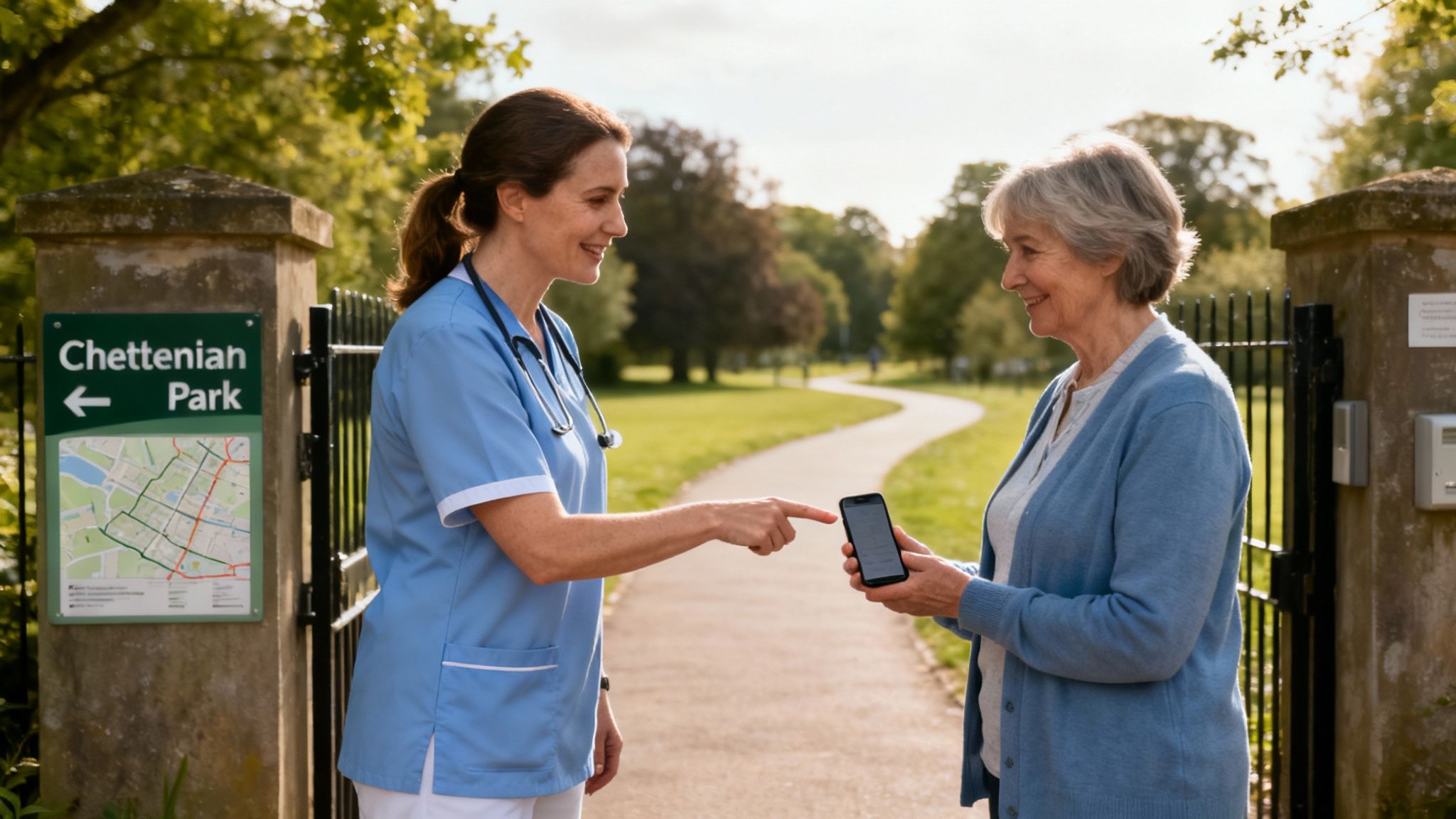
Just like any other kind of therapy, everything starts with an initial chat. This is our opportunity to get to know one another and talk through what you’re hoping to achieve. We’ll also sort out all the practical bits and pieces, making sure you feel completely at ease before we even take our first step outside.
Collaboration is Key
Your comfort, both physically and emotionally, is always my top priority. Before we head out for the first time, we'll decide on all the important details together:
Location: We’ll pick a spot in or around Cheltenham that feels right for you. It could be a quiet path in a local park or another green space where you feel safe and un-pressured.
Pace and Route: This is a gentle walk, not a race. You are completely in charge of the pace. We'll agree on a route that’s accessible and suits how you're feeling on the day.
The Conversation: The chat flows naturally as we move. There are no expectations. Sometimes we’ll talk the whole time, and other times we might just walk in a comfortable silence, noticing our surroundings.
To get the most out of it, being comfortable is a must – and that goes for your feet, too! Having the best walking shoes can make a surprising difference to how you feel during our sessions.
Maintaining Confidentiality in a Public Space
One of the first questions people ask is about privacy, and it's a completely valid one. How can we keep things confidential when we’re out in public? It’s simpler than you might think, and we have clear strategies to protect your privacy at all times.
For starters, we choose less-trodden paths to give us some natural privacy. I'm always aware of our surroundings, so if people are nearby, I'll naturally lower my voice or we can pause the conversation until they’ve passed. The simple act of walking side-by-side makes our chat much less obvious to anyone else compared to sitting face-to-face on a park bench.
We’ll also agree on a simple plan for what to do if we happen to bump into someone you know. This just helps you feel prepared and in control, taking any potential awkwardness out of the situation so we can carry on smoothly.
What About the Weather?
This is the UK, so we have to be realistic about the weather! We always have a backup plan. If it’s pouring with rain or blowing a gale, making an outdoor session a bit miserable, we can simply switch to an online video call or an indoor face-to-face meeting for that week.
This flexibility means your therapy journey can continue without a hitch, no matter what the weather decides to throw at us. Our sessions are built around you, providing a reliable and supportive space every single week. To get a better idea of how it all works, you can find out more about my specific approach to walk and talk therapy in Cheltenham.
Of course. Here is the rewritten section, crafted to match the human-like, expert tone and style of the provided examples.
What About Confidentiality and Safety When We’re Outdoors?
It’s a fair question. Trust and safety are the absolute cornerstones of good therapy, and that doesn't just disappear because we've swapped an office for a park. Taking our sessions outdoors might bring up thoughts about privacy, but I want to reassure you that the same professional framework is always in place to protect your confidentiality. The setting might be different, but the ethical standards are just as rigorous as they would be indoors.
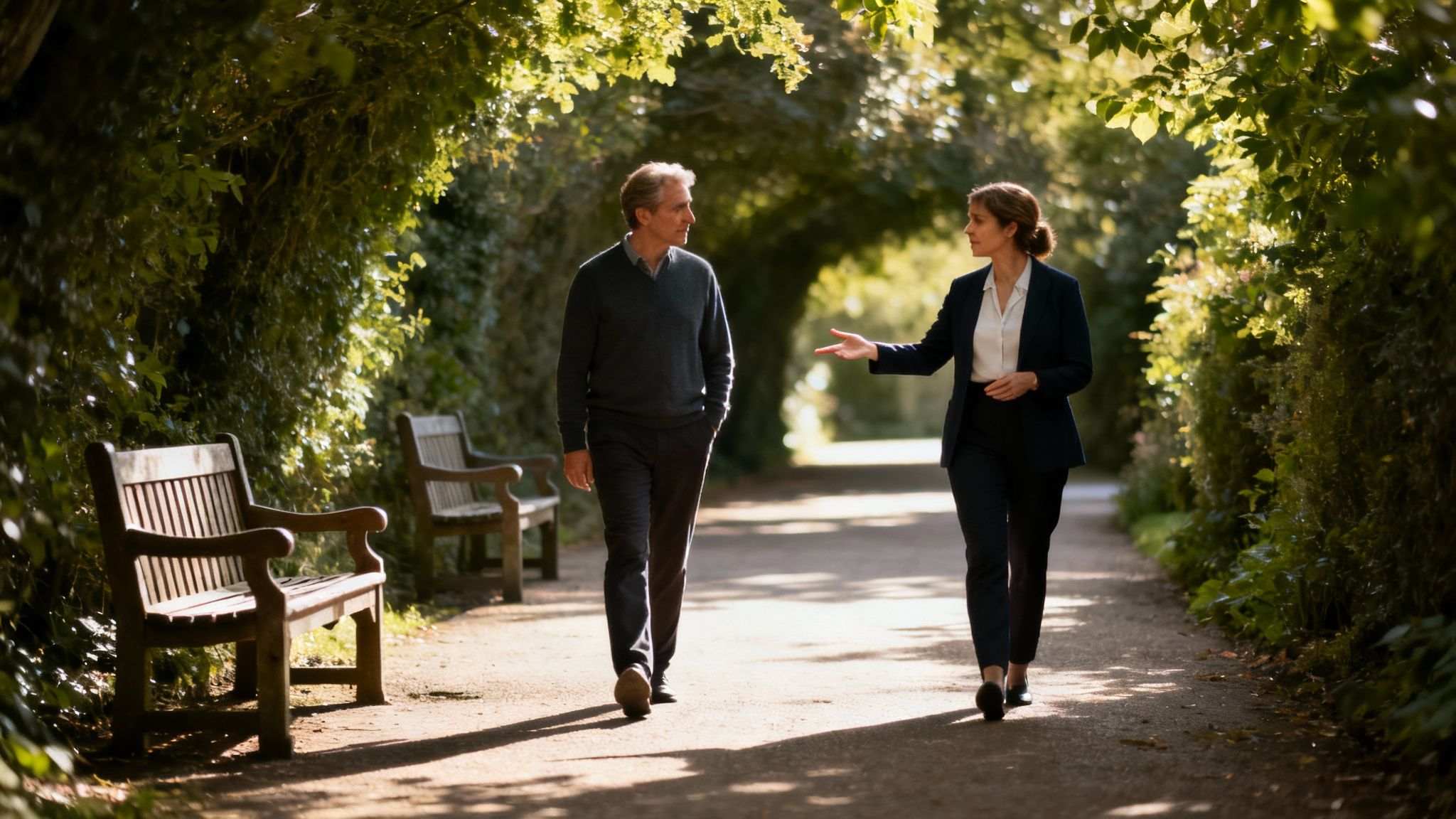
This commitment to creating a secure space for you begins right from our very first conversation. We’ll establish clear boundaries and practicalities from the get-go, so you can feel completely safe and respected throughout our time together.
Managing Privacy in Public Spaces
I get it – a big concern for many is the chance of being overheard or, even more awkwardly, bumping into someone you know. These are really valid points, and things I manage with a great deal of care and foresight. We'll choose our routes together, opting for paths that offer a bit of natural privacy and steering clear of Cheltenham’s busier spots in favour of quieter trails.
The very nature of walking side-by-side, rather than sitting face-to-face, makes our conversation much less obvious to any passers-by. I’m always conscious of our surroundings and will naturally lower my voice or just pause the conversation if people get a bit too close, picking things back up when the coast is clear.
We’ll also agree on a simple, discreet plan for what to do if we do happen to see someone you know. Just having that plan in place beforehand removes any potential awkwardness on the spot and keeps you in control, so we can handle it smoothly without disrupting the flow of the session.
Looking After Your Physical Safety
Your physical wellbeing is every bit as important as your emotional safety. The routes we use in and around Cheltenham are always picked with accessibility and safety front of mind.
Here are a few of the practical things we’ll always have covered:
Route Checks: I pre-walk all our routes to make sure they're on public land, have clear paths, and don't have any major hazards to worry about.
Pace and Comfort: You set the pace, always. We’ll stick to generally flat and even surfaces to make sure the walk is gentle and comfortable, not a workout.
Just-in-Case Planning: We'll both have our mobile phones, and we have clear procedures in place for any unexpected situations, so help is always at hand if it’s ever needed.
These simple measures help ensure the outdoors feels like a supportive and secure container for our therapeutic work.
Upholding Professional Standards
At the end of the day, talk and walk therapy is bound by the exact same strict code of ethics and professional conduct as traditional counselling in a room. The core principles of confidentiality, professional boundaries, and your wellbeing are completely unwavering, no matter where we are.
My commitment is always to provide a therapeutic experience where you feel totally secure to explore whatever is on your mind. By carefully managing the practical side of being outdoors, we create a confidential space where the focus stays entirely on your journey. Your trust is paramount, and I take every precaution to honour and protect it.
Taking Your First Step Towards Lasting Change
Deciding to start therapy is a big deal. It’s a brave and powerful act of self-care. As we've explored in this guide, taking that therapy session outside offers a really unique way to start feeling better, blending professional support with the simple, grounding benefits of movement and nature.
It’s an invitation to stop feeling stuck and to start moving, both literally and emotionally, towards a better headspace.
This isn’t just a pleasant alternative to sitting in an office; it's proving to be seriously effective. The growing popularity of walk and talk therapy right here in the UK speaks volumes about its power. One UK study involving 32 practitioners found an 89% retention rate and 91% attendance for outdoor sessions, with client satisfaction hitting 4.4/5. Even better, wellbeing scores shot up from an average of 48.6 (the UK average) to over 60 (a sign of high flourishing). You can dig into the numbers yourself in these UK outdoor therapy findings.
Are You Ready for a New Perspective?
If the thought of a less formal, more dynamic kind of therapy session appeals to you, then this could be a perfect fit. It’s an approach that can be especially helpful if you’re navigating anxiety, depression, or neurodiversity, or if you just feel that traditional indoor therapy isn't quite right for you. Sometimes, that first step towards change is about tackling very specific fears, too, like learning how to overcome fear of heights.
Reaching out for support isn't a sign of weakness. It’s a powerful step towards personal growth and reclaiming your own wellbeing. Think of it as an investment in yourself and your future.
Whether you're ready to book a session or just have a few more questions, I’m here to help. You can get a better feel for how I work with clients across Cheltenham by exploring my Walk and Talk Therapy service.
When you feel ready, I invite you to get in touch. We can have a relaxed, no-obligation chat to see if this is the right approach for you. Go on, take that first step today and contact me to book a consultation.
Your Questions Answered
Choosing to start therapy is a big decision, and it’s only natural to have a few questions, especially about a less traditional approach like walk-and-talk therapy. Getting the practicalities sorted in your mind can help you feel more confident about taking that first step. I’ve put together some answers to the questions I hear most often from people here in Cheltenham.
Hopefully, this will clear a few things up and give you a better sense of how our outdoor sessions work, so you feel comfortable and ready right from the start.
What Happens if the Weather is Bad on the Day?
This is Britain, after all! Planning for a bit of unpredictable weather is part of the package. Your safety and comfort are always the most important thing, so if the weather is truly awful – think torrential rain, high winds, or icy paths – we have a straightforward backup plan.
We can simply switch that week's session to an online video call or meet indoors face-to-face, depending on your preference and what's available. We'll always agree on this beforehand, so your therapy can continue without a hitch, no matter what the clouds are doing.
Is Walk and Talk Therapy Genuinely Confidential?
Absolutely. Confidentiality is the cornerstone of therapy, and that doesn’t change just because we’ve stepped outside. I’m very conscious of this and take several practical steps to protect your privacy.
For a start, we’ll stick to walking routes that are generally quieter, which gives us a natural sense of privacy. I’m always aware of our surroundings and will instinctively lower my voice or pause our conversation if people are nearby. The very act of walking side-by-side actually makes our chat much less obvious to anyone passing by than a face-to-face talk on a park bench would be.
We’ll also agree on a simple, discreet plan for what to do if we happen to bump into someone you know. Having this sorted from the get-go takes away any potential awkwardness and leaves you in control, so we can carry on our session without any disruption.
Do I Need to Be Physically Fit?
Not in the slightest. It’s really important to remember that this is a therapy session that happens to involve walking, not a fitness session. The real focus is on our conversation and your emotional wellbeing, not on getting a workout.
The pace is always set by you and is usually slow and gentle. We'll choose routes that are mostly flat and easy to manage, and we can stop for a rest on a bench whenever you like. The aim is to create a comfortable, supportive space for you to talk, not to set a physical challenge.
How is This Different from Just Walking with a Friend?
While a good walk and a chat with a friend is one of life’s great therapies, this is something different. What we’re doing is building a professional therapeutic relationship, which brings a completely different dynamic and skillset to the conversation.
As a qualified counsellor, my role is to hold a structured, non-judgemental space that is entirely focused on you. I draw on recognised therapeutic approaches to help you explore your thoughts and feelings, spot unhelpful patterns, and build real-world strategies for tackling challenges like anxiety or depression. It’s about combining the natural, calming benefits of a walk with the focused, professional support you need to make lasting, positive changes.
Ready to see if Therapy with Ben is the right fit for you? To find out more or to book an initial chat in Cheltenham, please head over to my website: https://www.therapy-with-ben.co.uk. Walk-and-Talk Highlight
Interested in something a little different? Discover the benefits of walk-and-talk therapy in Cheltenham’s green spaces, or read more about me and my approach. If you’re ready to start, get in touch to arrange a free introductory call.


Comments