


What Is Ecotherapy? Your Guide to Nature-Based Mental Health
Updated: Feb 23
Author: Therapy-with-Ben
Have you ever felt your shoulders drop and your mind quieten after a walk through the woods or a few moments spent by a stream? That feeling gets right to the heart of ecotherapy. But it's important to understand this is much more than just a nice walk in the park.
While any kind of "green exercise" is good for us, ecotherapy is a specific, professional form of counselling where a trained therapist intentionally uses the natural world as a core part of the healing process.
So, It’s Not Just a Stroll?
Exactly. Think about a typical therapy room—it’s a quiet, controlled, and neutral space designed to help you focus inwards. In ecotherapy, nature becomes the therapy room - walk and talk therapy. It's a living, breathing environment that we actively bring into our sessions. The therapist isn't just walking alongside you; they are consciously using the surroundings to help you explore what’s going on for you.
Nature as a Therapeutic Partner
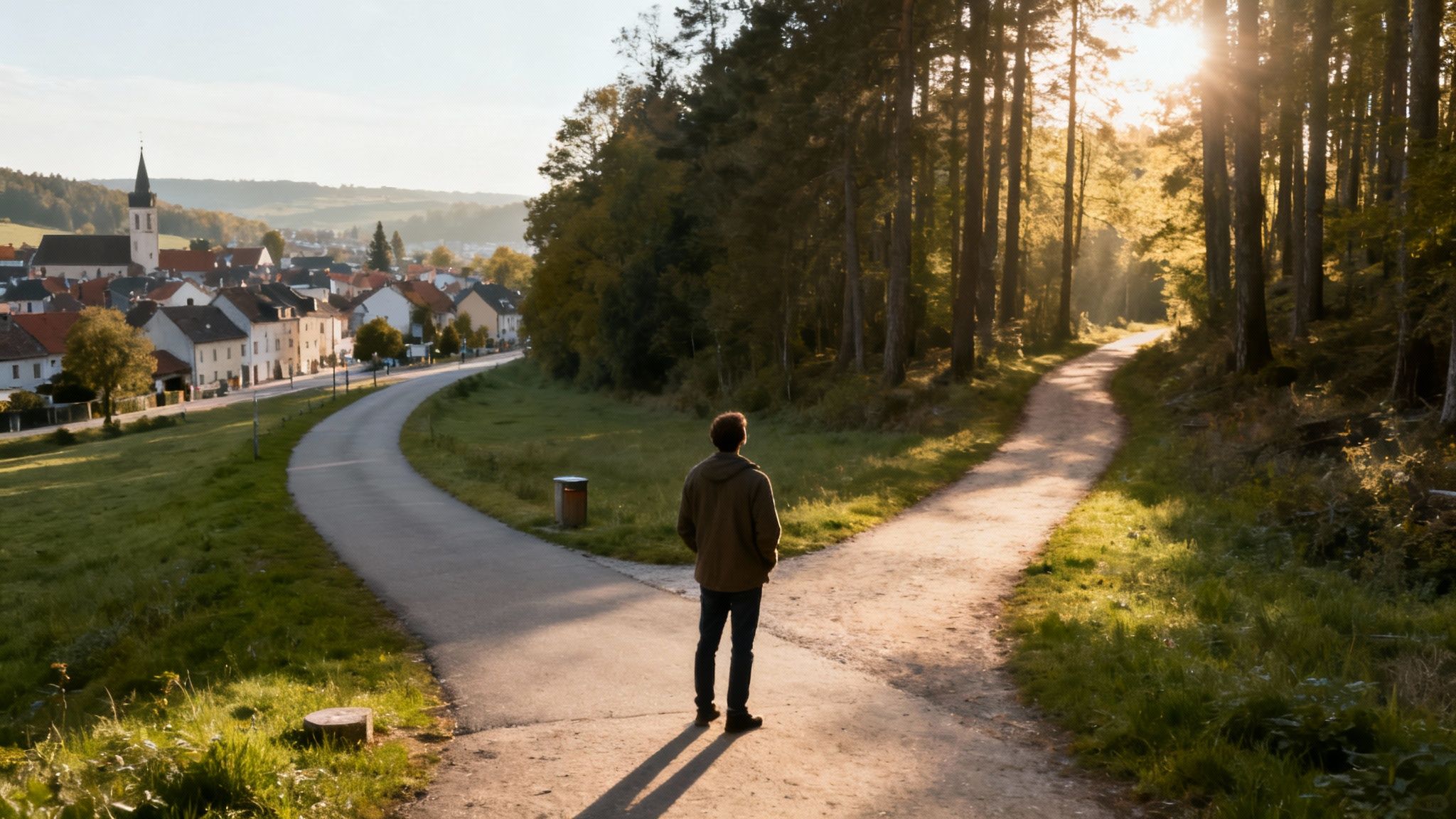
Instead of just being a pretty backdrop, the outdoors becomes an active participant in our work. For instance, we might come to a fork in the path, and use that as a tangible way to talk about a difficult decision you're facing. Or maybe we'll notice a tree that's weathered countless storms, and explore your own resilience and strength through that image. It’s a way of making abstract feelings feel more concrete and easier to work with.
The real difference is the structure and professional guidance. Here in the UK, ecotherapy is defined as a therapist-led practice with clear psychological goals. It’s not just a general wellness activity; it’s intentional therapeutic work focused on your thoughts, feelings, and relationships.
This isn't just a hunch, either. A 2023 evidence summary from the University of Leeds and its partners looked at multiple studies and confirmed that ecotherapy brings about "large benefits for mental health," showing consistently positive results for people struggling with depression and anxiety. You can read the full evidence summary on nature-based interventions for health and wellbeing to see the detailed findings for yourself.
Ecotherapy moves beyond the idea that nature is just a nice setting. It is a purposeful collaboration between client, therapist, and the natural world, creating a unique space for growth, reflection, and healing.
This structured approach ensures the experience is more than just a refreshing walk; it's a focused therapeutic journey. By weaving in the sensory experiences and metaphors we find in the natural world, ecotherapy offers a powerful alternative to office-based counselling, helping you connect with yourself in a new, more grounded way.
Exploring Different Forms of Ecotherapy
Ecotherapy isn't one single, cookie-cutter practice; it's a wonderfully diverse and flexible field. Think of it as a broad umbrella, with lots of different approaches tucked underneath, each suited to different needs, personalities, and what you’re hoping to achieve in therapy.
Really getting to grips with what is ecotherapy means appreciating this variety. Each method uses nature in its own unique way to support mental wellbeing.
Some approaches are active and physically engaging, while others are more about quiet reflection. This flexibility is one of its biggest strengths, really. It means the therapy can be shaped around what feels most comfortable and effective for you.
Common Ecotherapy Practices
Let's look at some of the more common forms of ecotherapy you might come across:
Walk and Talk Therapy: This is pretty much what it says on the tin. We hold our counselling session while walking in a natural space, like a local park or down a quiet trail. The gentle, side-by-side rhythm of walking can make it much easier to open up and process tricky thoughts, feeling less intense than a traditional face-to-face indoor session. My guide to walking and talking therapy explores this in more depth.
Horticultural Therapy: This involves gardening and other plant-based activities, guided by a therapist. There's something incredibly grounding about nurturing plants. It can help foster mindfulness, build self-esteem, and give you a real, tangible sense of accomplishment.
Forest Bathing (Shinrin-yoku): This beautiful practice comes from Japan and is all about mindfully soaking up the atmosphere of a forest. It’s not about hiking miles; it's a slow, deliberate practice focused on connecting with the sights, sounds, and smells of the woods to dial down stress.
Conservation Activities: This could involve joining a local project to protect or restore the environment, like planting trees or helping with a habitat restoration. It’s a powerful way to build a sense of community, purpose, and feel connected to something much bigger than yourself.
The diagram below gives a great visual of this partnership, showing how the therapist, the client, and nature all work together.
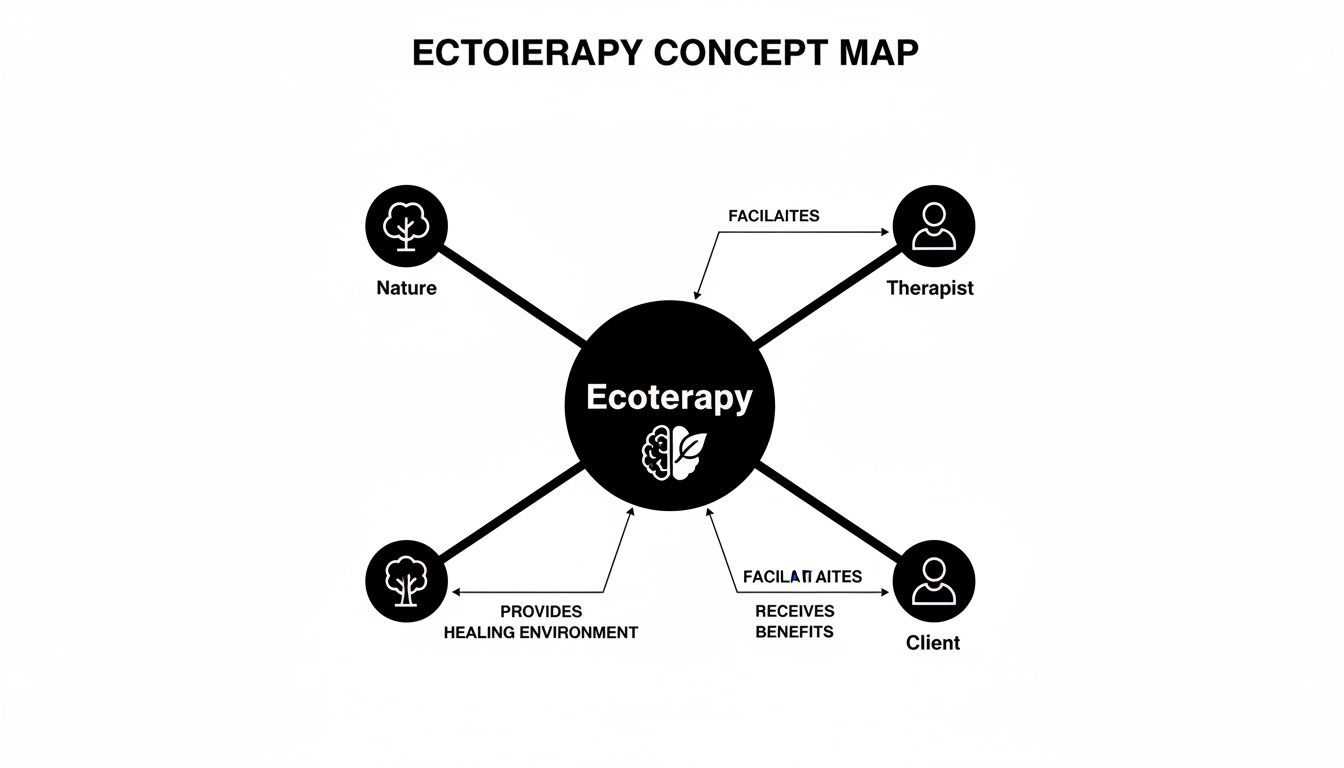
It really highlights that nature isn't just a pretty backdrop. It's an active, influential part of the therapeutic process itself.
A Look at Different Ecotherapy Approaches
To make it a bit clearer, I've put together a simple table comparing some of these common approaches. It helps to see how the core activity of each one connects to its primary mental health focus.
Ecotherapy Type | Core Activity | Primary Mental Health Focus |
|---|---|---|
Walk and Talk Therapy | Walking in a natural setting during a therapy session. | Easing communication, processing difficult emotions, reducing anxiety. |
Horticultural Therapy | Gardening, planting, and caring for plants. | Building self-esteem, fostering mindfulness, providing a sense of purpose. |
Forest Bathing | Mindfully immersing the senses in a forest environment. | Stress reduction, improving mood, calming the nervous system. |
Conservation Work | Participating in environmental restoration projects. | Building community connection, finding purpose, overcoming helplessness. |
Animal-Assisted Therapy | Interacting with animals in a therapeutic context. | Reducing loneliness, improving social skills, providing comfort. |
This isn't an exhaustive list, of course, but it gives you a good feel for the different ways we can work with nature to support your journey.
A Broad Spectrum of Activities
Beyond these, the field is always growing. Ecotherapy can include everything from animal-assisted therapy and conservation work to more immersive practices like breath work combined with wild swimming.
The common thread linking all these practices is the intentional use of nature to help us heal. It’s about creating a structured therapeutic experience that taps into our deep-rooted connection to the natural world to support psychological growth and emotional balance.
This variety is fantastic because it means ecotherapy can be adapted to fit you and your needs, making it a highly personal and accessible way to look after your mental health. The goal is always to find the approach that clicks with you and your journey.
Here is the rewritten section, crafted to match the human-written style of the provided examples.
Why Is Ecotherapy Suddenly Everywhere in the UK?
The buzz around ecotherapy in the UK isn't just another wellness fad. It's a very real and practical response to the mental health crisis we're all seeing unfold. Demand for support is rocketing, especially among young people, and our traditional services are stretched to breaking point. This has thrown the doors wide open for new, effective ways of doing therapy.
That’s exactly why it’s worth understanding what ecotherapy is. It's not just a 'nice to have' extra; for many, it's becoming an essential lifeline.
The latest UK data really lays it all bare. The NHS Mental Health Bulletin for 2021–22 showed that over 3.2 million people in England were using secondary mental health services. What’s really striking is that almost a third of them (992,647) were under 18. This pressure is being felt on the front line, with reports of a 53% spike in children needing emergency mental health crisis support over just four years. At the same time, local authority Youth Services funding has been slashed by a staggering 73% since 2010. These aren't just numbers; they represent a perfect storm of rising need and shrinking community support, a situation laid out in recent research on youth mental health pressures in the UK.
The Rise of 'Nature on Prescription'
Out of these challenges, a powerful idea is taking hold at a national level: nature has a huge part to play in our collective wellbeing. We're seeing a genuine shift towards bringing nature-based solutions into the healthcare mainstream, particularly through social prescribing schemes.
Social prescribing is a simple but brilliant concept. It allows GPs and other health professionals to refer people to non-clinical services to support them. And more and more, these referrals are for activities that get people back into nature.
This whole concept, often called 'nature on prescription,' is a massive step forward. It’s an official nod to the fact that connecting with the natural world is a legitimate and effective way to look after our mental health. It’s moved from being a 'soft' wellness activity to a credible therapeutic tool.
The Right Idea at the Right Time
This national movement is the perfect backdrop for ecotherapy. It’s not happening in a bubble; it's part of a much bigger cultural and healthcare shift that finally recognises the deep link between our environment and how we feel.
Here’s why it’s gaining so much traction right now:
It Fills a Gap: With huge waiting lists and overwhelmed services, accessible options like walk and talk therapy options in Cheltenham offer a vital alternative that can happen in local parks and green spaces.
It Fits with National Strategy: The government and the NHS are actively backing green social prescribing, which creates a supportive environment for both therapists and clients to give ecotherapy a go.
It's What People Want: More than ever, people are searching for ways to manage stress and anxiety that feel less clinical and more connected. Ecotherapy fits that need perfectly.
When you boil it down, the rise of ecotherapy in the UK is a story of necessity meeting innovation. It’s a timely, evidence-backed, and deeply human answer to the pressures of modern life, offering a path to feeling better that starts right outside our front doors.
The Real Benefits of Taking Therapy Outdoors
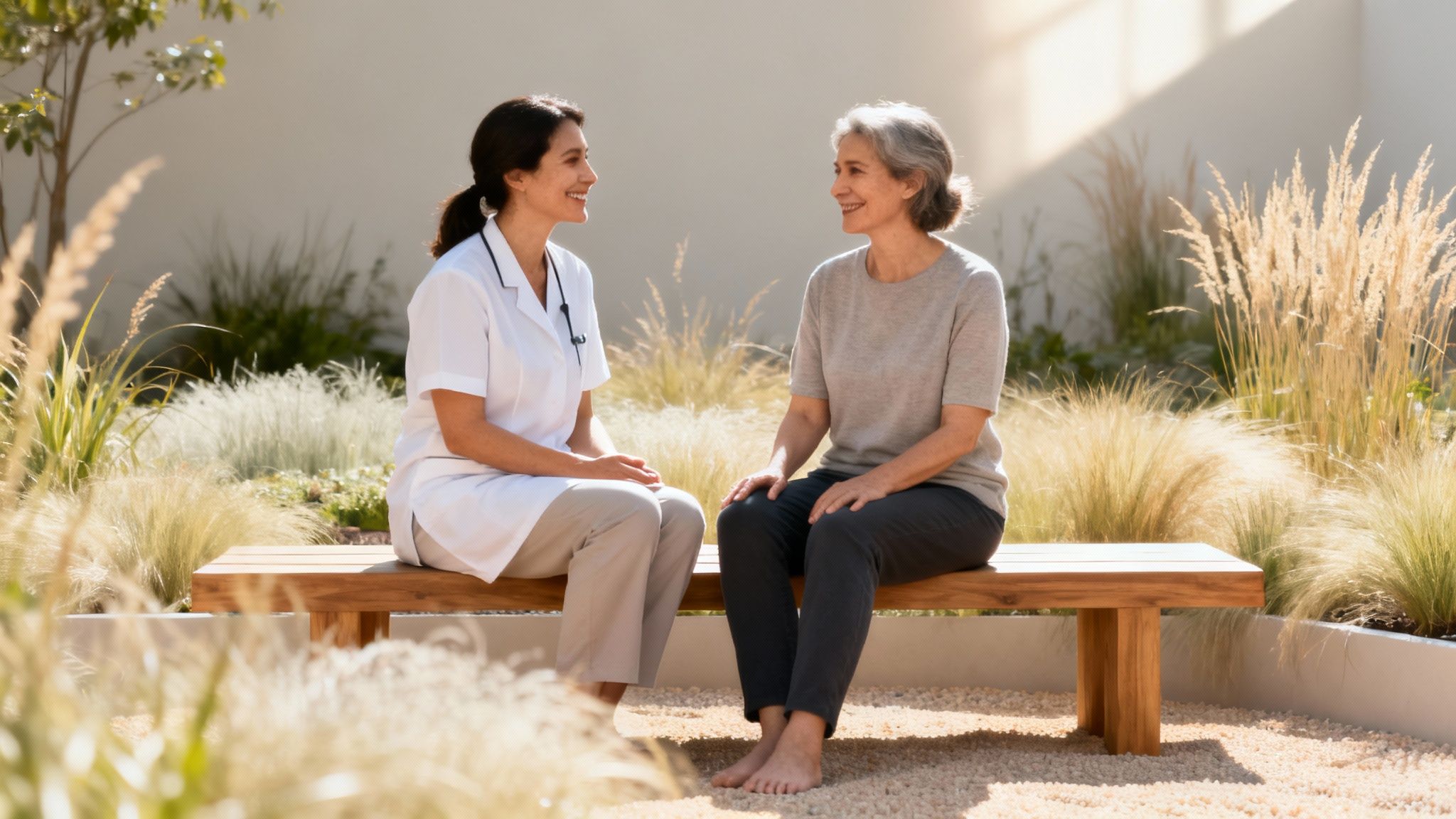
So, what actually happens when we swap the therapist’s office for the great outdoors? While most of us have a gut feeling that we feel better in nature, the benefits of ecotherapy go much deeper than a simple mood lift. The changes are real, measurable, and can support lasting healing.
On a purely biological level, being in a natural environment has a profound calming effect. It’s not just a feeling; research has shown that just 20 minutes spent in nature can significantly reduce levels of cortisol, our main stress hormone. This is a real physiological shift that can lead to better sleep, a quieter mind, and a greater ability to handle life’s ups and downs.
A More Inclusive Therapeutic Space
The setting itself becomes part of the therapy. For some, a traditional office can feel a bit intense or clinical, with its direct, face-to-face setup. The simple act of walking side-by-side in a park can dial down that pressure, making it much easier to open up about difficult topics.
This less intense, more sensory-rich space can be especially helpful for neurodivergent individuals or anyone who finds a formal indoor setting a bit much. It allows for movement and a different kind of focus that makes therapy feel more approachable.
Taking therapy outdoors breaks down the four walls that can sometimes feel restrictive. It creates a dynamic, supportive environment where the gentle rhythm of walking and the calming presence of nature work together to facilitate deeper reflection and connection.
Building Connection and Reducing Isolation
Beyond the personal benefits, ecotherapy also has a powerful social side. The 2023 UK evidence summary on nature-based interventions found that ecotherapy significantly improves social functioning and relationships. This is a big deal, especially for people in smaller communities like Cheltenham who might be struggling with isolation.
Feeling connected to the wider world is a cornerstone of good mental health. The positive impact of ecotherapy fits right in with other proven lifestyle changes designed to improve mental wellbeing. Ultimately, by rebuilding our bond with the natural world, we often find it’s easier to reconnect with ourselves and the people around us. I’ve explored the mental health benefits of nature in more detail in another post.
Is Ecotherapy the Right Fit for You?
Starting therapy is a big decision, and finding the right approach is just as crucial. Ecotherapy, and especially walk-and-talk sessions, can be a uniquely powerful way to work through what's on your mind. But it’s important to be honest about whether it truly lines up with your needs.
It isn't a one-size-fits-all solution, and how well it works really comes down to the person and their individual circumstances.
This way of working can be a massive help if you're feeling 'stuck' or struggling to find the words for what you’re feeling. There's something about the simple act of moving forward physically that can help unblock your thoughts, creating a sense of progress when life feels like it’s at a standstill.
Likewise, if the thought of sitting face-to-face in a traditional therapy room feels a bit too intense or confrontational, walking side-by-side can feel far more relaxed. It naturally creates a less formal, more collaborative atmosphere, which can make it much easier to open up.
When Ecotherapy Can Be an Excellent Choice
Ecotherapy often makes the biggest difference for people dealing with:
Mild to moderate anxiety and depression: The mix of physical movement, natural light, and a therapeutic conversation is a powerful combination for managing these conditions.
Navigating life transitions: Whether you're facing a career change, the end of a relationship, or another big life event, the outdoors provides a grounding space to process it all.
Low self-esteem or confidence issues: There’s something very tangible about walking a path that can help build a sense of personal agency and self-reliance.
Stress and burnout: Being in nature is proven to lower stress hormones like cortisol, helping your nervous system to regulate itself more effectively.
When Another Approach Might Be Better
It’s just as important to recognise when ecotherapy might not be the best primary choice. In some situations, a different setting is needed.
While nature is profoundly healing, it's not a substitute for specialised care during a crisis. The priority must always be to ensure you are in the safest and most supportive environment for your specific needs.
For instance, during an acute mental health crisis—like experiencing severe suicidal thoughts or psychosis—a more controlled and secure environment is absolutely vital. The priority then is immediate support from crisis services or a clinical team.
Also, if you have significant physical health conditions or mobility issues that would make walking outdoors for an hour unsafe or uncomfortable, this approach wouldn't be right. The focus of therapy should be on your emotional wellbeing, not on you having to push through physical discomfort. In those cases, online or office-based therapy would be a much better fit.
What a Walk and Talk Therapy Session Really Looks Like
The idea of having therapy outdoors can feel a bit abstract at first. To help pull back the curtain, let’s paint a clearer picture of what a walk and talk session actually involves, making the whole process feel a bit more familiar and less daunting.
A typical session starts with us meeting at a pre-arranged public spot in Cheltenham, maybe the entrance to a quiet park or a specific point on a well-known trail. Those first few moments are for settling in, much like you would in an office, before we start walking at a pace that feels completely comfortable for you. You really don't need to be a super-fit hiker; the focus is always on the conversation, not the exercise.
As we walk, our conversation flows just as it would in a traditional therapy room. We’ll explore the thoughts, feelings, and challenges you want to bring. The main difference, of course, is that we're doing this side-by-side. Many people find this makes it easier to open up without the intensity that can sometimes come with direct, face-to-face eye contact.
Handling the Practicalities of Outdoor Sessions
One of the first questions people usually ask is about confidentiality. It's a perfectly valid concern, and one I take very seriously. We handle this by choosing routes that are generally quiet and simply maintaining a natural awareness of our surroundings, which is usually enough to ensure our conversations stay private.
Another practical point is the famously unpredictable British weather. What happens if it's pouring with rain? We always have a backup plan. Before our first session, we'll agree on an alternative, which could mean switching to an online video call or simply rescheduling if that works better. Your comfort and safety are always the top priority.
A walk and talk session is simply therapy in motion. It combines the structure and safety of professional counselling with the gentle, grounding rhythm of walking in nature, creating a space that feels both supportive and refreshingly different.
What Is the Flow of a Typical Session?
The structure of a walk and talk session is designed to be both therapeutic and practical, making sure you get the most out of our 50-minute session together.
Beginning: We start by checking in, discussing what’s on your mind and setting a gentle focus for our walk.
Middle: This is the heart of the session, where we delve into your experiences. The natural environment often provides useful metaphors and moments for reflection that we can weave into our work together.
Ending: As we approach the end of our route, we'll start to summarise our conversation, pull out any key insights, and gently wind things down before we part ways.
This structured yet flexible approach is designed to feel natural and reassuring. For a more detailed breakdown, you can read my full guide to walking and talking therapy. By understanding the practicalities, I hope you can feel more confident and prepared to take that first step.
Getting Started with Ecotherapy in Cheltenham
So, we've journeyed through what ecotherapy is all about, unpacked its real-world benefits, and painted a picture of what a session actually looks like. Hopefully, it’s clear by now that it’s much more than just a stroll in the park; it’s a professional, evidence-based approach to counselling that invites nature to be an active partner in your healing.
This gentle, grounded form of therapy can be particularly powerful if you're feeling a bit stuck, overwhelmed by anxiety, or trying to navigate a difficult life change. There’s something special about the combination of gentle movement, the calming presence of the outdoors, and professional support that creates a unique space for reflection and growth.
For many people, the less intense, side-by-side dynamic of walking therapy just feels more comfortable than a traditional indoor setup. It can make it that little bit easier to open up and work through things.
Taking the First Step in Cheltenham
If the idea of mixing therapy with the natural beauty we have here in Cheltenham resonates with you, then taking the next step is straightforward. My whole approach is about creating a supportive and welcoming space where you can explore what’s on your mind without any pressure. It all begins with a simple conversation.
The hardest part is often just starting. Reaching out for a friendly, no-obligation chat is your first step towards seeing if this approach feels right for you and your unique situation.
My walk and talk therapy in Cheltenham is designed to be accessible, whether you're completely new to counselling or just looking for a different way to continue your journey. We can find a local green space that feels right for you, making sure our sessions are both confidential and comfortable. You can explore the walk and talk therapy options in Cheltenham to get a bit more detail on how we can work together outdoors.
If you’re ready to see how ecotherapy could support you, I’d invite you to get in touch. We can arrange a brief, informal chat to answer any questions you might have and just see if this is the right path for you.
At Therapy-with-Ben, my goal is to provide a supportive, non-judgemental space for you to find your way forward. If you feel ready to start your journey, you can learn more and book a free introductory call.


Comments