


Counselling on phone: A Complete Guide to Remote Therapy
When we talk about counselling on the phone, what we’re really talking about is a form of remote therapy where your sessions happen entirely over a telephone call. It’s a way of creating a professional, confidential therapeutic space using just our voices and focused listening, making mental health support that much more accessible for people who either prefer it or find it difficult to meet face-to-face.
Understanding What Counselling on the Phone Involves
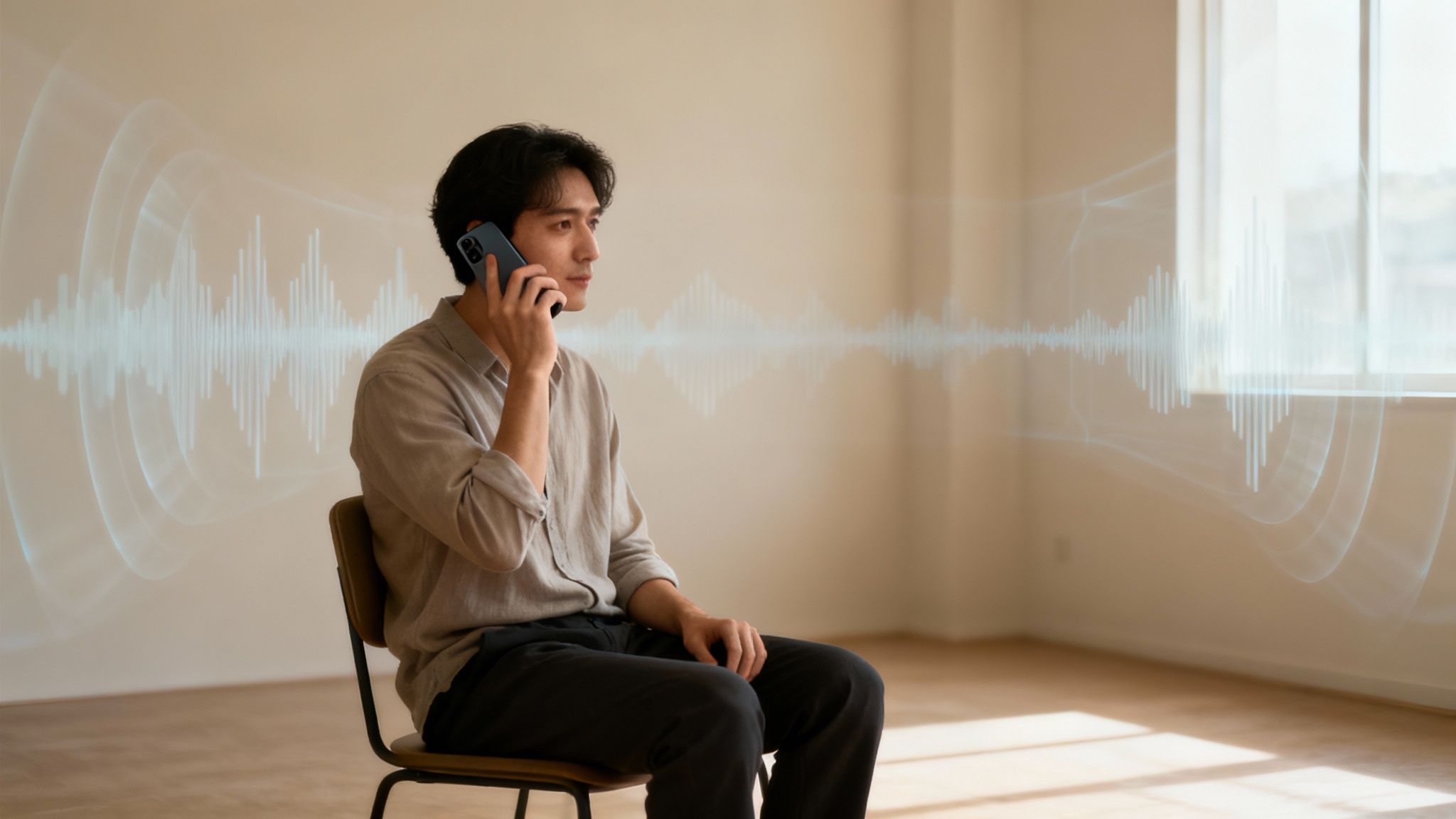
Let’s look beyond the simple definition. This isn’t just any phone call; it's a dedicated therapeutic space, built entirely through conversation. It’s a powerful and effective way to get mental health support without the logistics of having to travel.
Picture a traditional therapy room. Now, instead of physical walls and a couple of chairs, that safe space is built from spoken words and very intentional listening. This kind of audio-only environment can actually foster a unique type of connection. The tone of your voice, the pauses, the pace of your speech – these all become incredibly powerful tools for us to communicate and work towards healing.
The Auditory Therapeutic Space
In phone counselling, not having any visual cues isn't the drawback you might think. For many people, it's a real benefit. Taking the visual element out of the equation can lower inhibitions, making it feel safer to talk openly about difficult feelings or experiences. Frankly, some people just find it far less intimidating than sitting directly opposite someone in a room.
This dynamic means the therapeutic relationship develops based purely on that verbal connection. As a counsellor, I’m trained to listen intently not just to what you’re saying, but how you’re saying it.
This focused listening can create a profound sense of being heard and understood. When visual distractions are removed, both client and therapist can tune into the emotional nuances conveyed through voice alone, often leading to deep and meaningful insights.
Setting the Stage for Your Journey
This guide is designed to give you a complete and honest picture of what telephone counselling is all about. My aim is to cover everything you need to know to decide if it feels like the right path for you.
Here’s a quick look at what we'll explore:
The key benefits of choosing phone-based therapy, from sheer convenience to personal comfort.
How it stacks up against other ways of doing therapy, like video calls, walk-and-talk, and traditional in-person sessions.
Practical guidance on how to get the most from your calls and what you can expect a typical session to look like.
It's also worth knowing a little about the technology that makes it all work. Many therapists now use secure digital phone systems for clarity and privacy. You can get a sense of how these systems work by reading up on technologies like VoIP for business, which underpins a lot of modern, reliable communication.
Here at Therapy with Ben, phone counselling is an integral part of the flexible support I offer. I know that everyone's needs are different, which is why I provide various ways to access therapy in Cheltenham and further afield. To get a bit of background, you might want to read my other guide on what counselling is and how it helps.
Who Can Benefit from Telephone Counselling?
Telephone counselling isn’t some one-size-fits-all fix, but for some people and in certain situations, it’s not just a good option—it can be the best one. It’s a way of getting support that fits neatly into the cracks of a busy life, without demanding travel time or a complete reshuffle of your day.
So, who are the people who really find their stride with this approach?
For starters, busy professionals. If your calendar is a relentless puzzle of meetings and deadlines, finding a spare hour to travel to and from a therapy session can feel impossible. Counselling on the phone just wipes out that barrier. You can have your session from your office or home during a lunch break, making mental healthcare a manageable part of your work week.
Overcoming Physical and Geographical Barriers
For many people, the real barrier to therapy isn’t about time, but physical distance or mobility. This is where telephone counselling becomes an absolute lifeline, especially for individuals facing challenges that make getting out of the house difficult.
This really helps people with:
Mobility challenges or chronic illnesses, where leaving the house takes a huge amount of effort or causes real discomfort.
Those living in rural or remote areas where the nearest qualified therapist might be an hour or more away.
Parents or carers who just can’t easily arrange childcare or step away from their responsibilities to get to an appointment.
In these situations, the phone becomes a direct line to support that might otherwise feel completely out of reach. It levels the playing field, making sure your postcode or physical condition doesn't dictate whether you get the help you deserve.
Creating a Psychologically Safe Space
Putting the practical stuff aside, there are some big psychological wins with phone counselling. A lot of people experience social anxiety or find direct, face-to-face eye contact really challenging, especially when you’re trying to talk about deeply personal or sensitive topics. Taking the visual element out of the equation can be incredibly freeing.
For someone struggling with anxiety, the feeling of anonymity on a phone call can create a safe, comfortable space to open up. It removes that pressure of being 'seen', letting you focus entirely on your thoughts and feelings without worrying about body language or facial expressions.
This unique setup can be especially helpful for anyone just starting their therapy journey. It offers a gentle entry point into counselling, allowing you to build confidence and trust through conversation alone. For a closer look at how remote therapy can specifically help with anxiety, you might find our guide to effective online counselling for anxiety useful.
Ultimately, if you value privacy, convenience, and a focused conversational space, counselling on the phone is a powerful and effective option worth thinking about. It adapts to your life, rather than forcing your life to adapt to it.
Weighing the Pros and Cons of Phone Counselling
Deciding to start therapy is a big step, and figuring out the right format for you is just as important. To help you get a clear picture, it’s worth taking an honest look at both the powerful advantages and the potential downsides of using the phone for counselling.
This isn’t about finding a "perfect" method, because there isn't one. It’s about finding the one that fits best with your life, your comfort levels, and what you want to achieve right now.
The Clear Advantages of Telephone Therapy
Let's be honest, one of the biggest reasons people lean towards phone counselling is its sheer convenience. It completely removes the hassle of travel and geography, making it far easier to slot a session into a packed schedule. For many people, this is the single factor that makes sticking with therapy actually possible.
But it goes deeper than just being convenient. A few other key benefits really stand out:
Greater Accessibility: It opens doors for people who might otherwise struggle to get support. This includes those with mobility issues, chronic illnesses, or anyone living in a rural spot where local therapists are few and far between.
Reduced Inhibition: Without being face-to-face, a lot of people find it easier to open up. Talking about sensitive or difficult subjects can feel less intense or self-conscious when you don't have to worry about eye contact.
Focused Listening: The lack of visual cues can create a surprisingly powerful dynamic. Both you and your therapist can really tune into the nuances of what’s being said—the tone of voice, the pace of speech, even the silences. Sometimes, this is where the most profound insights come from.
Potential Cost Savings: It can be a more budget-friendly option. You're not spending money on fuel or parking, and sometimes the session fees are slightly lower because the therapist has fewer overheads.
This infographic shows some of the people who find this format particularly helpful.
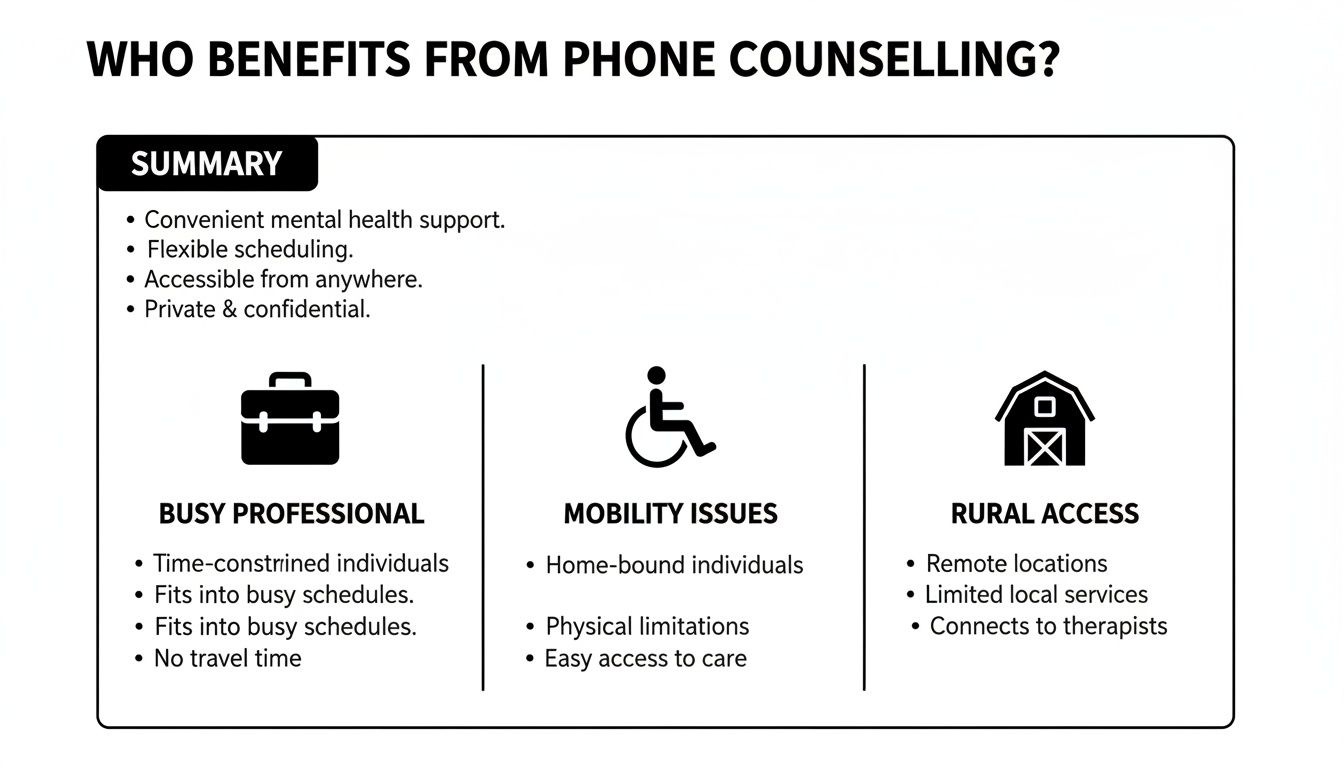
As you can see, phone counselling is brilliant at removing practical barriers, making mental health support a genuine option for people in all sorts of situations.
Understanding the Potential Limitations
Of course, no format is perfect, and it’s important to be aware of the potential drawbacks. Knowing about these ahead of time helps you make a choice that feels right and ensures your sessions are as effective as they can be.
The most obvious limitation is the absence of non-verbal cues. In a room or on a video call, a therapist can see your body language and facial expressions, which add a whole other layer of context. On the phone, everything has to be communicated through your voice.
While a skilled therapist is trained to listen for very subtle vocal cues, the lack of visual information does mean some nuances might be missed. It just requires both of us to be a bit more explicit and descriptive in how we talk.
Other things to think about include:
Technical Glitches: A bad mobile signal, a dropped call, or a dying battery can really disrupt the flow of a good conversation. It's vital to have a backup plan, which is something we would always discuss beforehand.
Environmental Distractions: Unlike a dedicated therapy room, your environment is down to you. Interruptions from family, pets, or your phone buzzing can pull you out of the moment and make it hard to focus.
Suitability for Certain Issues: For some acute mental health crises or for working through complex trauma, a format with visual contact—like video or in-person—might be more appropriate, or even necessary, to ensure you have the right level of support.
By weighing up these pros and cons, you can get a much better sense of whether the flexibility and focused nature of counselling on the phone is the right fit for your journey.
What to Expect in a Typical Phone Counselling Session
Starting any new kind of therapy can feel a bit nerve-wracking, and that's completely normal. Knowing what to expect can really help take the edge off that uncertainty, putting you back in the driver's seat. A typical session of counselling on the phone isn't random; it follows a clear, predictable rhythm designed to create a focused and safe space for you to open up.
Let's get the practical bits out of the way first. We’ll always agree beforehand who is making the call. Usually, I will call you at our scheduled time. This just makes sure you're settled and in your private space, ready to begin, without any last-minute confusion.
The single most important thing you can do for yourself is find a quiet spot where you won’t be disturbed for the full 50 minutes. This is your time, and protecting it from the outside world is key to getting the most out of our work together.
The Three Core Parts of a Session
You can think of a phone counselling session as having a beginning, a middle, and an end. Each part serves a different purpose, gently guiding our conversation from a simple catch-up into the deeper therapeutic work, and finally, to a supportive wrap-up that leaves you feeling grounded for the week ahead.
The structure generally looks something like this:
The Initial Check-in (First 5–10 minutes): We'll start just by touching base. I’ll ask how your week has been, checking in on any specific challenges or small wins you’ve experienced since we last spoke. It’s all about reconnecting and setting the scene for what we’ll talk about today.
The Core Therapeutic Work (Main 30–40 minutes): This is the heart of the session. Here, we'll dive into the thoughts, feelings, or situations that are most pressing for you. We might pick up a thread from our last conversation or explore something entirely new that's come up. My role here is to listen carefully, ask questions to help you reflect, and help you spot connections you might not have seen on your own.
The Wrap-up and Summary (Final 5–10 minutes): As we get to the end of our time, we'll start to wind down the conversation. We’ll go over the main points and any insights from the session to help them stick. We might also agree on a small, manageable focus for you to hold in mind before we next speak.
A good therapist creates a sense of safety and focus not with their physical presence, but with their voice. By carefully managing the pace of the conversation and using a calm, consistent tone, they build a secure auditory environment where you feel heard and understood.
Preparing for a Successful Phone Session
A little bit of preparation can go a long way. Taking a few simple steps beforehand means that when the phone rings, you’re not just answering a call—you’re stepping into your own personal therapy space, ready to engage.
Here are a few practical tips to consider:
Minimise Digital Distractions: Pop your computer to sleep, close down those extra tabs, and silence notifications on your phone. This helps you stay present with your own thoughts.
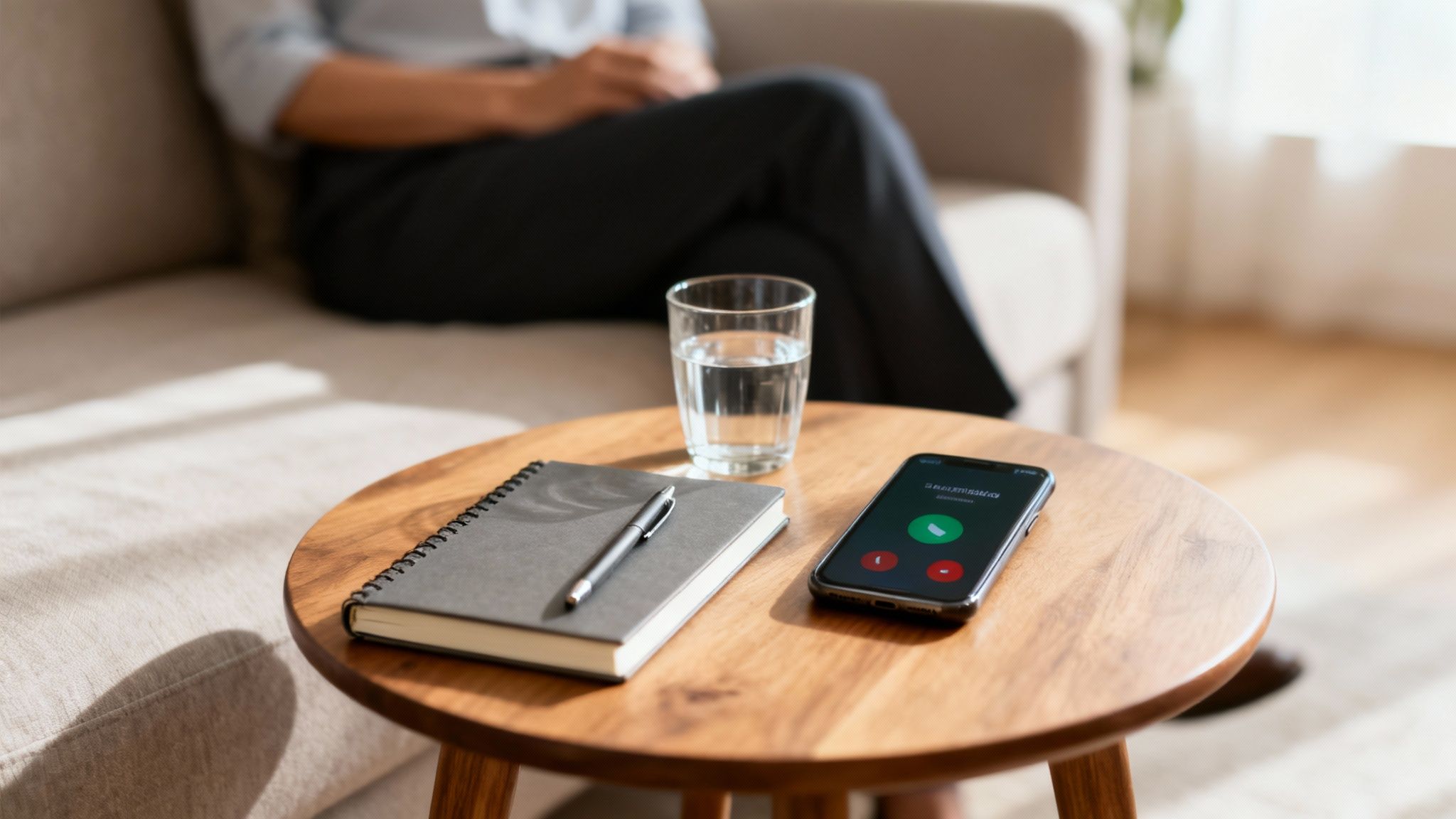
Have Necessities Nearby: Keep a glass of water, a box of tissues, and maybe a notebook and pen within easy reach. The last thing you want is to interrupt a meaningful moment because you’re thirsty.
Allow for Transition Time: If you can, give yourself five or ten minutes before the call just to sit quietly and gather your thoughts. It’s also really helpful to schedule a few minutes after the call to process things before jumping straight back into your day.
By understanding how a session flows and taking these small steps to prepare, you can walk into your counselling on the phone session feeling confident, comfortable, and ready to get started.
How Your Confidentiality and Safety Are Protected
If you’re thinking about starting counselling on the phone, it’s completely normal to wonder about privacy. Will it be secure? Is it as confidential as seeing someone in person? Let me put your mind at ease.
Your confidentiality isn't just an afterthought; it’s the absolute foundation of everything we do. Professional counsellors in the UK, myself included, are bound by strict ethical frameworks from bodies like the BACP (British Association for Counselling and Psychotherapy). These hold us to the very same high standards of privacy for phone therapy as face-to-face sessions.
What that means in practice is that everything we discuss is held in the strictest confidence. It's this core principle that builds the trust we need for you to feel safe enough to open up and explore your thoughts and feelings without holding back.
The Counsellor’s Commitment to Your Privacy
As your therapist, I take specific, practical steps to create a secure environment for every single one of our calls. This is a non-negotiable part of my professional practice and a duty I take very seriously.
Here’s what you can expect from my end:
A Secure and Private Setting: I always conduct our calls from a private, soundproofed room. You can be certain our conversation cannot be overheard.
Secure Record-Keeping: Any notes I make are anonymised and stored securely, fully compliant with GDPR (General Data Protection Regulation) to protect all of your personal data.
No Unauthorised Sharing: I will never share your information with anyone without your explicit consent. The only exception is in very rare situations where there is a serious risk of harm to you or others, which is a legal and ethical requirement we would discuss right from the start.
Your privacy is paramount. The therapeutic relationship is built on a bedrock of trust, and that trust begins with the assurance that our conversations are completely confidential. This professional boundary is what makes honest and open exploration possible.
Your Role in Protecting Your Own Confidentiality
While I’ve got my side of things covered, creating a confidential space is a shared responsibility. Taking a few simple steps at your end can make all the difference, ensuring your privacy is fully protected so you can focus completely on your session.
Think about where you’ll take the call. Find a spot where you won't be interrupted or overheard – that could be a room in your house, your car (while parked, of course!), or even during a walk in a quiet area. Popping in some headphones can also add an extra layer of privacy.
It’s completely understandable to have questions. For those who are particularly concerned about the security of their discussions, knowing how to encrypt phone calls can provide an extra bit of peace of mind. During our initial chat, I always encourage you to ask me anything you like about my privacy policy so you feel completely comfortable.
The need for this kind of confidential phone support is huge. To give you an idea, in a recent reporting period, Childline delivered 162,018 counselling sessions to young people in the UK. This just goes to show how crucial accessible, private phone-based services are. This shared commitment to safety and confidentiality is what allows services like theirs, and mine, to provide a trusted lifeline when people need it most.
How to Find the Right Phone Counsellor for You
Finding a counsellor who you just click with is probably the most crucial part of your whole therapy journey. That connection you build is just as vital as any technique or theory. When you're looking for support through counselling on the phone, it’s so important to find someone who isn't just qualified, but also feels like a good personal fit.
The search can feel a bit overwhelming, I know. But if you break it down into a few clear steps, it becomes much more manageable. You’re essentially looking for someone you can trust, feel comfortable opening up to, and who has the right kind of experience to help you.
Checking the Essentials
Before you even start thinking about rapport, there are some fundamental checks to make. Think of these as the non-negotiables that ensure you're working with a credible, ethical professional who is absolutely committed to your safety and wellbeing.
Start by looking for these key things:
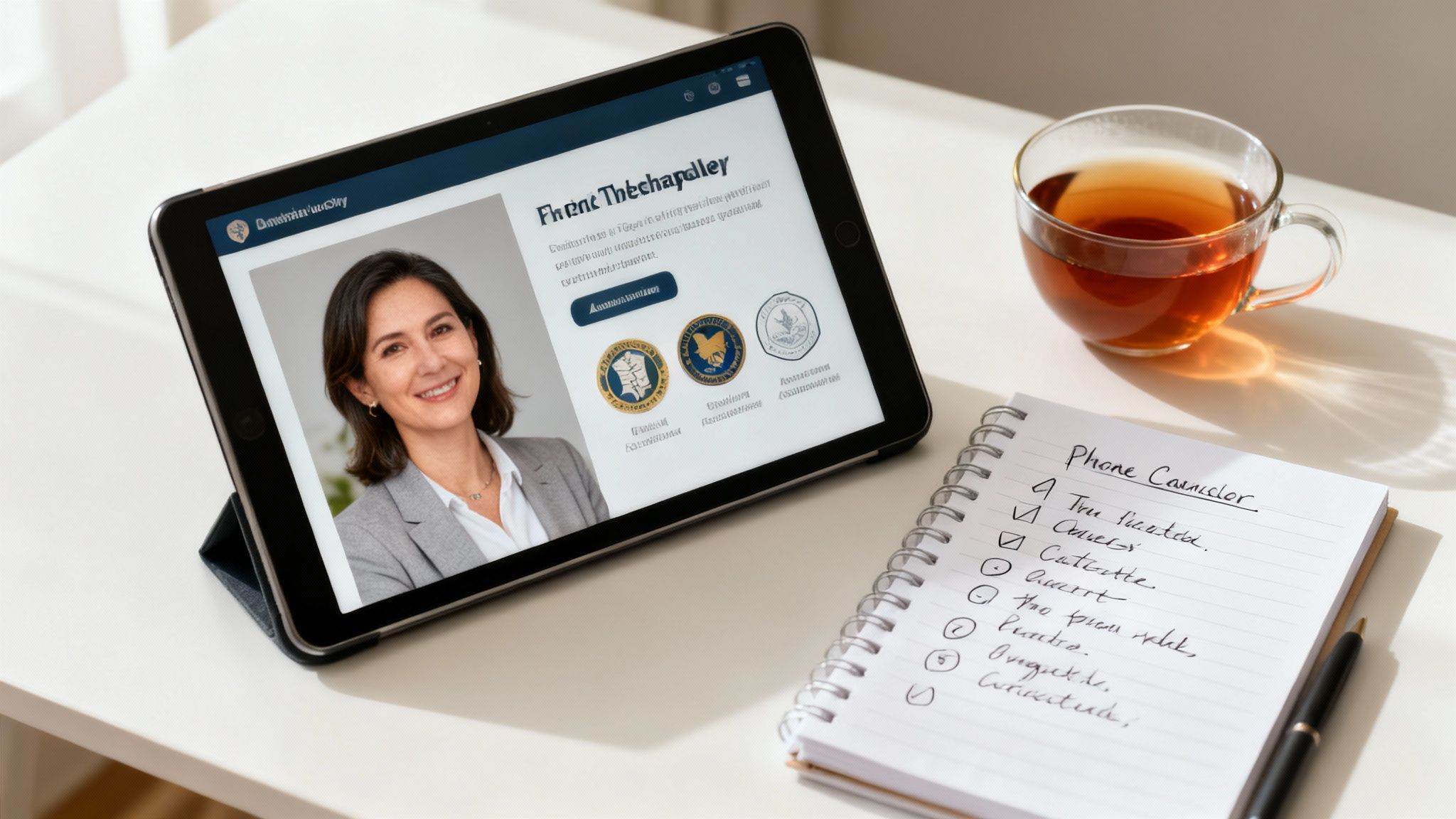
Qualifications and Training: Make sure the counsellor holds a recognised qualification in counselling or psychotherapy.
Professional Membership: Check they are a registered member of a professional body, like the BACP (British Association for Counselling and Psychotherapy). This means they're held to a strict ethical code.
Therapeutic Approach: Try to get a sense of their way of working. Do they focus on a particular approach like CBT or person-centred therapy? Their website should explain this in a clear, jargon-free way.
The right therapist doesn't just have the right qualifications; they have the right approach for you. Understanding how a therapist works helps you decide if their style will align with your personality and what you hope to achieve.
The Importance of the Initial Chat
Once you’ve shortlisted a few counsellors who tick the right boxes, the next step is usually an initial consultation call. This is typically a brief, no-obligation chat where you can get a real feel for the person behind the professional profile. It’s your opportunity to see if there’s a spark of connection and ask any questions you might have.
Use this time to ask about their specific experience with telephone therapy and how they create a focused, safe space over the phone. You can find a bit more guidance on this in my article about how to choose a therapist that's the right fit for you. The success of remote services is really well-established; NHS Talking Therapies in England, for instance, treated 670,000 people with a full course of therapy in just one year, with two-thirds seeing significant improvement. You can read more about these impressive outcomes on the NHS website.
My Approach at Therapy with Ben
Here at Therapy with Ben, I am a fully qualified and BACP-registered counsellor, and I work from a warm, empathetic, and person-centred place. I truly believe that you are the expert on your own life. My role is to provide a supportive, non-judgemental space where we can explore things together.
I offer a flexible service that includes phone counselling, online sessions, and my unique walk-and-talk therapy right here in Cheltenham. To get a better sense of my qualifications and how I work, please feel free to have a look at the About Ben page.
If you feel ready to take the next step, I invite you to book a no-obligation introductory chat. We can talk through how counselling on the phone, or one of my other services, could support you on your path.
Your Questions About Phone Counselling Answered
Deciding to start therapy naturally brings up questions, and that’s a good thing. It means you’re taking the time to consider what’s right for you. To help you find a bit of clarity, here are some answers to the most common things people ask about counselling on the phone.
Hopefully, this will help clear up any lingering doubts you might have, so you can feel more confident about taking that next step.
Is Phone Counselling as Effective as In-Person Therapy?
For many common struggles like anxiety and depression, research has shown that phone counselling can be just as helpful as meeting face-to-face. The real magic in therapy isn’t about the room you’re in; it's about the connection—the therapeutic relationship—you build with your counsellor.
In fact, some people find that the focused listening that happens during counselling on the phone, without any visual distractions, actually helps them connect on a deeper level. The widespread success of services like NHS Talking Therapies is a great real-world example of how effective this approach can be in helping people make real, positive changes.
What Happens if Our Call Drops?
This is a really common and practical worry, and any professional therapist will have a plan for it. Before we even begin, we'll agree on what to do if the line goes dead.
Usually, the plan is simple: I'll call you straight back. It’s always a good idea to make sure your phone is charged and you're in a spot with a decent signal, but we all know technology isn't perfect. We’re well-prepared for these little hiccups.
Can I Mix Phone Counselling with Other Types of Sessions?
Absolutely. A flexible or ‘blended’ approach to therapy often works wonders because it can be tailored to fit your changing schedule and what you feel you need at the time. Lots of people find that mixing things up is the perfect solution.
For instance, you might have weekly phone sessions for convenience and then book an in-person or a walk-and-talk session once a month for a different kind of experience.
Here at Therapy with Ben, we really champion this kind of flexibility. It means you can combine the ease of phone sessions with our unique walk-and-talk therapy in and around Cheltenham, creating a plan that genuinely fits your life.
How Much Does Private Phone Counselling Cost in the UK?
The cost can vary quite a bit, really. It often depends on the counsellor’s experience, their qualifications, and where they're based in the UK.
As a general ballpark figure, you can expect private therapy sessions to be somewhere in the range of £50 to £100 per hour. Some counsellors might offer a slightly lower rate for phone sessions as their overheads, like room hire, are lower. It’s always best to just ask and confirm the cost when you first get in touch. And while free services are sometimes available through the NHS, it’s worth knowing that you may face a waiting list.
Authenticity and Next Steps
At Therapy with Ben, I believe in authentic, client-led support. If you’d like to know more about my background or the different ways we can work together, have a browse—and when you’re ready, let’s connect.
Author: Therapy-with-Ben


Comments