


How to Reconnect With Yourself A Guide to Finding Your Way Back
Author: Therapy-with-Ben
Reconnecting with yourself isn’t about some grand, sweeping gesture. It’s about creating small, consistent moments of awareness that bridge the gap between who you are and who you feel you have to be. It all starts by figuring out why you feel disconnected in the first place and gently acknowledging that this feeling is just a normal signal asking for your attention.
Why You Might Feel Disconnected From Yourself
Ever feel like you’re just going through the motions? You’re busy, you’re productive, you’re ticking all the right boxes, but the person staring back from the mirror feels like a stranger. This sense of disconnection is a profoundly common experience in our demanding world. It’s not a sign you’ve failed; it’s more like a quiet alarm bell from your inner self.
This feeling rarely shows up overnight. It tends to creep in slowly, disguised by the general hustle of daily life. The space between your true self and the version of you that shows up every day widens with every little compromise, every ignored gut feeling, and every time you put external expectations ahead of your own needs.
The Weight of Modern Pressures
The pressure to succeed, to be constantly 'on', and to present a perfectly curated version of our lives online can be immense. This digital and societal overload shoves us into a reactive state, leaving very little room for quiet reflection. We can end up living a life that looks great from the outside but feels hollow because it’s not really ours.
Think about these common scenarios:
The Career Churn: You’ve climbed the ladder at work, but the role that once felt fulfilling now just feels draining. It leaves you questioning your purpose.
The Social Performance: You might spend weekends surrounded by people yet feel lonelier than ever because the connections just don't feel genuine or deep.
Major Life Transitions: Becoming a parent, changing careers, or navigating a loss can fundamentally shift your identity, leaving you feeling completely adrift. If you feel like your identity has been lost after a major life change, you can explore our guide on how to reclaim your identity when you feel you don't know who you are anymore.
These experiences are real, and they're widespread. In fact, feeling disconnected is often a symptom of underlying mental health challenges. Research shows that in England, one in five adults—or 20.2% to be exact—are living with a common mental health problem right now. That figure is climbing, especially among young adults, and often shows up as that persistent feeling of not being 'oneself'. You can read the full report on the state of mental health in England from Centre for Mental Health.
This feeling of disconnection is not a personal failing. It is a natural response to an unnatural amount of pressure, a signal that your core self needs nourishment and attention.
Understanding these 'whys' is the crucial first step. It shifts the internal conversation from self-criticism ("What's wrong with me?") to compassionate curiosity ("What is it that I actually need?"). This shift in mindset is the foundation you need to start rebuilding that vital connection to yourself.
Simple Practices for Daily Reconnection
Reconnecting with yourself doesn’t mean you need to blow up your life and start from scratch. Far from it. It’s actually about weaving small, consistent moments of awareness into your everyday routine, turning the mundane into something meaningful. The aim isn’t to force some dramatic breakthrough; it’s about gently, and repeatedly, turning your focus inwards. Think of it as building a bridge back to yourself, one small, steady action at a time.
And let’s be honest, the need for this has never been more pressing. Mental health services in England saw a record 5.2 million referrals in just one year, which is a staggering 37.9% increase since 2019. This isn't just a statistic; it's a reflection of a huge number of people feeling lost and trying to find their way back. Add to that the fact that 7.8% of adults report feeling lonely 'always or often', and you can see how easily that chasm between who we are and who we feel we’ve become can widen.
This is a common story. Life gets busy, demands pile up, and before we know it, we're running on autopilot.
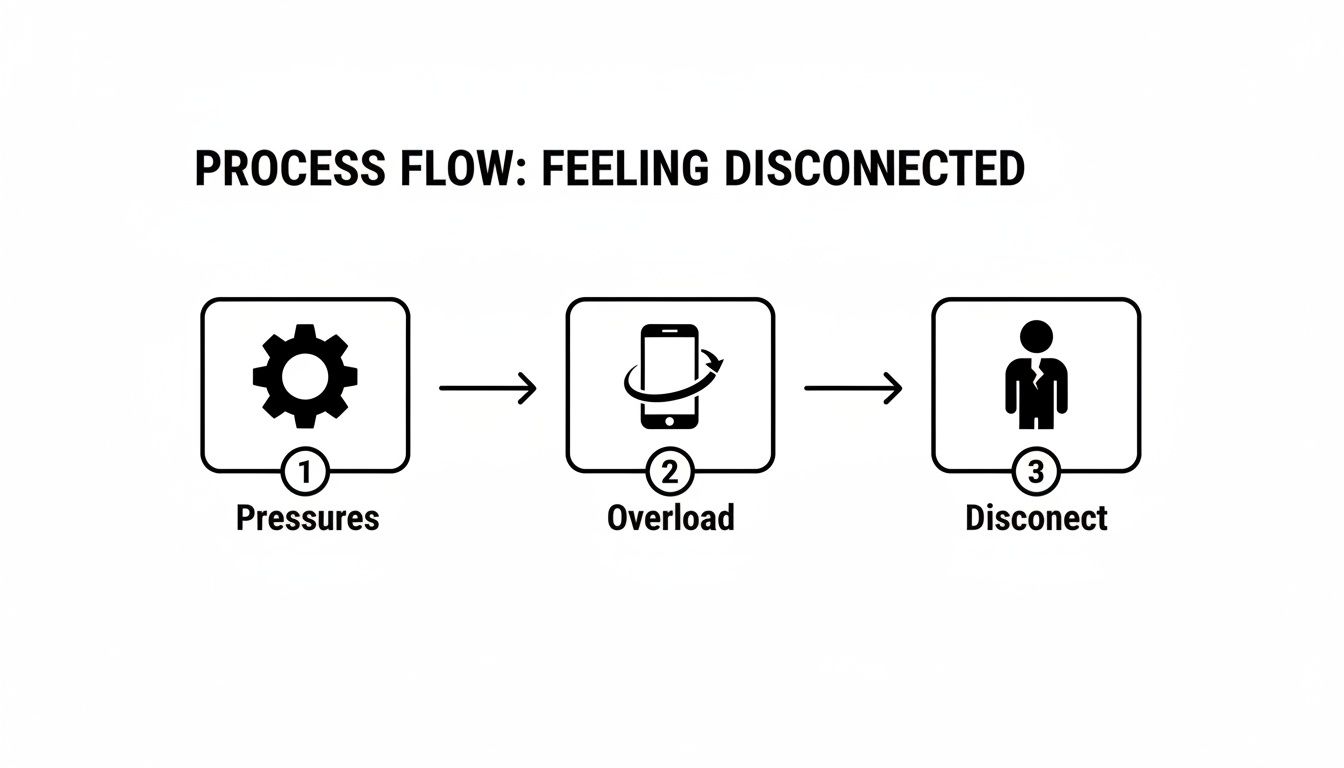
As the diagram shows, the constant hum of external pressures and digital noise can slowly but surely create a real sense of disconnection from our inner world. So, how do we start to close that gap?
Daily Reconnection Practices at a Glance
To get started, it helps to see what might fit into your day. This table offers a few simple ideas to choose from, depending on how much time you have and what you feel you need most right now.
Practice | Time Commitment | Primary Benefit | Best For |
|---|---|---|---|
Mindful Body Scan | 5-10 minutes | Grounds you in your body, calms the nervous system | When you feel scattered or stuck in your head |
Morning Journaling | 5-15 minutes | Provides clarity and sets a positive intention | Starting the day with focus and self-awareness |
Mindful Walk | 10-20 minutes | Connects you to your senses and the present moment | Breaking up the workday or finding a midday reset |
This isn't a prescriptive list, just a starting point. The key is finding a small practice you can genuinely stick with.
Begin with a Mindful Body Scan
A body scan is one of the most straightforward yet profound ways to anchor yourself in the here and now. All it involves is bringing a gentle, curious awareness to different parts of your body, simply noticing what’s there without any pressure to fix or change it. It’s less about forcing relaxation (though that often happens) and more about learning to listen to what your body is trying to tell you.
You can do this anywhere. Take five minutes at your desk, or try it in bed before you go to sleep. Just close your eyes, take a couple of deep, steadying breaths, and begin to mentally scan from your toes all the way up to your head. Notice any sensations—warmth, tingling, tightness, coolness—without judgement. This simple act starts to rebuild the bridge between your mind and body, a vital first step on the path back to yourself. There are many fantastic mind-body connection exercises out there if you want to explore this further.
Use Journaling for Morning Reflection
Before the day’s chaos kicks in and your to-do list takes over, spending just a few minutes with a journal can be incredibly grounding. This isn't about writing a masterpiece; it’s about honest, unfiltered reflection. The simple act of getting your thoughts out of your head and onto paper helps you make sense of them.
Here are three gentle prompts to get you started:
"What is one thing my body needs from me today?" This question immediately shifts your focus from external demands to your own internal wellbeing.
"When did I feel most like 'me' yesterday?" Thinking about these authentic moments helps you recognise what truly lights you up and makes you feel whole.
"What is one boundary I can set to protect my peace today?" This encourages you to be proactive about safeguarding your energy, rather than just reacting to whatever the day throws at you.
Reconnection is not about finding a 'new you'. It's about remembering and returning to the you that has been there all along, buried under layers of expectations and obligations.
Turn a Walk into a Mindful Moment
Mindfulness isn't something that can only happen on a meditation cushion. You can bring it into almost any part of your day, and a walk is a perfect opportunity. Whether you're heading to the shops or just taking a stroll through the park, you can transform it into a practice of presence. If you're curious, we have a whole guide exploring what mindfulness is in therapy and how it works.
Instead of letting your mind race with worries or plans, bring your awareness to the physical act of walking. Feel your feet making contact with the ground. Notice the natural rhythm of your breathing. Tune into your senses—what colours can you see in the leaves? What sounds are around you, both near and far? This simple shift pulls you out of the noise in your head and into the present, offering a powerful mental reset that connects you not just with yourself, but with the world around you.
Deeper Rituals for Weekly Self-Discovery
While those daily check-ins are brilliant for building the foundation, setting aside a bigger chunk of time each week for a deeper dive can really move the needle. Think of these not as chores, but as intentional, nourishing appointments with yourself. They’re designed to help you explore your inner landscape, find what genuinely lights you up, and consciously build a life that feels more you.
This is about moving beyond the five-minute check-in. It’s about creating enough quiet space to actually hear the whispers of your intuition – the stuff that usually gets drowned out by the relentless noise of everyday life. You're actively cultivating a relationship with yourself, just as you would with a close friend.

Unlock Your Inner World Through Creative Expression
Creativity is a fantastic conduit to your inner self. When we get creative without any pressure to produce a masterpiece, we sidestep that nagging inner critic and connect with a more intuitive, playful part of our brain. This has nothing to do with becoming a professional artist; it’s all about the process.
Give one of these a go once a week:
No-Rules Painting or Drawing: Grab some paper and whatever you have – paints, pastels, even just coloured pencils. Set a timer for 30 minutes and just go for it. Let your hand move, pick colours that feel good, and make marks without trying to create a recognisable picture.
Writing a Compassionate Letter: Write a kind, understanding letter to a younger you. Acknowledge what they went through, celebrate their strengths, and offer the wisdom and reassurance you wish they’d had. It’s a surprisingly powerful way to heal and reconnect with your own history.
Create a 'Joy List': Dedicate a page in your journal to an ongoing list of things that genuinely bring you joy, however small. The smell of rain, that first sip of coffee, a specific song. This simple act trains your brain to notice and appreciate these moments.
These practices can help you express feelings that are hard to put into words, giving you a direct line to the parts of yourself that have been quiet for too long.
Practice Intentional Connection and Redefine Your Social Circle
The people we spend time with have a massive impact on how connected we feel to our true selves. Some relationships lift us up and make us feel seen, while others are just… draining. Reconnecting with yourself often means taking a gentle, honest look at your social life.
Take a bit of time one weekend to think about your key relationships. Who leaves you feeling energised? And who leaves you feeling depleted or misunderstood? This isn't about dramatically cutting people off, but about making more conscious choices.
Reconnecting with yourself means nurturing relationships that reflect and support the person you are, not just the person others expect you to be. It’s about choosing quality of connection over quantity of interactions.
Once you have that clarity, you can start to set gentle boundaries. Maybe that looks like saying no to an invitation you know will wipe you out. Or perhaps it means making more of an effort to see friends who make you feel good about yourself. This conscious curation of your social energy is an act of profound self-respect.
Discover the Restorative Power of the Solo Date
Finally, one of the most powerful weekly rituals you can adopt is the 'solo date'. This is planned, committed time dedicated purely to enjoying your own company. It's a chance to remember that you are whole on your own and to explore things simply because you want to.
A solo date isn't just about being alone; it's about being intentionally present with yourself. Put it in your calendar like you would any other important appointment.
A few ideas to get you started:
Visit that museum or art gallery you've been meaning to check out.
Take a good book to a quiet café and properly savour a coffee.
Go for a long walk somewhere beautiful – a park or nature reserve – without your phone.
See a film that you’re actually excited about, not just one someone else wants to see.
The goal is to show yourself that your own company is valuable and your interests are worth pursuing. Over time, these weekly dates can become a real cornerstone of self-reliance and joy, reminding you that the most important relationship you'll ever have is the one with yourself.
Navigating Common Roadblocks on Your Journey
Embarking on the journey to reconnect with yourself is a deeply rewarding process, but let's be honest, it’s rarely a straight line. It's completely normal to hit a few bumps in the road. Life gets hectic, old habits are notoriously stubborn, and sometimes, the very feelings you’re trying to get to grips with can feel overwhelming.
Recognising these roadblocks isn’t a sign that you’re failing; it’s a crucial part of the whole thing. It’s an opportunity to practise a bit of self-compassion and build some real resilience. Think of this section as your troubleshooting guide for those common challenges, helping you stay on track with kindness and understanding.
Overcoming the Guilt of Putting Yourself First
One of the first and biggest hurdles many of us face is guilt. We're often wired to be the helpers, the providers, the problem-solvers for everyone else. So, taking a step back to focus on our own needs can feel incredibly selfish or unproductive, particularly when other people rely on us.
This guilt can be a powerful force, but it’s vital to start reframing it. Making time for yourself isn't selfish; it's essential maintenance. You know the safety briefing on an aeroplane? You have to put on your own oxygen mask before you can help anyone else. It's exactly like that. When you're nourished and connected to yourself, you show up as a better partner, parent, and friend for everyone else.
Guilt is often just a sign that you are challenging an old belief system. Acknowledge the feeling, thank it for trying to protect you, and then gently remind yourself that your wellbeing is not a luxury—it is a necessity.
Dealing with Inconsistency When Life Gets in the Way
So you start with the best of intentions. You journal for three days straight, you manage a mindful walk, and then a chaotic week lands on you like a tonne of bricks. Suddenly, your new self-care practices are the first things to get dropped. This can easily lead to a spiral of self-criticism, which just makes it even harder to get started again.
The key here is to ditch the 'all-or-nothing' thinking. Reconnecting with yourself isn't a pass/fail exam. Missing a day (or even a week) doesn’t wipe out your progress. The real practice is in how you come back to it.
Shrink the habit: If a 10-minute meditation feels impossible, just aim for three deep breaths.
Acknowledge the reality: Say to yourself, "It was a busy week, and I did my best. Today is a new opportunity."
Focus on the return: Celebrate the act of simply coming back to your practice, not how long your streak was. The return is where the real strength is built.
This approach turns a setback into a chance to practise self-compassion, which is a massive part of reconnecting with who you are.
Sitting with Difficult Emotions That Emerge
As you start to create a bit of quiet space for yourself, you might find that some uncomfortable feelings—sadness, anger, loneliness—begin to bubble up. This is a very normal, if unsettling, part of the process. For a long time, you may have been using busyness as a way to sidestep these emotions. When you finally slow down, they get their chance to be heard.
It’s tempting to immediately try and push these feelings away, but reconnection requires you to learn how to sit with them gently.
A Simple Practice for Difficult Feelings:
Name It: Acknowledge the emotion without any judgement. Just say to yourself, "This is grief," or "I'm feeling anxiety right now."
Locate It: Notice where you feel the emotion in your body. Is there a tightness in your chest? A knot in your stomach?
Breathe with It: Direct your breath towards that physical sensation. Imagine your breath creating a little more space around that feeling, not to get rid of it, but just to hold it.
You don't need to fix the emotion or make it vanish. The goal is simply to allow it to be there without letting it take over. This teaches you that you are capable of holding difficult feelings, which builds immense inner trust and resilience. It paves the way for a deeper, more honest connection with your true self.
When to Seek Professional Support in Cheltenham
The practices we've explored are powerful tools for self-discovery. For many people, they are more than enough to start rebuilding that essential, compassionate connection with themselves.
But sometimes, the disconnection runs a little deeper. The roadblocks can feel too big to navigate on your own. Realising you might need some extra support isn’t a sign of weakness—it’s an act of profound self-awareness and strength.
Self-help is brilliant, but it has its limits. If you've been trying these things and still feel stuck in a cycle of emptiness, numbness, or overwhelm, it might be time to think about professional support. Therapy provides a dedicated, confidential space to explore these feelings without judgement, guided by someone trained to help you make sense of it all.

Clear Signs It Might Be Time for Therapy
Knowing when to reach out can be tricky. It isn’t always a dramatic crisis. More often, it's a slow burn of persistent feelings that start to chip away at your daily life.
Does any of this resonate with you?
Persistent Emptiness: That feeling of numbness just isn't lifting, and it's starting to colour your whole experience of life.
Overwhelming Emotions: You feel hijacked by anxiety, anger, or sadness, making it tough to function at work or home.
Impact on Daily Life: Your sleep, appetite, relationships, or ability to concentrate are consistently suffering because of how you feel.
Feeling Stuck: You get the issues on an intellectual level, but you just can't seem to shift the underlying patterns or feelings alone.
No Real Support System: You feel like you have no one to talk to openly and honestly, without worrying about being judged.
These are all important reasons to find a safe space to work through what’s going on.
Introducing Therapy with Ben in Cheltenham
If you’re in Cheltenham and looking for that dedicated support, I offer a few different ways we can work together, designed to meet you wherever you are. My approach is all about creating a comfortable, trusting environment where you can explore what you're facing and find a way forward that feels right for you.
The goal is always to empower you, giving you tools and insights to help you not just cope, but thrive. If you're wondering what that looks like in practice, you can get some practical tips from our guide on finding the right Cheltenham therapist.
This journey back to yourself is vital. The consequences of prolonged disconnection can be incredibly serious. Harrowing statistics show that suicidal thoughts among 16-74-year-olds in England have nearly doubled from 3.8% in 2000 to 6.7% recently. This really highlights the critical need for meaningful connection and support. My therapeutic approaches are designed to help you rebuild that connection from the ground up.
Different Paths to Reconnection
Everyone's journey is unique, which is why I offer flexible ways to do therapy.
Walk and Talk Therapy: We take the session outdoors, walking through Cheltenham's beautiful parks. The simple act of walking side-by-side can make difficult conversations feel more manageable, and being in nature has a proven calming effect on the nervous system.
Face-to-Face Sessions: For those who prefer a more traditional setting, I offer confidential sessions in a calm, private therapy room. It's a space dedicated entirely to you and your inner world.
Online Counselling: Offering real flexibility and convenience, online sessions mean you can access support from the comfort of your own home, fitting therapy into a busy schedule.
Therapy isn't a last resort for when things are broken. It's a proactive, empowering tool you can use to deepen your self-understanding and accelerate your journey back to yourself.
A Space for Everyone
It’s so important that you feel understood and at ease with your counsellor. As a male counsellor, I offer a space where men can feel comfortable exploring emotions and vulnerabilities they might not feel able to discuss elsewhere.
I also have experience working with neurodiversity, understanding that the ways we all process the world are beautifully varied. The therapeutic approach is always adapted to respect and work with your unique way of thinking and being.
Whether you're neurodivergent or simply looking for a therapist who gets it, the aim is always to create a space where you can show up, exactly as you are, and be met with acceptance and understanding.
Got Questions About Reconnecting?
Deciding to reconnect with yourself is a massive act of self-respect, but it's totally normal for a few questions and a bit of uncertainty to bubble up as you start. I get asked these all the time, so I’ve put together some straightforward answers to help guide you on your path.
This whole process is deeply personal, and there’s no single ‘right’ way to go about it. The real aim is to stay curious, be kind to yourself, and remember that every small step you take inwards is a win.
How Long Does It Take to Reconnect With Yourself?
Honestly, there’s no set timeline. Think of this as an ongoing journey, not a race with a finish line. Some people feel a real shift within a few weeks of being consistent, while for others it might take several months before they notice a proper change. The pace isn't what's important here; the process is.
Your own history, what’s going on in your life right now, and how disconnected you feel will all play a part. It’s far more helpful to focus on the progress you’re making rather than chasing some idea of perfection. The goal isn't really to 'arrive' anywhere, but to build a lasting, compassionate relationship with yourself that grows and changes as you do.
What Is the Single Most Important First Step?
The most crucial first step is just to acknowledge that feeling of disconnection—without judging yourself for it—and then to create a small, intentional space just for you. This doesn't have to be some grand, time-consuming gesture.
It could be as simple as dedicating five minutes each morning to sit quietly with a cup of tea before you even glance at your phone. This one small act sends a powerful signal to your subconscious: you are a priority. It’s less about what you do and more about the intention behind it. By carving out that tiny pocket of stillness, you open the door for a bit of self-awareness to walk through.
The most powerful move you can make is the first one. It’s the decision to turn your attention inwards, even for just a moment, and listen to what’s there.
Can I Reconnect With Myself Without Therapy?
Absolutely. Plenty of people use self-help practices to build a much stronger inner connection. Powerful tools like mindfulness, journaling, getting out in nature, and finding a creative outlet can make a massive difference on their own.
That said, therapy can be a brilliant accelerator, especially if your sense of disconnection is tangled up with past trauma, deep-rooted anxiety, or patterns you feel completely stuck in. A good therapist provides a safe, non-judgemental space and professional guidance to help you navigate those complicated emotions and behaviours more effectively and safely. You can always start on your own and then decide later if some extra support would be helpful.
My Life Is Too Busy. How Can I Find the Time?
This is probably the most common—and completely valid—concern I hear. When your schedule is already overflowing, the thought of adding one more thing can feel downright impossible. The key is to start ridiculously small and weave these practices into things you’re already doing.
This isn’t about adding big new tasks to your to-do list; it’s about slotting small moments of awareness into the life you already lead.
Habit Stacking: While the kettle is boiling for your morning cuppa, just take three conscious, deep breaths.
Micro-Moments: While you're brushing your teeth, do a quick check-in. How does your body feel? Notice the sensation of your feet on the floor.
Shrink the Goal: Instead of aiming for a 20-minute meditation that you'll never get to, just commit to one single minute of mindful breathing at your desk between meetings.
By starting small, you make it achievable. You start to build a bit of momentum and prove to yourself that finding time for this is possible, even on the most frantic of days.
At Therapy with Ben, I provide a safe and supportive space to explore these challenges and find your way back to yourself. Whether through Walk and Talk therapy in Cheltenham's beautiful parks or through confidential online sessions, we can work together to build a stronger connection with your inner world. Visit my website to learn more about how I can support you on your journey at https://www.therapy-with-ben.co.uk.


Comments