


Childhood Trauma Therapy: A Path to Healing and Resilience
Childhood trauma therapy is a special kind of counselling, one that’s focused on helping adults work through and heal from difficult, painful, or distressing things that happened before they turned 18. The idea isn't to somehow wipe the slate clean or erase the past. Instead, it’s about lessening the hold those memories have on your life right now.
It's about creating a safe, understanding space where you can process what happened, allowing for real emotional healing and helping you build resilience for the future.
Understanding How Childhood Trauma Shapes Adult Life

Think of childhood trauma like a crack forming in the foundations of a house while it’s still being built. For years, the house might look perfectly fine from the outside. But underneath, that instability can cause all sorts of ongoing, nagging problems – a door that never quite shuts properly, a window that’s always draughty, or a damp patch in the walls that just won’t go away.
In a similar way, tough experiences early on create a sort of blueprint for how we see the world, ourselves, and the people around us. The impact, especially when it was ongoing or happened within important relationships, can run incredibly deep.
What Actually Counts As Childhood Trauma?
When we hear the word ‘trauma’, our minds often jump to big, obvious events like physical abuse or a serious accident. But often, it's the quieter, less visible experiences that leave the most complicated marks. These can include things like:
Emotional Neglect: This is about what wasn't there. It's when a child’s feelings are consistently ignored, dismissed, or made to feel unimportant by the people meant to be caring for them.
Emotional Unavailability: This happens when a parent is physically there but just isn't present emotionally. They might be struggling with their own mental health, an addiction, or their own unresolved past.
Inconsistent Caregiving: Growing up in a chaotic, unpredictable home where the rules, affection, and sense of safety are always changing can be incredibly unsettling for a developing brain and nervous system.
Medical Trauma: Frightening or long-term medical procedures can completely overwhelm a child's ability to cope, leaving behind a lasting feeling of helplessness and fear.
These kinds of experiences literally shape how our brains get wired. A child who grows up with an emotionally distant parent might learn deep down that their needs don't really matter, which can lead to a real struggle with self-worth as an adult. If you want to dive deeper into how these early bonds affect our adult relationships, you can learn more about attachment theory and how it shapes you in our detailed guide.
A core aspect of trauma is that it's not just about what happened to you; it's about what happened inside you as a result. It's the internalisation of fear, shame, or the belief that you are alone in your struggle.
The Lasting Impact on Adulthood
That cracked foundation can show up in all sorts of ways in adult life, often in patterns we just can't seem to break. Maybe you find yourself in the same kind of unhealthy relationships over and over. Perhaps you struggle with a constant, humming anxiety, or feel a sense of emptiness you can't quite put your finger on.
This is where childhood trauma therapy comes in as an essential tool for repair. It’s a supportive and structured process for going back to that original blueprint. The goal isn't to tear the house down and start from scratch. It’s to carefully reinforce the weak spots, mend the cracks, and build a much more stable and resilient foundation for your adult life.
Recognising the Signs of Unresolved Trauma
Many of us go through adult life feeling the echoes of things that happened long ago, often without making the connection between those past events and the challenges we face today. The impact of childhood trauma isn't always a big, dramatic flashback. More often, it’s a quiet, persistent undercurrent that shapes our emotions, our reactions, and even our physical health.
Learning to spot these signs is the first, and most important, step in understanding your own story and figuring out what kind of support you need.
It can feel a bit like trying to run your computer with a dozen heavy programmes open in the background. Everything feels slow, the system crashes for no obvious reason, and you just can’t figure out why things aren’t running smoothly. Those hidden processes are draining your energy, affecting everything you do, even if you’re not consciously thinking about them.
Emotional and Psychological Signs
The emotional weight of unresolved trauma often shows up as a constant, low-level hum of distress. It might not be one single, overwhelming feeling, but a mix of persistent states that have simply become your 'normal'.
Persistent Anxiety or Hypervigilance: This is that feeling of being constantly on edge, like you're just waiting for the other shoe to drop. It’s your nervous system stuck on high alert – a defence mechanism that might have been essential once, but isn't serving you anymore.
Emotional Numbness or Dissociation: Sometimes, the complete opposite happens. You might feel disconnected from your own feelings or even your body, like you’re just watching your life happen from a distance. This is a common coping strategy to avoid being overwhelmed by painful emotions.
Difficulty with Self-Esteem: A deep, nagging feeling of being flawed, unworthy, or carrying a huge amount of shame is incredibly common. Difficult early experiences can install a core belief that you are somehow ‘bad’ or just not good enough.
Intense Emotional Reactions: Ever found yourself having a massive emotional reaction to something relatively small? A minor setback or a simple disagreement can trigger surprisingly intense anger, fear, or sadness. This is what happens when a present-day event pokes at an old, unhealed wound.
These feelings often feed into each other. For instance, the sheer stress of holding everything in can lead directly to that persistent anxiety. Learning to spot the signs and impacts of bottled-up emotions can give you a clearer picture of how the past might be showing up in your present.
Behavioural and Relational Patterns
How we act and connect with others is profoundly shaped by our earliest experiences. When trauma is part of that foundation, certain challenging patterns can pop up in adulthood. It’s crucial to remember these aren't character flaws; they are survival strategies you learned along the way.
Unresolved trauma often leads to a cycle of reenactment. We might unconsciously find ourselves in relationships or situations that feel familiar—even if they’re unhealthy—because the brain is drawn to what it knows.
Have a think about whether any of these patterns feel familiar:
Relationship Difficulties: This can show up in different ways. Maybe it's an intense fear of being abandoned, which makes you cling to partners. Or it could be a deep-seated fear of intimacy, causing you to push people away before they can hurt you.
Addictive Behaviours or Compulsions: Using things like alcohol, drugs, food, or even work to numb emotional pain is a very common way to cope. It’s a way of getting some temporary relief from the distress going on inside.
Struggles with Boundaries: You might find it incredibly difficult to say "no," or you might consistently put everyone else's needs before your own. This often comes from a learned belief that your needs simply aren't as important.
Physical Symptoms
The body keeps the score. Trauma isn't just stored in our memories; it's held in our nervous system. This chronic, underlying stress can show up in very real, physical ways that are easy to dismiss as something else.
Below is a quick summary of how these signs can manifest across different areas of your life.
Common Adult Manifestations of Childhood Trauma
Category of Sign | Common Examples and Descriptions |
|---|---|
Emotional | Persistent anxiety, feeling 'numb' or detached, intense mood swings, chronic shame or low self-worth, and difficulty trusting others. |
Behavioural | Repeating unhealthy relationship patterns, addictive tendencies (e.g., substance use, overworking), difficulty setting boundaries, and avoiding triggers. |
Physical | Chronic fatigue or exhaustion, unexplained aches and pains (like headaches or muscle tension), digestive issues, and a weakened immune system. |
Seeing any of these signs in yourself isn't a reason to be hard on yourself.
Far from it. Instead, try to see it as your mind and body sending you a clear message that it's time for some healing. This awareness is the crucial first step on the path to seeking support and starting a journey towards a more peaceful and fulfilling life.
How Evidence-Based Therapy Actually Heals Childhood Wounds
Taking that first step into therapy for childhood trauma can feel huge. For many, there's a real fear of being forced to talk endlessly about painful memories. But that’s not really how modern, evidence-based therapy works. The goal isn’t to make you relive things, but to help you reprocess them in a safe, controlled way so they stop having such a powerful hold over your life today.
Here’s an analogy I often use: think of an unprocessed traumatic memory as a messy, chaotic file left wide open on your computer desktop. It’s always there in the background, slowing everything down, and it has a nasty habit of popping up when you least expect it. Therapy is the process of properly labelling that file, understanding its contents, and finally storing it away. The file isn't deleted, but it stops disrupting your daily life.
This work is grounded in well-researched methods designed to calm the nervous system and help you reshape the stories you’ve built around your past. It’s about empowerment—about finally feeling like you’re back in control of your own narrative.
The infographic below shows just how many different ways trauma can show up in our lives, touching on the emotional, behavioural, and physical signs that these therapies are designed to address.
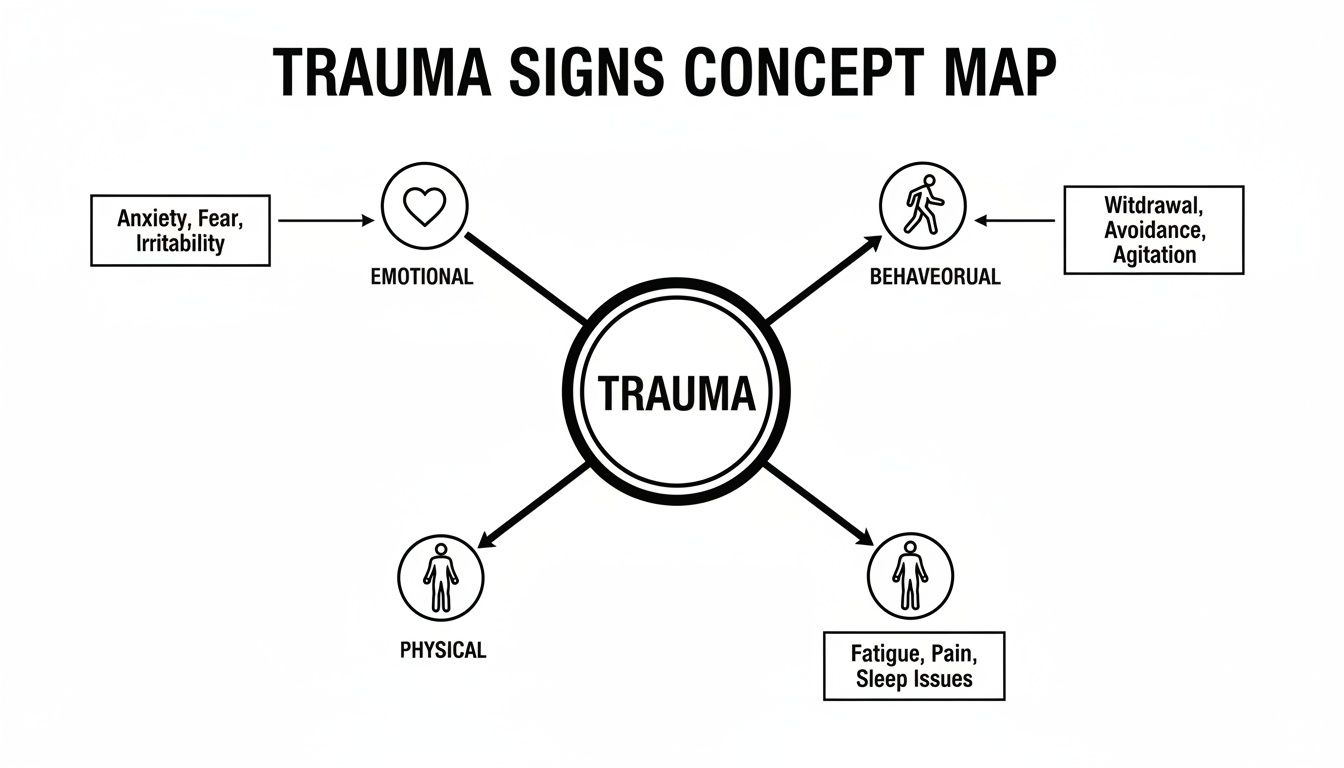
As you can see, the effects of trauma aren't just in our heads. It’s a whole-body experience, affecting how we feel, how we act, and even how we physically exist in the world.
Rewriting Your Story with Trauma-Focused CBT
Trauma-Focused Cognitive Behavioural Therapy (TF-CBT) is one of the most effective and widely studied approaches out there. It works by helping you spot and challenge the unhelpful beliefs that often take root after a traumatic experience.
For instance, someone might carry a deep-seated belief like "I am unsafe" or "It was my fault." TF-CBT gives you practical tools to look at these thoughts, almost like a detective, examining the evidence for and against them. Over time, you start to build a more balanced and compassionate perspective, gently untangling the knots that have kept you stuck.
A key principle here is that changing our thought patterns can directly change our feelings and behaviours. By learning to rewrite the narrative, you begin to change your emotional response to the memory.
In the UK, the need for these effective methods is stark. Recent studies show that over 7% of young people develop PTSD by the time they're 18. In one significant study comparing TF-CBT to other treatments, those who received trauma-focused therapy showed much bigger improvements in PTSD, anxiety, and depression symptoms after 11 months. You can read more about the research into trauma-focused therapy's effectiveness to see the data for yourself.
Reprocessing Memories with EMDR
Eye Movement Desensitisation and Reprocessing (EMDR) is another powerful approach that helps the brain process memories that have become "stuck." When something traumatic happens, the brain can struggle to file it away correctly, leaving the memory—and all its associated emotions—feeling raw and easily triggered.
EMDR uses what’s called bilateral stimulation. This often involves guided eye movements, but can also use sounds or gentle taps, while you briefly bring the traumatic memory to mind. This process seems to give the brain's natural information-processing system the nudge it needs to get working again, allowing the memory to finally be stored properly.
It’s less about talking through the trauma in detail and more about letting your brain do the heavy lifting. Many people find that after EMDR, the memory is still there, but it no longer carries the same intense emotional punch.
Releasing Trauma from the Body with Somatic Therapies
Sometimes, words just aren't enough, because trauma truly lives in the body. Somatic therapies are built on this very understanding—that traumatic experiences leave a physical imprint on our nervous system. This can lead to symptoms like chronic muscle tension, being constantly on high alert (hypervigilance), or feeling disconnected from your own body.
These therapies focus on bodily sensations to help release that stored tension. Techniques might include:
Mindfulness: Gently bringing your attention to physical sensations without judging them.
Grounding Exercises: Simple activities that help you feel more connected to the present moment and grounded in your body.
Breathwork: Using specific breathing techniques to help regulate and calm your nervous system.
At its core, this work is about creating a sense of safety within your own skin, teaching your nervous system that the threat has passed. All of these methods are central to a trauma-informed approach, which puts your physical and emotional safety first. You can explore our guide on what is trauma-informed care to learn its core principles for a deeper understanding.
By integrating these evidence-based techniques, childhood trauma therapy offers a clear and hopeful path toward lasting recovery.
Choosing the Right Therapist and Therapeutic Approach
Starting therapy for childhood trauma is a huge step, and finding the right person to walk that path with you is probably the most important decision you'll make. It’s about more than just qualifications hanging on a wall; it’s about finding a professional you genuinely connect with, someone you can build real trust with. That therapeutic relationship is the very foundation of all the healing work to come.
It’s also about more than just picking a type of therapy from a list. It's about finding an approach and a setting that feels right and, crucially, safe for you. Everything from a therapist's specific training in trauma to the simple human feeling of being comfortable in their presence matters. Taking a bit of time to think about these things will make all the difference in finding a space where you feel supported enough to be vulnerable and do the real work of healing.
Key Qualities in a Trauma Therapist
When you start looking, it helps to know what you’re looking for. Not every counsellor has specialist training in trauma, and for this kind of work, finding someone with the right background is absolutely essential for your safety and for the therapy to be effective.
Here are a few crucial things to keep in mind:
Trauma-Informed Training: Look for a therapist who specifically says they are trauma-informed. This isn't just a buzzword; it means they get the profound impact trauma has on the brain, body, and behaviour. Crucially, it means they will always prioritise your safety and empowerment.
Experience with Your Concerns: A therapist with experience in the specific things you’re dealing with—whether that’s complex trauma, neglect, or difficulties with attachment—will have a much deeper, more nuanced understanding of what you're going through.
A Feeling of Connection: Trust your gut. During an initial chat, pay attention to how you feel. Do you feel properly heard? Does their way of talking feel right for you? This isn't a minor detail; it's a huge part of what makes therapy work.
Exploring Different Therapeutic Environments
The classic image of therapy—sitting in a quiet room, talking face-to-face—is a powerful and effective setup for many people. It provides a private, contained space that's perfect for exploring difficult feelings. But it’s not the only way. Different settings can bring unique benefits, especially when it comes to processing trauma.
To make sure you find a space that truly supports you, I offer a few different ways of working. This flexibility is so important, because what works for one person might not be right for another. We can talk through the options to find what feels most comfortable for you to begin your healing journey.
Finding the right therapeutic fit is like finding the right key for a specific lock. The approach must align with your personal needs, experiences, and comfort levels to truly unlock the potential for healing.
The Benefits of Walk and Talk Therapy
For some people, the idea of sitting opposite a therapist can feel a bit intense or confrontational. Walk and Talk therapy is a fantastic alternative that takes our sessions outdoors. There’s something about walking side-by-side in nature that can make conversations flow more easily and feel less formal.
This approach has some real advantages:
Reduces Intensity: Walking next to someone, rather than staring directly at them, can take the pressure off. It often makes it easier to open up about difficult topics.
Calms the Nervous System: The gentle, rhythmic motion of walking is naturally soothing for our nervous system. It can help dial down feelings of anxiety and hypervigilance, helping you feel more grounded in the moment.
Encourages Freer Thinking: Being outdoors and moving your body can help shift stuck thought patterns. New ideas and insights often pop up more naturally when you’re not stuck in one place.
Considering a Male Counsellor
The gender of your therapist can also be a significant factor in your decision. For some, working with a male counsellor can offer a unique and healing space to explore certain issues. It might provide a safe environment to process past experiences involving men, challenge old beliefs, or work through themes related to trust, fatherhood, or masculinity in a supportive way. The most important thing is always to find a therapist you feel safe with and can build a strong rapport with, regardless of their gender.
Ultimately, choosing the right childhood trauma therapy is about honouring what you need. Whether that's in a traditional office, online, or walking in a park, the most effective approach is the one that empowers you to heal in your own time. To get a feel for other creative modalities, you might want to read up on what art therapy is and see how creative expression can also play a valuable part in the healing process.
Why Neurodiversity-Affirming Trauma Therapy Matters
A ‘one-size-fits-all’ approach to therapy can feel invalidating for anyone, but it often completely fails neurodivergent individuals. When your brain is wired differently, standard therapy models that don't account for this can miss the mark—and sometimes, they can even cause more harm than good. This is exactly why a neurodiversity-affirming approach is so critical when we talk about healing from childhood trauma.
This way of working begins from a place of understanding and acceptance. It sees conditions like Autism or ADHD not as problems to be fixed, but as natural variations in how the human brain works. This perspective fundamentally changes how a therapist approaches trauma, ensuring the process is genuinely supportive, not just another situation where you feel you have to conform to fit in.
How Trauma Can Look Different for Neurodivergent People
Trauma shows up in unique ways for neurodivergent individuals. For someone with Autism, for example, sensory sensitivities can mean an environment that others find perfectly normal feels overwhelming, chaotic, and threatening. This can easily lead to traumatic stress. The constant effort of simply trying to navigate a world not built for your brain can, in itself, be a source of ongoing, low-level trauma.
This is where the idea of ‘masking’ becomes so important. Masking is the exhausting, often unconscious, effort to hide or suppress your natural neurodivergent traits to meet neurotypical expectations. This constant self-monitoring is incredibly draining. It can seriously compound the effects of other childhood traumas, leaving you feeling profoundly disconnected from who you really are.
A neuro-affirming therapist understands that masking is a survival strategy, not a character flaw. The therapy room should be the one place where you can finally take the mask off without fear of judgement.
This understanding is crucial because standard therapies might misread neurodivergent communication styles or emotional expressions as resistance or a lack of engagement. A neuro-affirming counsellor knows these are simply differences to be respected, not problems to be solved.
Adapting Therapy to Your Unique Needs
A huge part of neurodiversity-affirming therapy is adapting the environment to support you. Traditional therapy settings can be full of sensory triggers—uncomfortable chairs, buzzing lights, or the pressure of intense, direct eye contact. These things can put your nervous system on high alert, making it almost impossible to do the deep, vulnerable work of healing.
Learning to advocate for your needs is a powerful part of this process. This might look like:
Flexible Formats: Requesting sessions that work for you, like online therapy from your own comfortable space or trying Walk and Talk therapy. The gentle movement and natural setting of walking outdoors can be especially calming for an overstimulated nervous system.
Clear Communication: Asking for direct, literal communication if you find social nuances tricky, or using other ways to express yourself, like writing or drawing.
Sensory Comfort: Talking openly about your sensory needs. This could mean dimming the lights, using fidget tools, or not having to maintain direct eye contact during difficult conversations.
The situation in the UK really highlights the need for this kind of tailored support. Statistics show that just 39.6% of children with diagnosable mental health needs actually get access to care, and this gap is often even wider for neurodiverse individuals who face extra barriers. With 52% of 17-23 year olds reporting that their mental health is getting worse, it's essential that the therapy we offer is truly effective and accessible for everyone. You can read more about the research on youth mental health access to get a sense of the full challenge.
Ultimately, neurodiversity-affirming childhood trauma therapy ensures you are not just a passive recipient of care, but an active partner in a process designed to honour your unique way of being in the world.
Taking Your First Steps Towards Healing
Moving from understanding to action is often the hardest part, but it’s where real, meaningful change begins. You’ve explored how childhood trauma can shape your adult life and learned about the effective ways therapy can help repair those foundations. Now, it’s time to focus on a clear, simple path forward, turning that insight into your first brave step.
The journey of healing can feel overwhelming, but you don't have to walk it alone. Whether you’re looking for support in Cheltenham or prefer the flexibility of online sessions, the most important thing is finding a process that feels safe and right for you. It all starts with a single, manageable step.
How to Get Started
Deciding to start childhood trauma therapy is a decision to invest in yourself and your future. I keep the process straightforward and centred around you, right from the very beginning.
Reach Out for an Initial Chat: The first step is simply to book a free, no-obligation initial consultation. This is just a conversation for us to connect, discuss what’s on your mind, and see if we’re a good fit.
Discuss Your Needs: You can share as much or as little as you feel comfortable with. It’s your opportunity to ask questions about my approach, including options like Walk and Talk therapy, and for me to understand what you hope to achieve.
Decide on a Path Forward: Together, we’ll decide on the best way to proceed. There’s absolutely no pressure; the choice is always yours.
Finding the Right Support in a Challenging System
Getting timely mental health care can be a real challenge. In the UK, with NHS Talking Therapies having only a 37.8% recovery rate for PTSD and the use of acute mental health beds for crises surging, finding effective, accessible support is crucial. Services offering flexible options can help bridge this gap, especially for the many people who aren't receiving psychological therapy through official channels. You can learn more about the current landscape of mental health access on gov.uk.
For some, the healing journey involves more complex challenges. In these cases, understanding and accessing integrated mental health and addiction services can be a vital first step.
Remember, the goal isn't to erase the past, but to create a future where its weight no longer defines your present. Taking this first step is an act of profound hope and strength.
You’ve already done the hard work of seeking out information. Now, you’re ready to start healing.
Any Questions About Trauma Therapy?
It’s completely natural to have questions when you’re thinking about starting a healing journey. For many people, it’s a mix of hope and a bit of uncertainty. I’ve put together some straightforward answers to the things people often ask when considering therapy for childhood trauma, just to help you feel a bit more prepared.
How Long Does Childhood Trauma Therapy Take?
There’s no magic number here, because everyone’s story is different. How long therapy takes really depends on what you’ve been through and what you’re hoping to get out of our time together. It’s your personal journey, not a race.
For some, if we’re focusing on specific symptoms with something structured like Trauma-Focused CBT, you might start feeling a real difference within a few months. For others, especially if the trauma is more complex or has been around for a long time, the work might be more of a longer-term process of self-discovery. We’ll work together to set goals that feel right for you, making sure the pace is always comfortable and sustainable.
Will I Have to Talk About Things I Don’t Want To?
Absolutely not. A core part of trauma-informed therapy is making sure you feel emotionally and psychologically safe at all times. You are always in the driver's seat when it comes to what you share and when.
A good therapist will never push you to talk about a memory or experience before you’re ready. The first job is always to help you build coping skills and emotional resources, creating a solid foundation of safety.
This groundwork means that if and when you do decide to explore difficult memories, you feel ready and supported. Therapy is a partnership built on trust, and your boundaries will always be respected. It’s about feeling empowered, not being re-traumatised.
Is Online Therapy as Good as Meeting in Person?
Yes, for many people, it really is just as effective. Plenty of research has confirmed that it delivers similar results to in-person sessions for all sorts of issues, including trauma. The biggest plus is that it’s accessible – you can have your session from a space where you already feel comfortable and safe.
Different formats also offer their own unique benefits. For instance:
Walk and Talk therapy mixes gentle movement with counselling, which can be incredibly calming for the nervous system.
The side-by-side nature of walking outdoors often feels less intense than a face-to-face chat for some people.
Just being in nature has its own therapeutic qualities that really support the healing process.
Ultimately, the best format is whatever works for you and helps you feel safe enough to open up.
What Should I Expect in My First Therapy Session?
Think of the first session as a relaxed, non-judgemental chat where we can get to know each other and see if we’re a good fit. It’s an introduction, not an interrogation.
You can share as much or as little as you’re comfortable with about what’s brought you here. I’ll probably ask a few gentle questions to get a sense of your situation and what you’re hoping for. Most importantly, it's your chance to ask me anything you want about how I work or what therapy involves. The main goal is just to establish a connection and figure out the best way forward together.
Posted by: Therapy-with-Ben
If you feel ready to take that first step, Therapy with Ben is here to support you. Book a free initial consultation today to begin your journey in a safe and compassionate space.


Comments