


How to deal with seasonal depression: Practical tips to lift your mood
Author: Therapy-with-Ben
As the days shorten and that familiar chill settles over the UK, it’s all too easy to write off a low mood as just the ‘winter blues’. But when we’re talking about how to deal with seasonal depression, it’s important to acknowledge that it's often something much deeper. The key is to be proactive – boosting your light exposure, keeping a solid daily routine, and knowing when it's time to reach out for professional support if things feel overwhelming.
Understanding Seasonal Depression in the UK

As a therapist, I think it's vital to first validate these feelings. What you’re going through is very likely Seasonal Affective Disorder (SAD), a recognised type of depression that’s directly tied to the changing seasons. The most important first step is simply understanding this is a genuine condition. It isn't a personal failing or something you just need to "get over."
If you find yourself struggling as the skies get darker, please know you are far from alone. SAD is surprisingly common here in the UK; the NHS estimates that around 2 million people are affected by it each year. Interestingly, some research suggests women might be up to four times more likely than men to experience it. If you want to dig into the data, you can explore more insights about seasonal mental health challenges.
My goal with this guide is to offer a compassionate and genuinely practical resource. We'll walk through effective strategies you can start using today to manage your symptoms and feel better during these tougher months. It’s all about building a personal toolkit of coping skills that actually work for you.
What Makes SAD Different from the 'Winter Blues'?
While people often use these terms interchangeably, there’s a clear and important distinction between the two. Getting this right is the first step in knowing how to approach things.
The 'Winter Blues': This is a very common, much milder feeling. You might feel a bit more sluggish, less like socialising, and generally a bit 'meh' during autumn and winter. Usually, these feelings are manageable and don't throw your entire life off track.
Seasonal Affective Disorder (SAD): This is a clinical diagnosis. The symptoms are much more severe and persistent, really impacting your ability to function at work, keep up with relationships, and find any enjoyment in things you normally love.
It really comes down to the severity and impact. The 'winter blues' might make you want to curl up with a cup of tea and a good book, whereas SAD can make it feel almost impossible to even get out of bed.
Throughout this article, we'll dive deeper into these symptoms, talk through practical lifestyle changes, and look at the professional support options available. Building trust is a big part of any therapeutic journey, so if you'd like to get a better feel for my approach to counselling, you can learn more on the About Ben page as we get started.
Recognising the Signs of Seasonal Affective Disorder
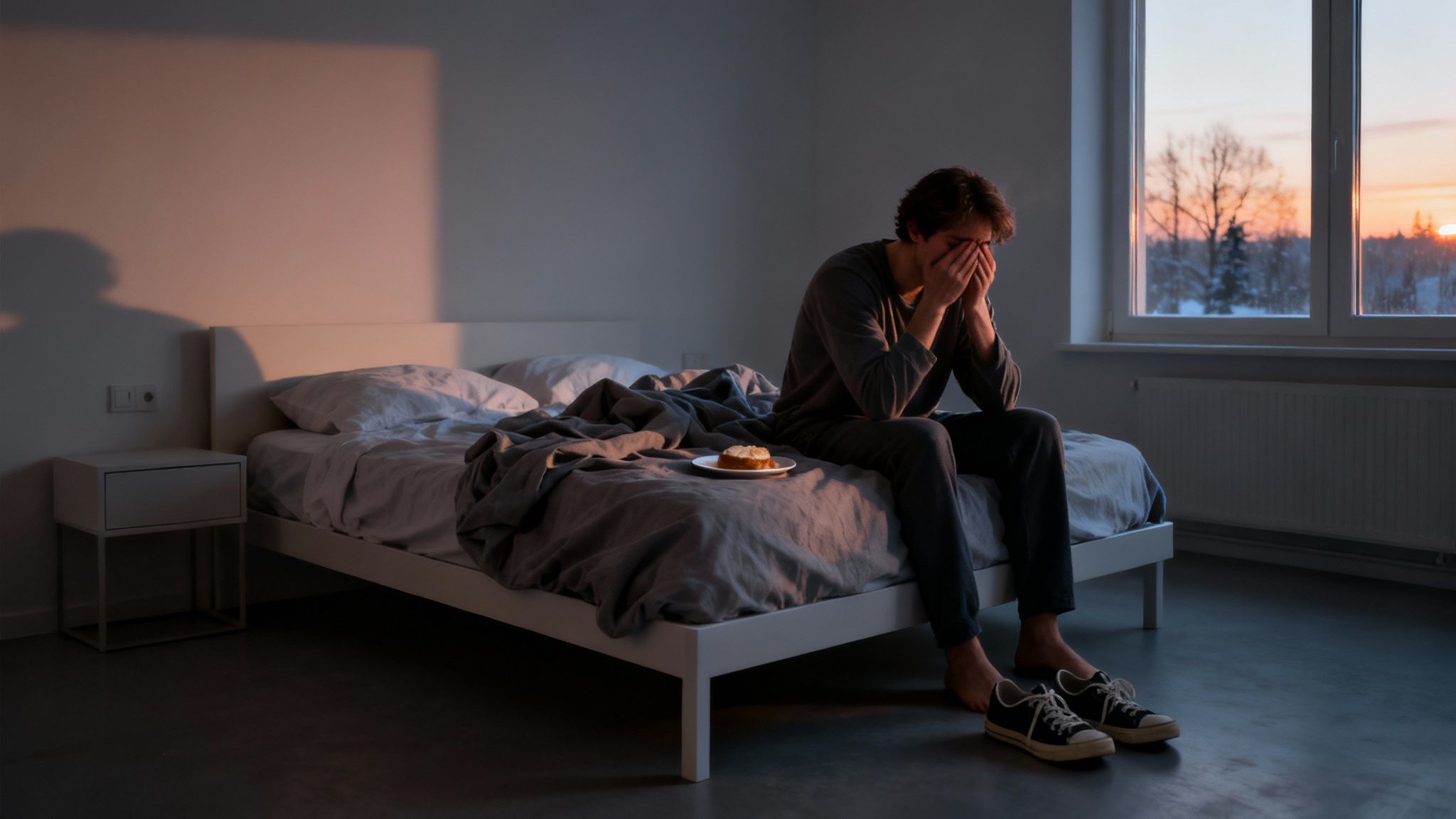
Before we can begin to manage seasonal depression, we first need to get really honest about what it looks and feels like. It’s so much more than just a vague feeling of being ‘a bit down’ through winter. It’s about learning to pinpoint the specific ways it disrupts your life.
Recognising these signs is the first, most empowering step you can take.
The symptoms of SAD are often far more debilitating than the 'winter blues' that many people casually dismiss. It’s a genuine condition that brings on a wide range of psychological and physical symptoms, and it can seriously impact your day-to-day life.
This can show up as a persistent low mood, losing interest in things you usually love, overwhelming fatigue, sleeping far too much, and intense cravings for carbs. If you want to get a broader picture, Sky News recently explored the full spectrum of SAD symptoms and why it's more than just a passing mood.
Let’s break these symptoms down a bit, so you can see if they resonate with your own experience.
SAD Symptom Checklist Self-Assessment
It can be hard to know if what you're feeling is "normal" winter tiredness or something more. Use this checklist to reflect on your experiences over the darker months. It's not a diagnostic tool, but it can be a really helpful starting point for understanding what's going on.
Symptom Category | Common Signs to Look For | Do You Experience This Frequently in Autumn/Winter? |
|---|---|---|
Mood & Emotions | Persistent sadness, hopelessness, or worthlessness. Heightened irritability, anxiety, or feeling on edge. Difficulty concentrating or making decisions. | |
Energy & Sleep | Overwhelming fatigue that sleep doesn't fix. Hypersomnia (oversleeping) – needing much more sleep than usual. A heavy, lethargic feeling in your body. | |
Appetite & Cravings | Strong cravings for carbohydrates (bread, pasta, sugary foods). A noticeable increase in appetite, often leading to weight gain. | |
Social & Behavioural | Loss of interest in hobbies and activities you usually enjoy. Withdrawing from friends and family; avoiding social events. A general slowdown in your movements or speech. |
Taking a moment to honestly fill this out for yourself can be quite revealing. If you find yourself ticking several boxes, it’s a clear signal that it might be time to seek some support.
Psychological and Emotional Signs
The mental toll of SAD is often the heaviest part. It’s a persistent weight that can colour your entire outlook on life during the darker months. You might be wrestling with a deep sense of hopelessness or worthlessness that simply wasn't there in summer.
This can also bubble up as heightened irritability or anxiety. Little things you’d normally brush off can suddenly feel huge and overwhelming, leading to snappy responses with loved ones or a constant feeling of being on edge. For many, concentration becomes a real struggle, making work tasks or even just following a conversation feel like wading through treacle.
A key emotional sign of SAD is the loss of pleasure, known as anhedonia. This is when activities you usually love—a hobby, meeting up with friends, or even a favourite meal—suddenly feel flat and uninteresting. It’s not just a lack of motivation; it’s a profound absence of joy.
If you notice your emotional state shifts this dramatically with the seasons, it’s probably more than a passing mood. Recognising these patterns is crucial, and if they feel overwhelming, exploring options like Depression Counselling can be an important step toward feeling more like yourself again.
Physical Symptoms You Can't Ignore
SAD isn't just in your head; it has a very real, very physical impact on your body. One of the most common complaints I hear from clients is a deep, bone-weary fatigue that no amount of sleep seems to fix.
This often goes hand-in-hand with changes in sleep patterns. For most people with winter-pattern SAD, this means hypersomnia, or oversleeping. You might find yourself sleeping for ten hours or more and still struggling to drag yourself out of bed into the dark morning.
Another classic physical sign is a noticeable shift in appetite, specifically an intense craving for carbohydrates. You might find yourself constantly reaching for pasta, bread, and sugary snacks. This is thought to be the body's attempt to boost serotonin levels, but it often leads to weight gain and further feelings of sluggishness.
Behavioural Changes and Social Withdrawal
When you're feeling emotionally low and physically drained, it's completely natural for your behaviour to change. You might start turning down invitations from friends, making excuses to avoid social gatherings that you would have previously looked forward to.
This social withdrawal can create a vicious cycle. The less you interact with others, the more isolated you can feel, which only deepens the feelings of depression. You might also notice a general slowdown in your movements and speech, as if everything requires more effort than usual.
Cancelling plans: Regularly backing out of social commitments at the last minute.
Loss of interest: Dropping hobbies or activities that once brought you fulfilment.
Reduced productivity: Struggling to keep up with responsibilities at home or work.
Increased isolation: Spending more and more time alone, avoiding contact with others.
These behavioural shifts are often the most visible signs to friends and family, even if they don't know the underlying cause. If this sounds familiar, acknowledging these changes is the starting point for learning how to deal with seasonal depression and reclaiming your life.
Practical Lifestyle Strategies to Ease SAD Symptoms
Recognising the signs of seasonal depression is one thing, but knowing what to do about it is another. The next step is to start building a personal toolkit of practical, everyday strategies to push back against the winter blues.
While professional support is often a crucial part of the picture, you'd be surprised how much of a difference small, consistent changes to your daily life can make. It’s all about creating a supportive structure that helps regulate your mood and energy when the darker months roll in.
This isn't about a massive life overhaul overnight. It’s about introducing sustainable habits that you can stick with, even when your motivation is at rock bottom.
Maximise Your Natural Light Exposure
If there’s one weapon in our arsenal against SAD, it’s light. The drop in natural sunlight is a primary trigger for the condition because it messes with our internal body clock (our circadian rhythm) and can cause a dip in serotonin, the neurotransmitter that keeps our mood stable.
Making a conscious effort to soak up as much daylight as you can is non-negotiable.
Brighten Your Morning: First thing you do when you get up? Open the curtains. Even on a grim, overcast day, that natural light is far more powerful than anything your lightbulbs can produce.
Move Your Base: Try to position your desk, your favourite armchair, or wherever you spend most of your time as close to a window as possible. This kind of passive light exposure really adds up over the day.
Take a Lunchtime Stroll: Aim for a 20-30 minute walk outside around midday. The light is at its strongest then, making it the most effective time to get your daily dose.
Since light is so important, it's worth thinking about how you manage it in your home. Learning about optimising natural light with different window treatments can help you let the good stuff in during the day while ensuring your bedroom is dark enough for proper sleep at night.
Create Structure with a Consistent Routine
When you’re feeling sluggish and low, a routine can be an absolute lifeline. SAD can knock your body’s internal clock completely out of sync, and a predictable daily schedule is one of the best ways to get it back on track, which in turn helps stabilise your mood and energy.
The most important part of this is your sleep schedule. Try to go to bed and wake up at the same time every single day. Yes, even on weekends. That weekend lie-in might feel good in the moment, but it can throw your circadian rhythm for a loop, making that Monday morning feel ten times harder.
Think of your routine as a form of self-care scaffolding. It’s there to hold you up when you don't have the energy to make decisions, ensuring you automatically meet your basic needs for sleep, food, and movement.
A good routine takes the mental effort out of figuring out what to do next, which can feel like climbing a mountain when your motivation is gone. This simple act of consistency can be incredibly grounding.
The Powerful Link Between Movement and Mood
I get it. When you're feeling exhausted and completely unmotivated, exercise is probably the very last thing on your mind. But honestly, physical activity is one of the most effective natural antidepressants out there. Even very gentle movement can have a surprisingly big impact on your mood.
Exercise helps by releasing endorphins – our body’s natural mood-lifters – and it's also brilliant for dialling down stress and anxiety. The trick is to find something you can actually stick to, not some punishing workout regime that you'll abandon after a week. A brisk walk, a gentle online yoga class, or even just dancing around your living room to a few of your favourite songs can make a real difference.
Even better? Combine that movement with a bit of nature. Getting outdoors, even in the cold, can be incredibly restorative. If you'd like to explore this more, I've written before about the mental health benefits of nature and how to weave it into your life.
Fuel Your Body to Support Your Mind
The connection between what we eat and how we feel is huge, particularly when you’re dealing with SAD. One of the classic symptoms is an intense craving for carbs and sugary foods – that’s your body desperately searching for a quick energy and serotonin hit.
A little bit of what you fancy does you good, of course. But relying on sugary snacks and beige food will almost certainly lead to energy crashes, making you feel even more sluggish and low. Instead, try to focus on foods that support brain health and give you stable, long-lasting energy.
Try to get more of these on your plate:
Complex Carbohydrates: Things like oats, brown rice, and wholewheat bread release energy slowly and steadily, helping you avoid those horrible post-sugar slumps.
Omega-3 Fatty Acids: You'll find these in oily fish like salmon and mackerel, but also in walnuts and flaxseeds. They're essential for good brain function and have been linked to a better mood.
Lean Protein: Chicken, eggs, beans, and lentils will help you feel fuller for longer and keep your blood sugar levels nice and stable.
Making these small tweaks to your lifestyle provides a solid foundation for managing SAD. They are proactive steps you can take to feel more in control and, hopefully, a lot better.
Exploring Therapy and Medical Support
While the lifestyle adjustments we've talked about are incredibly valuable, sometimes they aren't enough to lift the heavy weight of SAD on their own. If your self-care efforts feel like they’re barely scratching the surface, that's a good sign it’s time to look at more structured therapeutic and medical support. Reaching out isn’t a weakness; it’s a sign of real strength.
This section is all about understanding the main treatment pathways available here in the UK. Knowing your options can make the whole process feel much less intimidating. From specialised light therapy to talking therapies and medication, there are effective, evidence-based routes to feeling better.
Getting a handle on seasonal depression often needs a multi-layered approach. Combining lifestyle changes with professional support can build a pretty solid defence against the darker months. This little decision tree can be a simple starting point for figuring out which strategies might line up with your specific symptoms.
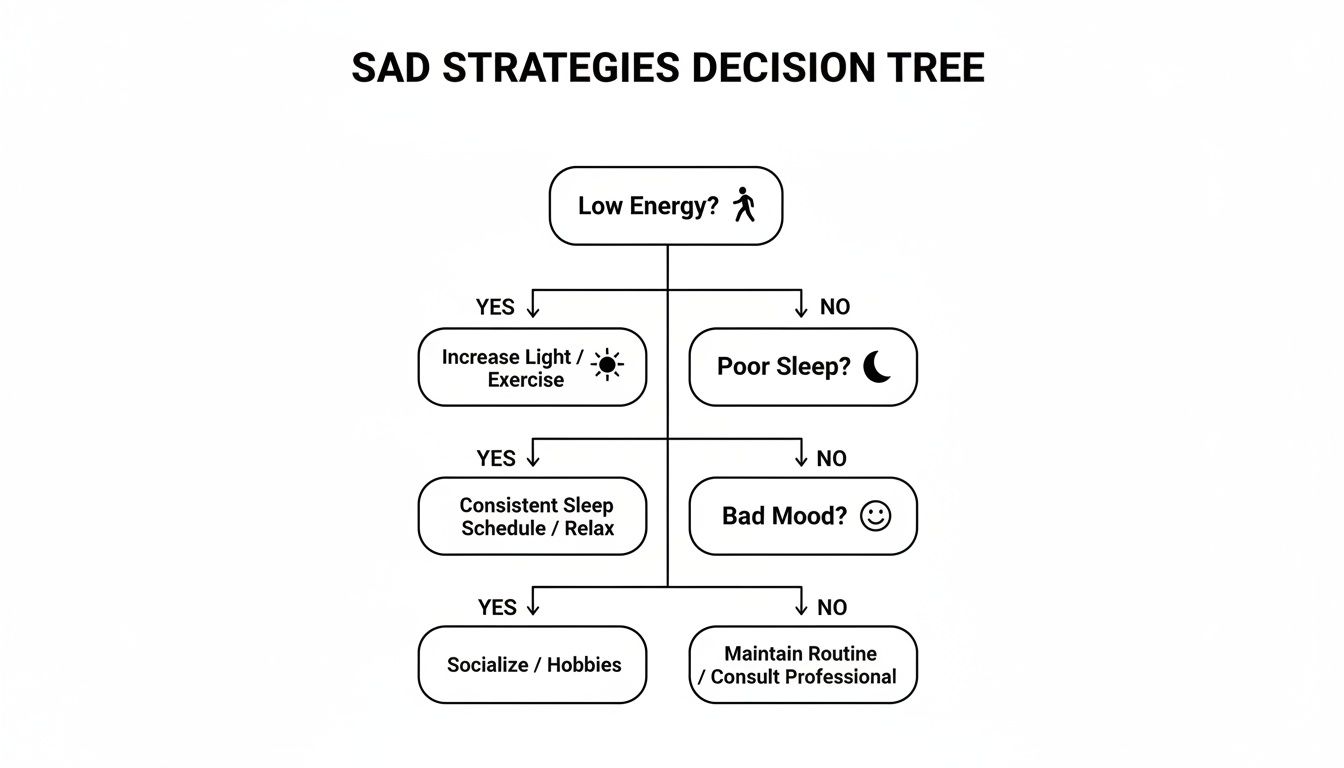
It just shows how different feelings, like low energy or a persistently bad mood, can be tackled with specific, targeted actions. It’s all about creating a more personal plan that works for you.
Harnessing The Power Of Light Therapy
One of the most well-known and effective treatments for SAD is light therapy, sometimes called phototherapy. It's designed to directly tackle the main trigger of the winter blues: the lack of natural sunlight.
The therapy involves sitting in front of a special light box, or SAD lamp, for a set amount of time each day, usually first thing in the morning. These lamps are much brighter than your usual indoor lighting and are built to mimic natural daylight.
When you're choosing a SAD lamp, look for one that provides at least 10,000 lux of cool-white, UV-filtered light. This is the intensity that’s been proven most effective in clinical studies. A typical session lasts around 30 minutes, and you can read, work, or have your breakfast at the same time. The real key, though, is consistency.
Think of it like this: your body’s internal clock has drifted off course because of the dark mornings. Light therapy acts as a strong signal—like a loud alarm clock for your brain—helping to reset your circadian rhythm and boost mood-regulating chemicals like serotonin.
It's a simple, non-invasive treatment, and many people find it makes a massive difference to their energy levels and overall mood within just a week or two.
Talking Therapies: The Key To Changing Your Mindset
While light therapy addresses the biological side of things, talking therapies get to grips with the psychological patterns that can keep you feeling stuck. One of the most effective approaches is Cognitive Behavioural Therapy (CBT), which has been specifically adapted for SAD (CBT-SAD).
CBT helps you to spot, question, and reframe the negative thoughts and behaviours that creep in with the changing seasons. For instance, a therapist might help you challenge the thought "I'm useless in winter" by finding evidence that proves it wrong and planning enjoyable, achievable winter activities.
A therapist will work with you on a few key things:
Challenging Negative Thoughts: You’ll learn to catch and question those automatic negative beliefs about the winter months.
Behavioural Activation: This is all about actively scheduling positive and rewarding activities, even when you don't feel like it, to counteract that urge to withdraw and the feeling of lethargy.
Building Resilience: You'll develop coping strategies you can use year after year to prepare for the seasonal shift, making you more resilient over time.
This type of therapy gives you practical tools to manage your own mental state. If you think this approach could be for you, you can read more about finding hope with counselling for depression to get a better sense of the process.
A Breath Of Fresh Air: Walk And Talk Therapy
As a therapist, one of my specialisms is Walk and Talk Therapy, an approach I've found to be particularly powerful for clients dealing with seasonal depression. It combines the proven benefits of traditional talking therapy with gentle physical activity and exposure to nature.
Instead of sitting in an office, we hold our sessions while walking outdoors in a park or another green space. This combination is a perfect antidote to the feelings of inertia and being cooped up that SAD often brings. You get the mental benefits of therapy, the mood-boosting effects of exercise, and precious exposure to natural light, all at once.
I find this approach often feels less intense and more collaborative than face-to-face sessions, allowing conversations to flow much more naturally.
When To Speak With Your GP About Medication
For some people, particularly when SAD symptoms are severe and really impacting daily life, medication might be a necessary and helpful part of the treatment plan. It’s important to go into this conversation with your GP openly and without judging yourself.
The most commonly prescribed medications for SAD are a type of antidepressant called Selective Serotonin Reuptake Inhibitors (SSRIs). These work by increasing the level of serotonin—a key mood chemical—in the brain.
Your GP can talk you through the potential benefits and side effects, helping you make an informed decision about whether it’s the right path for your situation.
Deciding how to manage SAD involves looking at all the options and seeing what fits best. Below is a quick comparison of the approaches we’ve just discussed to help you weigh them up.
Comparing SAD Management Approaches
Approach | How It Helps | Best For... | Key Consideration |
|---|---|---|---|
Light Therapy | Mimics natural sunlight to reset your body clock and boost mood chemicals. | People with classic SAD symptoms like low energy, oversleeping, and carbohydrate cravings. | Requires daily consistency, typically 30 minutes each morning. A 10,000 lux lamp is recommended. |
CBT for SAD (CBT-SAD) | Teaches skills to identify and change negative thought patterns and behaviours associated with winter. | Individuals who want long-term coping strategies and to address the psychological roots of SAD. | Requires active participation and a commitment to practising techniques between sessions. |
Walk and Talk Therapy | Combines counselling with light exercise and natural light exposure, reducing feelings of isolation. | Those who feel confined indoors, struggle with traditional office-based therapy, or want a more holistic approach. | Dependant on weather and physical accessibility. Sessions may need to be rescheduled or moved indoors. |
Medication (SSRIs) | Increases serotonin levels in the brain to help regulate mood and reduce depressive symptoms. | Individuals with moderate to severe SAD symptoms that haven't responded to other treatments. | Can have side effects and takes a few weeks to become effective. Requires a consultation with a GP. |
Ultimately, there's no single "best" solution—the right path is the one that brings you relief. Often, a combination of these approaches yields the best results.
Creating Your Personal Winter Wellness Plan
So, we've looked at the signs of SAD and a few different ways to manage it. The next logical step is to pull all these ideas together into something that actually works for you. We’re going to build a personal winter wellness plan that feels supportive and practical, not like another list of chores.
Think of it as creating your own ‘SAD Toolkit’.
The idea is to get ahead of those low moods instead of just reacting when they hit. A decent plan can be the structure that holds you up when your own motivation is running low. It’s all about being deliberate with your self-care and accepting that your needs simply change with the seasons.
Building Your SAD Toolkit
Your toolkit is just a collection of your go-to activities and strategies that you know will shore up your mental health during the darker months. This isn’t about creating a punishing, rigid schedule; it’s about figuring out what genuinely helps and making a real commitment to it.
Start by thinking about your personal triggers. Is it the dark mornings that really get to you? Or maybe it’s the social isolation that creeps in when the weather’s miserable? Once you’ve pinpointed your main challenges, you can build your plan around them.
Your toolkit could look something like this:
A Booked-in Light Therapy Session: Make those 30 minutes with the SAD lamp a non-negotiable part of your morning routine, just like brushing your teeth.
A Daily Movement Promise: This doesn’t have to be a hardcore workout. It could be a 20-minute walk on your lunch break or an online yoga class after work. Consistency is what really matters here.
Protected Time for Hobbies: Actually schedule time for things you enjoy, even if you don't feel like it at the time. This is a crucial way to fight back against anhedonia (the loss of pleasure).
When you're putting your plan together, weaving in outdoor activities can make a huge difference to your mood and energy. If you're a runner, check out these practical tips for winter runs to stay safe and motivated when it’s cold out.
Planning for Connection and Self-Compassion
One of the sneakiest parts of seasonal depression is how it makes you want to withdraw and be on your own. Your wellness plan needs to actively push back against this by making social connection a priority.
Don't wait until you feel lonely to get in touch with people. Look at your calendar and proactively schedule calls with friends, low-key coffee dates, or family dinners. Having these things in the diary gives you something to look forward to and takes away the effort of trying to organise things when you’re already feeling low.
Setting realistic expectations is a profound act of self-compassion. Acknowledge that you might not have the same energy or productivity levels in winter as you do in summer, and that is perfectly okay. The goal is not to feel amazing every day but to navigate the season with more ease and less self-criticism.
This proactive approach can extend to how you structure other parts of your life, too. For instance, combining a gentle walk with your therapy session can be incredibly powerful. To get a better sense of how this works, you can read more about my approach in this article on walking as therapy your path to better mental health.
Knowing When to Ask for More Support
Your personal wellness plan is a powerful first line of defence, but it’s also important to know its limits. A good plan always includes knowing when it's time to call for reinforcements by seeking professional help.
It’s probably time to reach out if:
Your low mood is sticking around for more than two weeks without a break.
Your symptoms are getting in the way of your ability to function at work, at home, or in your relationships.
You find yourself relying on unhealthy coping mechanisms, like alcohol, to get through the day.
You’re having feelings of hopelessness or any thoughts of self-harm.
These aren't signs that you've failed; they are clear signals that you're dealing with a serious health issue that needs professional support. You don't have to go through this on your own. If you feel ready to take that step, you can reach out to me directly via the Contact page to have a chat about how we could work together.
Your Questions About Seasonal Depression, Answered
Let's finish up by tackling some of the most common questions that come up in my therapy room. Getting a straight answer to these practical points can make all the difference, giving you the confidence to put a plan in place and start feeling more in control.
Think of this as clearing up any last bits of confusion so you can move forward.
What’s the Real Difference Between SAD and the ‘Winter Blues’?
This is probably the question I hear more than any other, and it’s a vital one to get right. People often use the terms interchangeably, but they are worlds apart.
The ‘winter blues’ is that familiar, mild sense of sluggishness many of us get when the days draw in. It’s common, and while it isn’t fun, it doesn't generally stop you from living your life. You might feel less motivated to go out, but you can still get to work, see friends, and manage day-to-day.
Seasonal Affective Disorder (SAD), however, is a clinical diagnosis. It's a form of depression that follows a seasonal pattern, and its symptoms are much more severe and persistent. We’re talking about the kind of bone-deep fatigue, overwhelming lack of interest, and persistent low mood that can make just getting out of bed feel like a monumental effort.
Here's the simplest way I explain it: the winter blues might change what you want to do, but SAD changes what you can do. If your symptoms are genuinely getting in the way of your life, it's almost certainly more than just the blues.
Can I Get a Light Box on the NHS?
A really practical and important question. While light therapy is a well-established and effective treatment for SAD, getting a light box prescribed directly on the NHS isn't standard practice. GPs and mental health teams are more likely to point you towards talking therapies like CBT or, if needed, medication.
That said, the National Institute for Health and Care Excellence (NICE) does recognise light therapy as a valid option. Your GP can definitely give you advice on it and may well recommend it as part of your overall plan. The usual route is that you would need to buy a medically certified SAD lamp yourself from a reputable supplier.
It’s always best to have a chat with your GP first, though. They can give you a formal diagnosis and make sure there are no other health reasons why light therapy might not be a good fit for you.
Does Walk and Talk Therapy Actually Work in Bad Weather?
As a therapist who loves this approach, I can give you a confident and resounding "yes!" In fact, some of the most profound sessions happen on those classic grey, drizzly days. It's not about waiting for a perfect sunny afternoon; it's about getting out there and finding the good in the season as it is.
There's something powerful about wrapping up warm and heading out regardless. It feels like a small act of defiance against that urge to hibernate and withdraw, which is such a core part of SAD.
Here’s why it works so well, especially in winter:
Maximising Light: Even on the cloudiest day, the natural light you get outside is miles better than standard indoor lighting.
Gentle Movement: It directly counters the physical heaviness and lethargy that SAD brings on.
A Metaphor for Resilience: Just showing up and walking through difficult weather is an empowering act. It builds a sense of mental toughness.
Of course, safety and comfort always come first. We’d reschedule for a blizzard, but a bit of British drizzle is rarely enough to stop a really productive, mood-lifting session.
When Should I Contact a Therapist About My Low Mood?
This is such a personal decision, but there are definitely a few clear signs that your own self-help efforts might not be enough on their own. The right time to think about therapy is when your low mood is consistently getting in the way of you living your life.
Consider reaching out for support if you notice:
It’s Persistent: The sadness or hopelessness just isn't lifting and has been there for more than a couple of weeks.
It’s Affecting Your Life: You're finding it hard to cope at work, your relationships are suffering, or you're struggling with daily tasks.
The Joy is Gone: You’ve completely lost interest in hobbies and activities that you used to love.
You're Using Unhealthy Coping Methods: You find yourself leaning on things like alcohol, emotional eating, or anything else to numb the feelings.
Please know that reaching out is never a sign of failure. It's a brave and proactive step towards taking back control of your own wellbeing.
Getting through the darker months can feel like a real struggle, but you don't have to face it on your own. If you feel that professional, compassionate support could help you navigate this season, Therapy with Ben is here for you. Whether you’re interested in Walk and Talk Therapy in Cheltenham or prefer online counselling, I offer a safe space to explore your feelings and develop strategies to feel better. To learn more or to book an initial chat, please visit https://www.therapy-with-ben.co.uk.


Comments