


Finding Hope with Counselling for Depression
Counselling for depression is a dedicated, supportive space where you and a trained professional can begin to understand and manage what you're going through. Think of it as a collaborative process. Together, you'll explore the thoughts, feelings, and behaviours that are keeping you stuck, and start building practical strategies to find your way forward.
Understanding How Counselling for Depression Helps
Taking that first step into therapy can feel huge, but at its heart, it’s about finding an ally for your mental health journey. The idea can be daunting, I know, but the whole process is designed to be a safe, confidential partnership. It’s so much more than just talking; it’s about having dedicated time to gently untangle that complex web of thoughts and feelings that feed a low mood.
A counsellor isn’t just a passive listener. They work with you, helping to spot those recurring negative patterns and offering you the tools to challenge them. It’s a process that builds resilience and self-awareness, equipping you to handle life's challenges more effectively, long after your sessions have ended. The real aim is to empower you with coping skills that foster genuine, lasting well-being.
Why Support Is More Crucial Than Ever
Here in the UK, the need for accessible mental health support has never been clearer. The numbers really paint a picture: in a single year, mental health services in England received a record 5.2 million referrals. That's a staggering 37.9% increase compared to pre-pandemic levels in 2019.
But despite this huge demand, only about one-third of adults with common mental health problems are actually getting treatment, which shows there's a critical gap. You can read the full analysis of mental health pressures from the BMA for a deeper dive.
This infographic captures the supportive, collaborative feel of a counselling session, which is what makes therapy so effective.
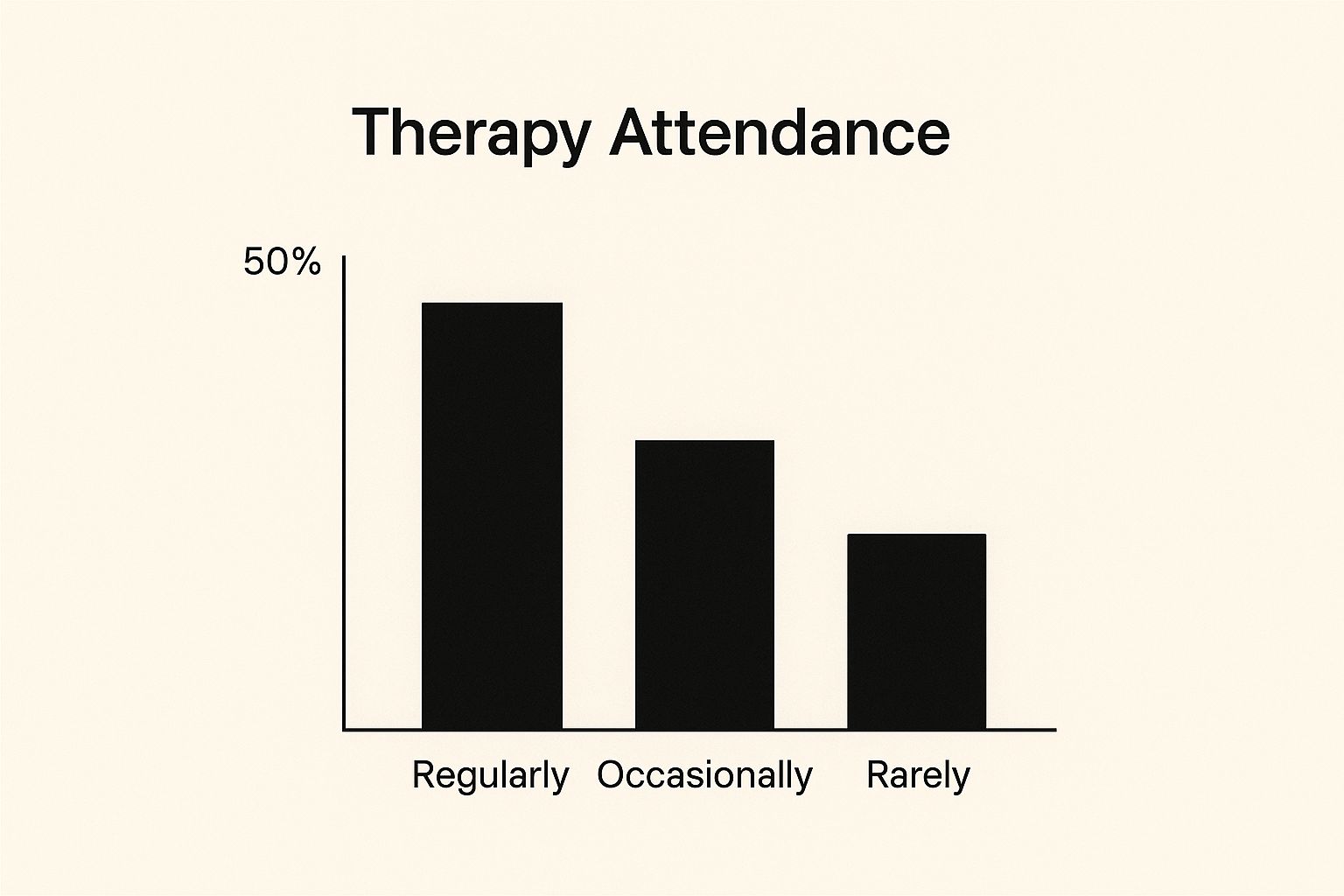
It’s all about that therapeutic relationship—a calm, focused conversation aimed at understanding and healing.
The Core Benefits of Professional Guidance
Working with a counsellor gives you a few key advantages when you're dealing with depression. For a start, it’s a rare opportunity to get a fresh perspective on your challenges from someone who is objective and professionally trained.
The key benefits often include:
Developing Healthy Coping Skills: You'll learn practical techniques to manage symptoms like low energy, poor sleep, and that nagging negative self-talk.
Exploring Root Causes: It's a chance to gently uncover underlying issues, from your past or present, that might be contributing to how you feel.
Improving Relationships: You can start to understand how depression affects your connections with others and learn healthier ways to communicate and interact.
Counselling isn't about "fixing" something that's broken. Instead, it’s about building a stronger, more self-aware version of yourself—one who can navigate emotional storms with far greater confidence and skill.
By Therapy-with-Ben
Exploring Different Therapeutic Approaches
Choosing the right kind of therapy can feel a bit like trying to find the right key for a lock; what works wonders for one person might not click for another. The world of counselling for depression isn’t about a one-size-fits-all solution. Instead, it’s a collection of different, well-researched methods, each with its own way of helping you find your way back to feeling more like yourself.
Getting to grips with these different approaches is a great first step. It puts you in a much better position to make a choice that genuinely feels right for you. Let’s have a look at some of the most common and effective ways of working.
Cognitive Behavioural Therapy CBT
Cognitive Behavioural Therapy, or CBT as it’s usually known, is one of the most recognised forms of therapy out there. The core idea behind it is actually quite simple, but incredibly powerful: our thoughts, feelings, and what we do are all linked together.
CBT helps you spot and challenge those unhelpful or negative thought patterns that can fuel a low mood, like harsh self-criticism or always jumping to the worst-case scenario.
A session might involve you and your counsellor breaking down a tricky situation, looking at the thoughts that popped up, and then coming up with practical, real-world strategies to change how you respond over time. It’s a very hands-on, skills-based way of working. It’s also worth noting that alongside face-to-face sessions, there are now many effective Cognitive Behavioral Therapy (CBT) apps that can offer extra support, helping you practise the techniques you learn between your appointments.
Person-Centred Therapy
If CBT is quite structured, Person-Centred Therapy is almost the opposite, placing you firmly in the driver’s seat. This approach is built on the fundamental belief that you are the expert on your own life. You know your experiences better than anyone.
Here, the counsellor’s role isn’t to give advice or direct you. It’s to create a warm, empathetic, and completely non-judgemental space where you can explore whatever is on your mind, at your own pace. The therapy hinges on building a strong, trusting relationship where you feel properly heard and accepted, maybe for the first time. It’s through this supportive connection that you can find clarity, build up your self-esteem, and tap into your own inner strength to heal and grow.
Psychodynamic Counselling
Psychodynamic Counselling invites you to look a bit deeper, exploring how your past—especially experiences from childhood—might be influencing how you feel and act today. The idea is to gently uncover some of the unconscious thoughts or unresolved conflicts that could be contributing to your depression.
This approach can lead to some incredible "aha!" moments, helping you understand the "why" behind your emotions. By making sense of these deep-rooted patterns, you can start to loosen their grip on your present and find healthier ways of relating to both yourself and the people around you.
The goal of any therapeutic approach is not to erase difficult experiences, but to help you process them in a way that reduces their power over your present life, allowing you to move forward with greater freedom and self-compassion.
Now, it's useful to see how these approaches stack up against each other. Each has its own strengths and is suited to different needs and personalities.
Comparing Common Therapeutic Approaches for Depression
Therapeutic Approach | Core Focus | Best Suited For |
|---|---|---|
Cognitive Behavioural Therapy (CBT) | Identifying and changing negative thought patterns and behaviours. | Individuals looking for practical, structured strategies and coping skills to manage current symptoms. |
Person-Centred Therapy | Creating a supportive, non-judgmental space for self-exploration and personal growth. | People who want to explore their feelings at their own pace and build self-acceptance and trust in their own judgment. |
Psychodynamic Counselling | Exploring how past experiences and unconscious thoughts influence present feelings and behaviours. | Those interested in gaining deep insight into the root causes of their depression and understanding long-standing patterns. |
This table is just a quick guide, of course. The best fit often comes down to the connection you have with your counsellor, regardless of the specific model they use.
In the UK, these kinds of talking therapies are often accessible through schemes like the NHS Talking Therapies programme. While they are generally very effective, it’s interesting to note that success can vary. Some research suggests these therapies seem less effective for young adults aged 16-24 compared to those aged 25-65, which really underlines the need to adapt services for different age groups.
Each of these methods offers a unique lens through which to understand and work through depression. To dig a little deeper, you might find our guide on the top 5 best therapy for depression in 2025 a helpful next read.
The Unique Benefits of Walk and Talk Therapy

Sometimes, the best way to move forward mentally is to literally move forward physically. Traditional counselling for depression is incredibly powerful, but sitting face-to-face in a room just isn’t the right fit for everyone. For some, it can feel a bit intense or overly formal, making it that much harder to open up.
This is where Walk and Talk therapy offers a refreshing change of scene. It's a dynamic approach that takes all the core principles of good counselling and pairs them with the simple, rhythmic act of walking outdoors. This one small shift in setting can completely transform the therapeutic experience, creating a space that feels more relaxed and natural.
Breaking Down the Barriers of the Therapy Room
Stepping outside the four walls of a therapy office can immediately dial down the pressure. Walking side-by-side with a counsellor, rather than sitting directly across from them, often feels less like an interview and more like a collaboration.
This less formal environment can make difficult conversations feel a whole lot more manageable. The natural rhythm of walking and the gentle distractions of the world around you can help calm anxious feelings, letting thoughts and emotions flow more freely. Many people find they can talk about things they might have struggled with in a more conventional setting.
The side-by-side nature of Walk and Talk therapy creates a real sense of partnership. It feels like you're exploring challenges together, both literally and figuratively, which can make the whole process feel less intimidating and more empowering.
The Dual Power of Mind and Body
One of the biggest advantages of this approach is the powerful link between physical movement and mental well-being. We all know that exercise is a fantastic mood booster, releasing endorphins and cutting down stress. Walk and Talk therapy harnesses this benefit and weaves it directly into your counselling sessions.
This dual-action approach has several key benefits:
Feeling Less 'Stuck': The physical act of moving forward can be a powerful metaphor for psychological progress, helping you feel less trapped in negative thought patterns.
Boosting Energy and Mood: Even a gentle walk increases blood flow to the brain. This can help lift a low mood and improve mental clarity right there in the session.
Stimulating New Perspectives: Being in a natural, changing environment can spark new insights and ways of thinking that might not have surfaced in a static indoor space.
By engaging both your mind and body, you're actively taking part in your own healing on multiple levels. It’s a holistic way of working that truly acknowledges the deep connection between our physical and emotional health. If this sounds like it could be a good fit for you, you can learn more in our complete guide to Walking and Talking therapy.
By Therapy-with-Ben
What to Expect in Your First Few Sessions
Taking that first step into counselling for depression can feel pretty daunting. Knowing what's around the corner can really help take the edge off, turning any jitters into a sense of being in the driver's seat. The start of therapy isn't some clinical test; it's the beginning of a conversation, a first look at the map for our journey together.
It all kicks off the moment you reach out, whether that’s a quick phone call, an email, or filling in a contact form on a website. This is just a simple, low-pressure way to make contact and maybe give a brief idea of what's on your mind. From there, the next step is usually to arrange an initial assessment, which is our first proper meeting.
Your Initial Assessment
This first session is really just a chance for us to get to know one another. It's a two-way street. It’s just as much about you figuring out if I’m the right fit for you as it is about me getting a sense of what you’re going through.
We’ll chat about what brought you to counselling, what’s happening in your life, and what you’re hoping to get out of our time together. You don’t need to have everything figured out. The aim is just to start building a shared picture so we can decide how best to move forward. There’s absolutely no pressure to dive deeper than you feel ready to.
Confidentiality is the bedrock of counselling. Everything we discuss is held in the strictest confidence. The only time this rule is ever broken is in rare situations, like if there’s a risk of serious harm to yourself or someone else, and this is always explained clearly right from the start.
Building the Therapeutic Relationship
The connection you have with your counsellor is one of the biggest predictors of success in therapy. That’s why these first few sessions are so important for building what we call the therapeutic relationship – a partnership based on trust, understanding, and a complete lack of judgement.
In this early stage, our main goals are to:
Establish a Safe Space: My job is to create an environment where you feel safe enough to be open and honest, without ever worrying about being judged.
Set Your Goals: We'll work together to outline what you want to achieve. These goals aren’t set in stone; think of them as a starting point that can change and grow as we go.
Agree on a Framework: We’ll also sort out the practical bits, like how often we'll meet and when. This creates a predictable, reliable structure for our work.
Think of these initial meetings as laying the foundations. It’s a gentle, collaborative process designed to make sure you feel heard, understood, and hopeful about the path we're about to walk together. If you'd like a more detailed look at how this works, you might find our post on what happens in counselling sessions helpful. This is all about moving at your pace, making sure you always feel in control.
How to Find the Right Counsellor for You

The relationship you build with your counsellor is probably the single most important factor in whether therapy works for you. It’s about so much more than qualifications; it’s about finding a professional you can genuinely connect with. This is a practical guide to help you find a counsellor who feels right, so you can make a choice you feel confident in.
Starting your search for counselling for depression can feel a bit overwhelming, but a great first step is to focus on credentials. Here in the UK, that means checking if a therapist is registered with a recognised professional body.
This registration is your assurance of quality and safety. It confirms they meet strict standards for training, ethics, and ongoing professional development.
Verifying Credentials and Finding a Good Fit
When you’re looking at a counsellor’s profile, keep an eye out for memberships with organisations like the British Association for Counselling and Psychotherapy (BACP) or the UK Council for Psychotherapy (UKCP). These are the leading bodies in the field.
Being registered shows they’re committed to working ethically and safely. But a qualification is only one piece of the puzzle. The other crucial element is the ‘therapeutic fit’.
The therapeutic fit is that essential feeling of trust and safety you have with your counsellor. It’s the sense that you are truly seen, heard, and understood without judgement, which allows the real work of therapy to begin.
This connection is deeply personal. What works for one person might not work for another, and that’s perfectly okay. Trust your intuition on this one; you have the right to find someone you feel truly comfortable with.
Questions to Ask a Potential Counsellor
Most counsellors offer a brief, free introductory call or an initial assessment session. Think of it as an interview—for both of you. It’s your chance to ask questions and get a real feel for how they work.
Don't be afraid to ask direct questions to see if their approach lines up with what you need. Consider this your personal checklist:
What's your experience working with people dealing with depression? This helps you understand their specific expertise in the area you need support with.
Could you describe your therapeutic style? Hearing them talk about their approach (e.g., CBT, person-centred) gives you an idea of what sessions might actually feel like.
What can I expect in our first few sessions together? This clarifies their process and helps you feel more prepared and in control.
What are your fees, session length, and cancellation policy? It’s always best to get these practical details sorted from the start to avoid any misunderstandings later.
Taking the time to find the right person is an investment in yourself. This isn't just about finding any counsellor; it’s about finding your counsellor.
By Therapy-with-Ben
Why a Personalised Approach to Therapy Matters
Depression isn't some monolithic experience that feels the same for everyone. It shows up differently in each of our lives, coloured by our unique personalities, the stories we carry, and the situations we find ourselves in. Because of this, truly effective counselling for depression can never be a generic, cookie-cutter process.
An approach that's life-changing for one person might completely miss the mark for someone else. That’s why personalised care isn't just a nice-to-have; it's essential.
Think of it like getting a bespoke suit. Sure, an off-the-peg option might cover you, but it’s never going to fit as perfectly or feel as comfortable as one tailored specifically to your measurements. It’s exactly the same with counselling. The best results always come when the therapeutic approach is carefully shaped to fit you—respecting your pace, getting to grips with your specific challenges, and using methods that genuinely click with you.
Adapting Support for Younger Adults
This need for a personal touch becomes crystal clear when we look at supporting younger adults. While talking therapies are a cornerstone of mental health support, they don't always land with the same impact across different age groups. In fact, some research suggests that standard therapies can be less effective for younger adults compared to those in the working-age bracket. You can explore the findings on therapy for younger adults from UCL for a deeper dive into this.
What this tells us is that we have to be more flexible in how we offer support to younger people. The pressures they face, their communication styles, and their life experiences often call for a more creative and relatable approach.
A truly personalised therapy plan doesn't just treat the symptoms of depression; it honours the individual experiencing them. It's about building a therapeutic relationship and strategy that feels authentic, supportive, and right for you.
Ultimately, the goal is for anyone seeking help to find support that not only works, but feels genuinely empowering. It’s about crafting a therapeutic journey that’s as unique as the person on it, ensuring the path towards feeling better is both effective and meaningful. This is really the heart of successful counselling.
Common Questions About Counselling for Depression
Deciding to start counselling is a big step, and it's completely normal to have a few practical questions or worries bubbling away. Getting some straightforward answers can really help you feel more confident and prepared for the journey ahead.
So, let's tackle some of the things that people most often ask.
How Long Does Counselling for Depression Usually Take?
There’s no magic number here, as the length of therapy is different for everyone. It really depends on you.
Some people find that short-term therapy, which is usually around 6-12 sessions, is exactly what they need to get a handle on specific challenges and learn some new coping skills. For others, particularly if there are deeper issues to explore, longer-term support over several months (or even longer) feels more beneficial.
The timeframe is always guided by your unique needs and the goals we set together. We'll regularly check in on how things are going, and we can adjust the plan at any time.
Is Everything I Say in Counselling Confidential?
Absolutely. Confidentiality is a cornerstone of therapy and something I take incredibly seriously. As a registered counsellor, I'm bound by strict ethical and legal codes to keep everything you share completely private. It’s your space.
The only time this would ever change is if there's a serious risk of harm to you or someone else, or a child protection concern. I'll explain these limits clearly and simply in our very first session, so you can feel fully informed and secure from the outset.
What If I Don't Connect with My Counsellor?
This is such an important question, and a perfectly valid concern. The relationship you have with your counsellor—what we call the 'therapeutic fit'—is genuinely one of the biggest factors in whether therapy is successful.
If the first therapist you meet doesn't feel like the right person for you, that is perfectly okay.
You have every right to find someone you feel a real, comfortable connection with. Most therapists completely understand this and will even support you in finding a better match. Please don't let it put you off; finding the right person is just part of the process.
At Therapy with Ben, my focus is on providing a supportive, personalised space for you to explore what's on your mind. Whether you're interested in traditional sessions or Walk and Talk therapy in Cheltenham, I'm here to help. To learn more or to book an initial chat, please visit https://www.therapy-with-ben.co.uk.
By Therapy-with-Ben


Comments