


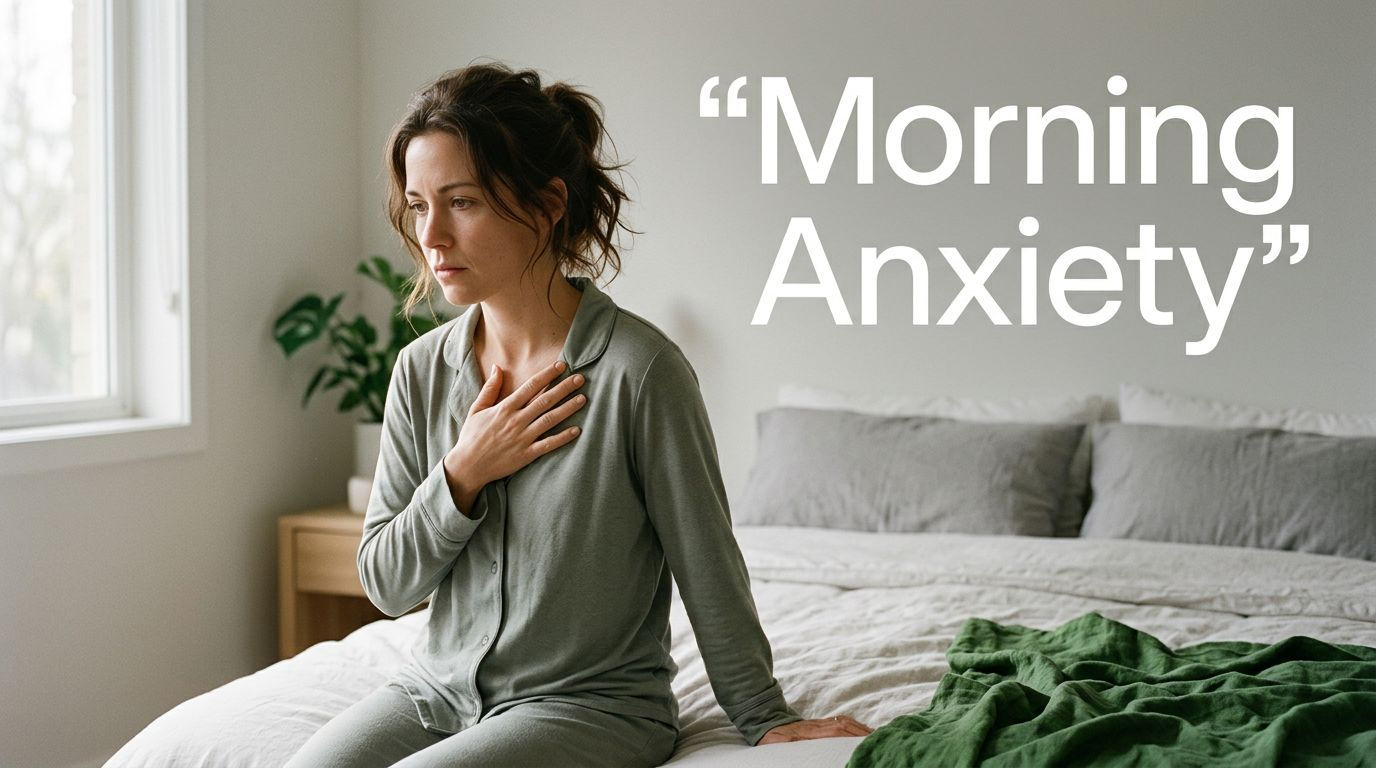
Morning Anxiety: Why It Hits When You Wake Up
Waking with a racing heart, dread, or a mind already scanning for problems can make the day feel difficult before you have even left bed. The physical symptoms may feel sudden and personal, but understanding them can make a calmer response possible.
They do not automatically mean something is wrong or predict how the day will unfold. Waking biology and sleep can interact with stress and worry, shaping the morning without deciding what comes next. The next section introduces the cortisol awakening response as one part of this picture.
Key takeaways
An unsettled start can have understandable links to waking biology and rest.
Early distress does not determine how the rest of the day will feel.
Understanding the pattern can support a calmer response.
Key Takeaways
Morning anxiety can be linked to waking biology, poor sleep, caffeine, blood sugar changes, and ongoing stress.
The cortisol awakening response can make physical sensations feel intense, but it does not automatically mean you have an anxiety disorder.
Grounding, gentle breathing, water, breakfast, and one small routine can help settle your nervous system before you tackle the day.
If symptoms persist, worsen, or disrupt daily life, a GP or mental health professional can help identify contributing factors and suitable support.
Why morning anxiety can feel so physical
Your body does not move from sleep to full alertness in one smooth step. As you wake, it releases cortisol, a stress hormone involved in energy, alertness, and responding to demands. This process is known as the cortisol awakening response.
Cortisol commonly rises during the first 30 to 45 minutes after waking. This pattern is the cortisol awakening response, not proof that you have an anxiety disorder. However, if your nervous system has been under prolonged strain, that rise can feel like an internal alarm.
You may notice a tight chest, nausea, shaking, a fast heart rate, tense muscles, or racing thoughts. Similar sensations can resemble panic attacks, but they do not confirm a diagnosis. The brain can then search for an explanation and land on tomorrow's deadline, a difficult conversation, money worries, or a fear that something is seriously wrong.
A surge of anxiety on waking is often a body sensation first, with worrying thoughts arriving afterwards to explain it.
Research has explored a link between the cortisol awakening response and later anxiety symptoms, although a single difficult morning is not evidence of an anxiety disorder. A long-term study of cortisol and anxiety found an association, not a simple cause-and-effect rule for every person.
The fight-or-flight response is designed to prepare you for action. When it activates without an immediate danger, it can still feel convincing. Your heart is not trying to frighten you. It is responding to a threat signal, which your nervous system may interpret as danger even when it comes from stress, uncertainty, or learned expectation rather than present danger.
What can make anxious mornings more likely
Morning anxiety rarely has one neat cause. It often builds where physical vulnerability and emotional pressure meet.
Poor sleep is a common starting point. Long periods awake, nightmares, irregular sleep patterns, late-night scrolling, and untreated sleep problems can leave the brain more reactive the next day. Good sleep hygiene includes consistent bedtimes, limiting late-night scrolling, and addressing untreated sleep problems. A calming bedtime routine might include mindfulness and meditation, but these aren't guaranteed cures. Worrying at bedtime may set the tone for waking, leaving no real break from trying to solve a problem.
Food and drink can add to physical sensations. After a night without eating, some people feel shaky, light-headed, irritable, or nauseous, as changes in blood sugar levels can resemble anxiety. If you have diabetes or recurring symptoms, seek medical advice. A simple breakfast with protein, fibre, and carbohydrate may help you feel steadier.
Caffeine can sharpen alertness, but higher caffeine intake may also raise your heart rate and cause jitteriness. If you already wake on edge, delay your first coffee until you've eaten and had some water. Consider whether afternoon coffee, energy drinks, or pre-bed alcohol are affecting your sleep. Alcohol can make you sleepy at first but often disrupts sleep later in the night.
Stress can lower your stress threshold, making ordinary waking sensations harder for the nervous system to tolerate. A difficult period at work, caring responsibilities, grief, relationship tension, burnout, or an upcoming change can heighten your sensitivity. You might then wake before you consciously remember what is troubling you.
A normal cortisol awakening response often settles as you wash, dress, and start moving. A sensitised nervous system may interpret the same rise as danger and trigger increasingly alarming thoughts. You cannot reliably tell the difference from one morning alone. Look for patterns over several weeks, including sleep, caffeine, mood, symptoms, and helpful coping strategies.
Settle your nervous system before you solve the day
When morning anxiety pins you to the bed, do not demand that you feel calm immediately. Start by reducing the urgency. You can acknowledge the feeling without treating every thought as a task.
Try this short sequence as part of a daily routine, before checking messages, news, or your calendar:
Put both feet on the floor, or press your back into the mattress, and name five things you can see around you.
Let your exhale become a little longer than your inhale. Breathe in gently through your nose, then breathe out slowly. Do not force a deep breath if it makes you uncomfortable.
Say what is true in the room: "It is morning. I am in my bedroom. Anxiety is here, and I can still take the next step." Positive affirmations may help some readers when phrased credibly. They should not be used to argue aggressively with distress or demand instant calm.
Drink water, open a curtain, and do one ordinary action such as showering, feeding a pet, or making breakfast.
Grounding directs attention towards the present rather than the story anxiety is building. It shares a present-focused quality with mindfulness and meditation, without becoming a separate practice. NHS Inform offers several grounding exercises for overwhelming anxiety, including using your senses and noticing contact with the floor.
Breathing works best when it is gentle rather than perfect. Gentle breathing is one of several relaxation techniques that may help you settle. The NHS guidance on breathing exercises suggests letting the breath move as deeply as is comfortable. The aim is not to make every sensation disappear. It is to show your body that it does not need to escalate.
A written note can also interrupt racing thoughts. Keep it brief: write the worry, the negative thoughts around it, the feared outcome, and one small action you can take later. Then return to your routine. A 7.30 am thought does not always need a 7.31 am solution.
Use CBT and ERP ideas without feeding the cycle
Cognitive behavioural therapy, or CBT, looks at links between thoughts, feelings, bodily sensations, and behaviour. Morning anxiety can become self-reinforcing when you check your pulse, search symptoms online, seek reassurance, cancel plans, or use other safety behaviours before getting out of bed. These actions may soothe you briefly, yet they can teach the nervous system that ordinary sensations are dangerous.
A more helpful response is to test the prediction. If your mind produces negative thoughts such as, “I cannot cope with work feeling like this”, write them down. Go through the first small part of your routine, then notice what happens. You may still feel anxious, but you might also make the train, complete an email, or find the feeling eases after breakfast. This is a behavioural experiment, based on real evidence rather than forced positive affirmations.
Exposure response prevention, also commonly written as exposure and response prevention, is a structured CBT approach most commonly used for obsessive compulsive disorder. It involves facing a feared thought or sensation while gradually resisting the usual compulsion or safety behaviours. If mornings include compulsive checking, reassurance seeking, or rituals, an ERP-trained mental health professional can help you practise this safely and at a manageable pace.
Continuing with normal responsibilities matters because avoidance can make the next morning feel more threatening. Keep the goal small and realistic. Get dressed, take a short walk, attend the first meeting, or travel part of the usual route. Rest when you need it, but try not to make anxiety the sole decision-maker.
When morning anxiety needs professional support
Seek professional help if these symptoms persist, worsen, disrupt sleep or work, or lead you to avoid daily life.
A GP can assess for an anxiety disorder and consider generalized anxiety disorder where clinically relevant. They can also check for physical contributors, such as medication effects, thyroid problems, sleep apnoea, or blood glucose issues.
Seek urgent medical help for new or severe chest pain, fainting, trouble breathing, or panic attacks. Don't assume these are familiar panic symptoms when they feel new, severe, or different from usual. If you are in immediate danger or might act on thoughts of harming yourself, call 999 or go to A&E. You can also contact Samaritans on 116 123 or text Shout to 85258 for support.
Therapy with a mental health professional can help you understand why mornings feel loaded, rather than only managing symptoms. If you would like to explore this at your pace, use the Booking page to find a suitable appointment. Appointments are available in Cheltenham, online, or through walk-and-talk sessions.
Frequently Asked Questions
Why do I feel anxious when I wake up?
Waking naturally involves changes in cortisol and alertness, which can feel like an internal alarm when your nervous system is already under strain. Poor sleep, caffeine, blood sugar changes, and ongoing stress may make these sensations more noticeable.
Does morning anxiety mean I have an anxiety disorder?
No. A difficult morning or a physical surge of anxiety does not confirm an anxiety disorder, and the cortisol awakening response is a normal part of waking biology. If symptoms continue, worsen, or interfere with daily life, speak to your GP.
What can I do when I wake up feeling anxious?
Put your feet on the floor, notice what you can see, breathe gently, and name what is true in the room. Drinking water, opening a curtain, eating breakfast, and completing one ordinary action can help you move towards the next step without demanding instant calm.
When should I seek help for morning anxiety?
Seek professional support if morning anxiety persists, disrupts sleep or work, or leads you to avoid daily life. Seek urgent medical help for new or severe chest pain, fainting, trouble breathing, or symptoms that feel different from usual.
A steadier start is possible
Morning anxiety is uncomfortable, but it is not a verdict on your character or ability to cope. Your nervous system may be waking into a stress response, while your mind tries to make sense of it. The cortisol awakening response may contribute, but it doesn't determine your day.
Small, repeated coping strategies can change the pattern: protect sleep, notice triggers, and slow the first few minutes. A predictable daily routine can help, as can mindfulness and meditation over time. With support from a mental health professional where needed, morning anxiety can become a signal to meet with care rather than a command to retreat.


This is a great point about learning through visual content. I often find useful study resources in video format, and pinterest video download can help save interesting material for future reference.