


ADHD Traits and Feeling Different: A Kinder View
Updated: Aug 21
For many adults, the feeling of being out of step begins long before there are words for it. You may have looked around and wondered why everyday life seemed to come with an unwritten rulebook that everyone else had received.
ADHD traits and feeling different often sit side by side. This does not mean every difference points to ADHD, or that you need to reach a conclusion today. It is an invitation to pause, notice your own patterns and become a little more curious about how your mind works.
Where the feeling of being different can begin
You may remember the feeling from childhood or adolescence. Perhaps your mind always seemed busy. Maybe you spoke before you had fully considered your words, regularly lost track of time, or found routines much harder to maintain than other people appeared to.
You may also have been able to become completely absorbed in something that interested you. Hours could disappear while you read, made something, researched a subject or solved a problem. Then somebody asked you to stop, change direction or begin a less interesting task—and the shift felt far harder than it seemed it ought to.
None of these experiences proves ADHD. People struggle with attention, organisation or restlessness for many reasons, and a single trait never tells the whole story. The NHS overview of ADHD in adults explains some of the ways difficulties with attention, hyperactivity and impulsivity can appear in adult life.
What often matters more is the effort that other people do not see. You might appear organised at work while using every scrap of energy to keep on top of deadlines. Friends may know you as sociable and confident, while you go home and replay the conversation in your head. Looking capable does not mean that things feel easy.
Growing up without the rulebook everyone else seems to have
Many people I work with describe a sense that other people understand social expectations, organisation and everyday routines more naturally. They seem to know when to begin, how to break a job into steps and when to stop talking. Meanwhile, you may have felt as though you were trying to work it all out in real time.

Repeated messages can leave a mark. Being told to “try harder”, “pay attention” or “stop being careless” may eventually shape the way you speak to yourself. You may have been labelled rude when you were excited, unreliable when you lost track of time, or lazy when you felt unable to begin.
Over time, you may have learnt to hide the parts of you that attracted criticism. Perhaps you over-prepare, apologise quickly, copy other people’s systems or stay quiet to avoid saying too much. These ways of masking can offer protection, but they can also be exhausting.
Shame can grow when a difficulty is repeatedly treated as a flaw in your character.
You did not need to be disruptive or visibly restless for your experience to matter. Some adults carry the feeling privately for years because their effort or coping strategies kept it from view.
Why the same differences can look like strengths or struggles
A quick mind may make surprising connections and bring imagination to your work or conversations. It can also mean that several thoughts arrive at once, making it difficult to wait, listen or stay with one point.
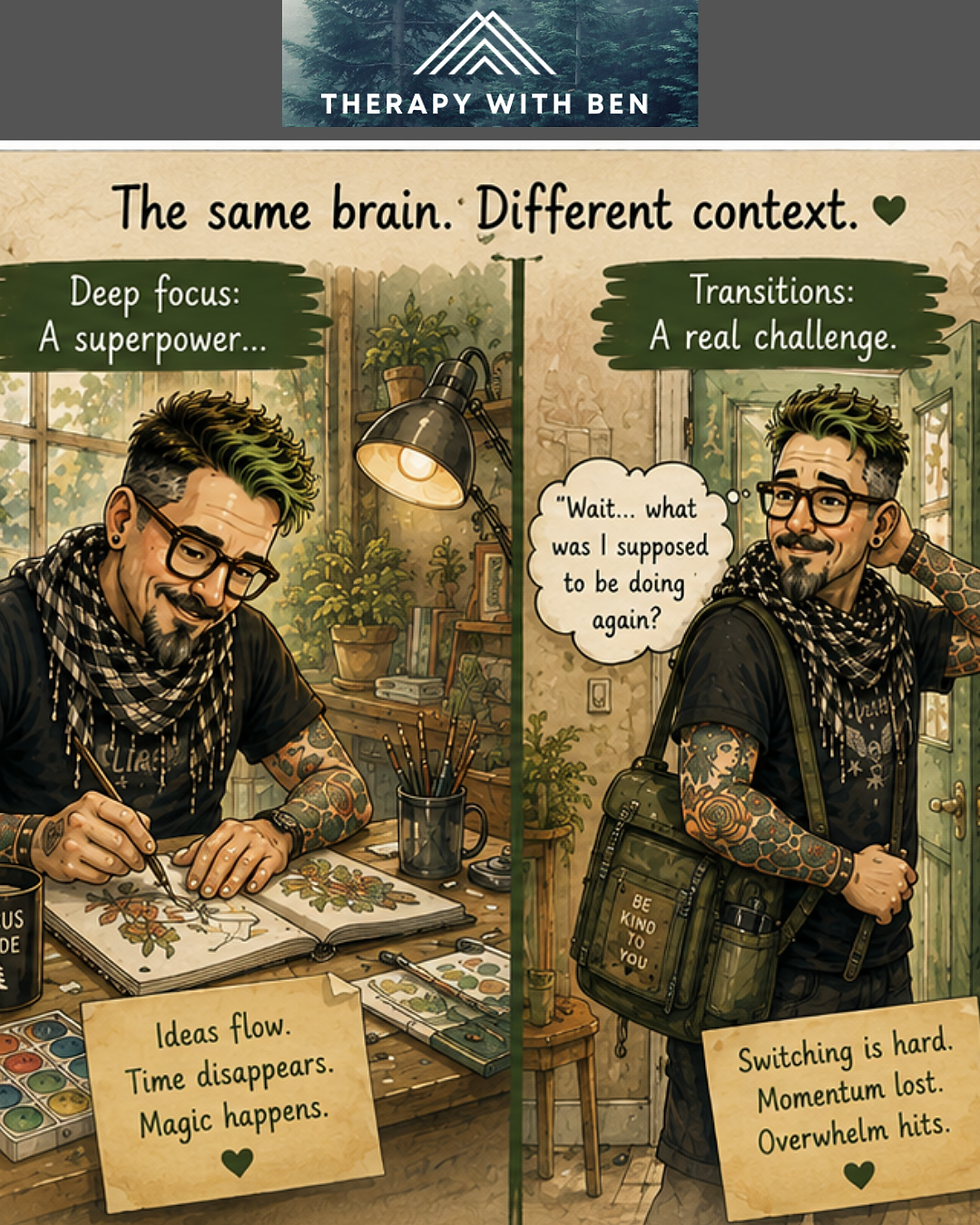
Deep focus can support creative projects, learning and work that matters to you. Yet interruptions may feel jarring, and changing tasks unusually difficult. Interest, stress, sleep and sensory demands all influence how a trait is experienced on a particular day.
It can be tempting to describe ADHD either as a superpower or as a list of deficits. Neither leaves much room for a real person. A more honest view is that the same mind can hold genuine abilities and genuine difficulties—and that context often affects which of those comes to the surface.
Research into adults’ experiences of seeking ADHD support has highlighted how complicated the route to recognition and care can be. Finding language for years of struggle may bring relief, sadness, anger or all three.
ADHD traits and feeling different: a kinder way to understand yourself
Self-judgement tends to ask, “What is wrong with me?” Curiosity opens up a different question: “What might be happening here—and what would help?”
That change is small, but not superficial. If you miss an appointment, calling yourself useless offers no useful information. Noticing that reminders need to be visible, repeated and linked to a clear next step gives you something you can work with. If a noisy café leaves you unable to follow a conversation, choosing a quieter place is not a failure. It is an informed choice.
Recognising ADHD traits and feeling different is not the same as diagnosing yourself. A professional assessment considers your history, the effect on different areas of your life and other possible explanations. If these experiences affect your work, studies or relationships, your GP can be a useful first step. ADHD UK’s adult diagnosis pathway explains the routes that may be available.
For some adults, exploring adult ADHD traits provides language for patterns that have never made sense. For others, it opens a wider conversation about attention, energy, self-esteem and coping. You do not have to force yourself into a label for that exploration to be worthwhile.
Looking through a different lens can reduce shame
One thing I’ve noticed through my counselling work is how quickly difficulties become a verdict on who a person is. “I forgot” becomes “I’m unreliable”. “I could not start” becomes “I’m lazy”.
A broader view can soften those conclusions. Look for patterns across school, work, home and relationships rather than judging yourself by one missed deadline or awkward conversation.
Perhaps you did well when a subject interested you but struggled with repetitive homework. Maybe you manage a demanding job and then have little energy left for cooking or household tasks. These details do not provide a diagnosis, but they may reveal what has been difficult and what has helped.
Understanding is not an excuse to avoid responsibility. It gives you a more accurate place from which to take it. You can repair mistakes, keep commitments and work towards change without using shame as your main source of motivation.
Curiosity can be more helpful than trying to become someone else
You do not need to analyse every part of your personality. Begin by noticing the conditions around the moments that are difficult.
What changes when you have slept well or when a task genuinely interests you? What effect do clutter, noise, hunger or too many decisions have? Pay attention, too, to what helps you begin, change direction or finish.
A few questions may be useful:
When do I feel most able to focus, and what is different about those times?
Which tasks leave me drained before I have even started them?
What do I tend to do when I fear criticism or getting something wrong?
What support did I need when I felt overwhelmed or misunderstood?
Where am I expecting myself to work in a way that does not suit me?
Curiosity does not demand a quick conclusion. It gives you room to notice your actual experience rather than continually measuring yourself against an idea of “normal”.
From self-criticism towards a more authentic way of living
Self-knowledge is where more authentic choices begin. Understanding what drains and steadies you makes it easier to shape your days with those things in mind.
Kindness does not mean lowering every expectation. You can have responsibilities, ambitions and goals that stretch you. You may still want to build steadier routines, manage time more reliably or communicate more clearly. The difference is that you can try to work with your mind rather than treating it as an enemy.
That might mean keeping an important object where you can see it, asking for written instructions or breaking a vague task into one visible first action. Small adjustments are not cheating. They often make change sustainable.

If you would like a supportive space to talk through these patterns, you are welcome to book a counselling session. There is no need to arrive with a firm conclusion about ADHD; we can begin with what life has actually been like for you.
Small reflections to begin understanding your own experience
Set aside ten minutes with a notebook. Choose one time when you felt noticeably different from the people around you. It could be at school, in a workplace, within your family or with friends.
Write a few lines about what was happening, what you felt, what other people seemed to expect and what you needed but did not receive. Try to describe the scene before you interpret it.
Then ask: if this were somebody I cared about, what might I notice that criticism misses?
You may see themes such as pressure around time, fear of disapproval, difficult transitions or relief when you can follow a genuine interest. There is no need to reach a verdict. For now, noticing is enough.
Self-understanding is a beginning, not a final answer
Insight often arrives gradually. You might decide that seeking an ADHD assessment feels right, recognise only a few familiar traits, or realise that something else deserves attention. Any of these can be a useful next step.
Your identity is larger than any diagnosis. A label can bring clarity, support and belonging, but it does not have to explain every part of you. You are still a whole person, with your own history, relationships, difficulties and hopes.
A gentler place to begin
Feeling different can have many roots. Recognising ADHD-like patterns does not require you to diagnose yourself or decide everything at once.
You might simply begin by returning to one familiar struggle and replacing “Why can’t I just be like everyone else?” with “What makes this hard for me, and what might help?”
That is not letting yourself off the hook. It is stepping out of a fight with yourself and towards a more honest understanding—one from which practical change becomes possible.


Comments