


Find Support with Anxiety Support Groups Today
Posted by: Therapy-with-Ben
Feeling like you're the only one battling the crushing weight of anxiety is an incredibly isolating experience, even though it's remarkably common. This is where anxiety support groups completely change the script. They offer a rare space where people just get it—no lengthy backstory required. Think of them as a powerful tool for finding connection, community, and genuine healing.
You Are Not Alone: The Power of Shared Experience

Anxiety has a nasty habit of building walls, convincing you that you’re cut off from the rest of the world. It whispers that your fears, your racing thoughts, and even your physical symptoms are yours and yours alone. This feeling of being isolated often makes the anxiety worse, locking you into a difficult cycle.
Anxiety support groups are designed to break that very cycle. Imagine walking into a room—whether it’s a physical space or an online forum—and being met with quiet nods of understanding rather than confused looks. It’s a place where you don’t have to apologise for your feelings or spend ages trying to explain them.
Creating a Community of Understanding
The real magic of these groups lies in the shared experience. Hearing someone else put words to the exact thought that’s been spinning in your own mind is profoundly validating. It starts to chip away at the loneliness, making those once strange or shameful feelings feel normal. Out of this shared validation, a strong sense of community is born.
The benefits of this connection are huge:
Reduced Isolation: You realise, very quickly, that you are not on your own with this.
A Sense of Hope: Seeing other people make progress and handle their struggles can be incredibly inspiring for your own journey.
Judgment-Free Sharing: It’s a safe space to be vulnerable without any fear of being criticised or misunderstood.
"The simple act of being seen and heard by others who truly understand can be one of the most powerful steps toward healing. It reminds us that connection itself is a form of support."
This really highlights the concept of emotional support from others in a community setting. It’s not just about talking; it’s about building resilience together. Peer support is unique because it gives you the chance to not only receive help but also to offer it, which can be fantastic for building self-esteem. Simply by breaking the silence, you begin to take back the power that anxiety once held over you.
How Support Groups Make a Tangible Difference
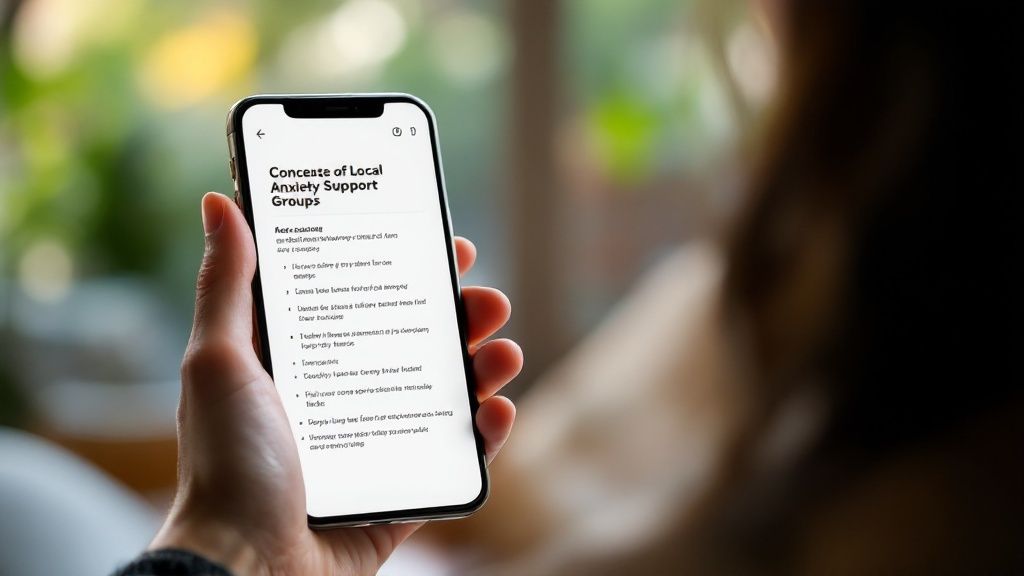
While the comfort of knowing you’re not alone is huge, the benefits of a good anxiety support group go so much deeper. They’re not just about talking; they’re about equipping you with real-world tools that make a genuine difference in your daily life. This is practical, on-the-ground support.
And let’s be honest, that support is desperately needed. In England, around 6% of people are diagnosed with Generalised Anxiety Disorder every single week. With only about a third of adults with common mental health issues getting formal treatment, support groups are vital. They fill a crucial gap, offering an immediate lifeline and breaking the profound isolation that anxiety so often creates.
From Shared Stories to Practical Strategies
This is where the real magic happens. A support group is a space where people don't just share their struggles; they share what actually works. You’re getting advice from people who are in the trenches with you, navigating the same challenges day in, day out.
You might hear firsthand about:
Grounding Techniques: Simple, effective methods to pull you back to the present moment during a panic attack, shared by someone who relies on them.
Challenging Negative Thoughts: Real-life examples of how another member reframes their anxious thoughts, offering a fresh perspective you can try yourself.
Navigating Social Situations: Small, manageable tips that have helped others tackle social anxiety, making big events feel that little bit less daunting.
It’s like crowd-sourcing solutions from a team that truly gets it. This isn't textbook theory; it's tried-and-tested wisdom you can start using straight away.
The Empowerment of Mutual Support
There’s a unique strength that comes from both giving and receiving help. In a support group, you’re not just passively taking advice—you’re an active part of a community of care.
Offering your own experience or a word of encouragement to someone else can be incredibly empowering. It reinforces your own knowledge and builds self-esteem by reminding you that your journey has value and can help others.
This two-way street builds a powerful sense of purpose and motivation. It’s the perfect complement to formal therapy, creating a space for continuous reinforcement and peer accountability. You can learn more about how professional sessions and peer support work hand-in-hand in our article on how therapy helps you manage anxiety.
The positive effects often ripple out beyond the group meetings, too. Many people feel inspired to take their wellbeing even further by developing a robust self-care routine.
Ultimately, a support group gives you practical tools, renewed hope, and the empowering knowledge that you have the strength to manage your anxiety—and you absolutely don’t have to do it alone.
Finding The Right Fit For Your Needs
Let’s be honest, not all anxiety support groups are created equal. Finding the right format is absolutely key to unlocking a positive and helpful experience for you. What works wonders for one person might feel completely wrong for another, so it’s worth taking a moment to explore the options.
Thinking about what aligns with your personality, comfort level, and even just your weekly schedule will empower you to find a space where you feel you can genuinely open up and connect. By understanding the different ways these groups run, you can make an informed choice that sets you up for success.
Online Support Groups: An Accessible First Step
For many people, the very idea of walking into a room full of strangers is enough to trigger the anxiety they’re trying to manage. This is where online anxiety support groups can be a brilliant starting point. They offer a layer of anonymity and convenience that can make it so much easier to take that initial leap.
Accessibility: You can join from anywhere with an internet connection. This is a game-changer if you have mobility issues, live in a more rural part of Gloucestershire, or simply have a packed schedule.
Anonymity: Using a screen name can dial down the fear of judgement, often allowing you to share more openly than you might feel ready to do in person.
Variety: The digital world is vast. This means you can often find groups focused on very specific types of anxiety, helping you connect with a community that truly understands your niche struggles.
Of course, there's a trade-off. Online groups can sometimes lack the deeper, personal connection that comes from sharing a physical space with others. It’s a balance between comfort and a different kind of human interaction.
The image below gives a sense of a typical face-to-face meeting, highlighting the kind of supportive atmosphere that in-person groups aim to build.
This kind of setting fosters a powerful sense of community and direct peer-to-peer connection that can be profoundly validating.
Face-to-Face and Walk & Talk Groups
Traditional face-to-face meetings offer a dynamic that digital platforms just can't fully replicate. Being physically present with others means you pick up on all the non-verbal cues—body language, tone of voice, a reassuring nod—that deepen understanding and empathy. This shared presence can forge incredibly strong bonds.
A fantastic alternative that’s gaining popularity is the walk and talk group. This model is built on the well-documented mental health benefits of light exercise and being in nature. The simple act of walking side-by-side can make conversations feel more natural and less intense than sitting directly opposite someone. Many people find this format helps in breaking the anxiety and avoidance cycle by gently encouraging activity in a supportive, low-pressure setting.
Deciding which format is best for you is a personal choice. To help you weigh the options, I’ve put together a quick comparison table.
Comparing Anxiety Support Group Formats
Feature | Online Groups | Face-to-Face Groups | Walk & Talk Groups |
|---|---|---|---|
Convenience | High – join from anywhere. | Lower – requires travel to a set location. | Moderate – requires travel but can be informal. |
Anonymity | High – can use a screen name. | Low – you are physically present. | Low – you are physically present. |
Non-Verbal Cues | Limited to video, if used. | Full range of body language and tone. | Full range of non-verbal cues. |
Environment | Your own home/chosen space. | Indoor setting, e.g., a community centre. | Outdoors, often in a park or nature reserve. |
Physical Activity | None. | None. | Light exercise (walking) is integrated. |
Best For... | Those needing flexibility, anonymity, or with mobility issues. | People seeking deep, in-person connection. | Individuals who find face-to-face intense or benefit from nature and movement. |
Ultimately, there’s no right or wrong answer—just what’s right for you at this moment in your journey.
While these groups offer invaluable emotional connection, remember that creating a comforting personal environment is also vital for managing anxiety. You might find it helpful to explore practical strategies like these cozy home decor ideas to help make your own space a true sanctuary.
The right group is one that respects your boundaries while gently encouraging growth. Whether that's online, in a quiet room, or on a park path, the goal is to find a space where you feel safe, heard, and understood.
Your Guide to Finding a Local Group
Knowing you want to join a group is one thing, but figuring out where to even start looking can feel like another hurdle altogether. The good news is, once you know where to look, finding the right community is much simpler than you might think.
It’s not about finding just any group; it’s about finding the right one for you. Let’s walk through how to find a welcoming space that genuinely fits what you need.
Where to Begin Your Search
A great first step is often a chat with someone you trust in the healthcare world. Your GP is usually well-connected with local mental health services and can often point you towards credible anxiety support groups right here in the Cheltenham area.
There are also some brilliant national charities that are treasure troves of information:
Mind: As a leading mental health charity, Mind has local branches dotted all over the UK. They often run their own groups or can direct you to trusted ones nearby.
Anxiety UK: This organisation is dedicated to supporting people with anxiety. They have a wealth of resources and can help you find services that match your specific situation.
Online Directories: Websites like Meetup or even local community forums sometimes list peer-led groups. Just be sure to do a bit of homework on them first to make sure they feel right.
Key Factors to Consider
Once you’ve got a shortlist, it’s time to look a little closer to see which one feels like the best fit. Not all groups run the same way, and thinking about a few key things can help you find a place where you’ll feel truly comfortable.
The most important thing is finding a group where you feel safe and understood. Trust your gut feeling – the right group should feel right to you, without any pressure to be someone you're not.
Before you go along, it’s worth asking a few questions about how the group operates:
Leadership Style: Is the group run by a mental health professional, like a counsellor, or is it led by peers with their own lived experience? A professionally-led group might offer more structure and therapeutic input, whereas a peer-led one often creates a powerful sense of community and shared understanding.
Group Focus: Does the group have a specific theme? Some are for general anxiety, but others might be focused on things like social anxiety, panic disorders, or OCD. Finding a group that really gets what you’re going through can feel incredibly validating.
Group Size and Format: Do you think you’d prefer a small, cosy circle or a larger gathering? And is the meeting structured with a topic for each session, or is it more of a free-flowing chat? Think about what sort of environment would help you feel able to open up.
Taking a bit of time to check these details helps take the mystery out of it all. It gives you the confidence to find a group that doesn't just offer support, but offers the right kind of support for you and your journey.
What to Expect in Your First Meeting
Walking into any new room—whether it's virtual or a real, physical space—can be daunting. That fear of the unknown is a huge barrier for so many people, but getting a clearer picture of what actually happens can make taking that first step feel a lot more manageable. An anxiety support group isn’t designed to feel intimidating; its whole purpose is to be a welcoming and safe space.
Most meetings follow a fairly simple, gentle structure to help everyone ease in and feel comfortable. The facilitator, who could be a peer with lived experience or a trained professional, will usually kick things off by welcoming everyone and running through the group’s guidelines. One rule is always paramount: confidentiality. What’s shared in the group stays in the group.
The Flow of a Typical Session
After the initial welcome and ground rules, the session often moves into some form of sharing circle. This is where you really start to feel the power of peer support.
While every group is different, a typical format might look something like this:
Brief Introductions: This is usually just sharing your first name. There’s absolutely no pressure to give your life story.
A Gentle Opening: Some groups might start with a short reading, a theme for the day, or just a moment of quiet reflection to help everyone feel centred and present.
Sharing Time: The facilitator will then open the floor for people to share what's on their minds. Crucially, this is always voluntary.
Guided Discussion or Open Chat: Some meetings focus on a specific topic, like coping mechanisms or handling panic attacks, while others are more of an open forum for whatever members feel they need to talk about that day.
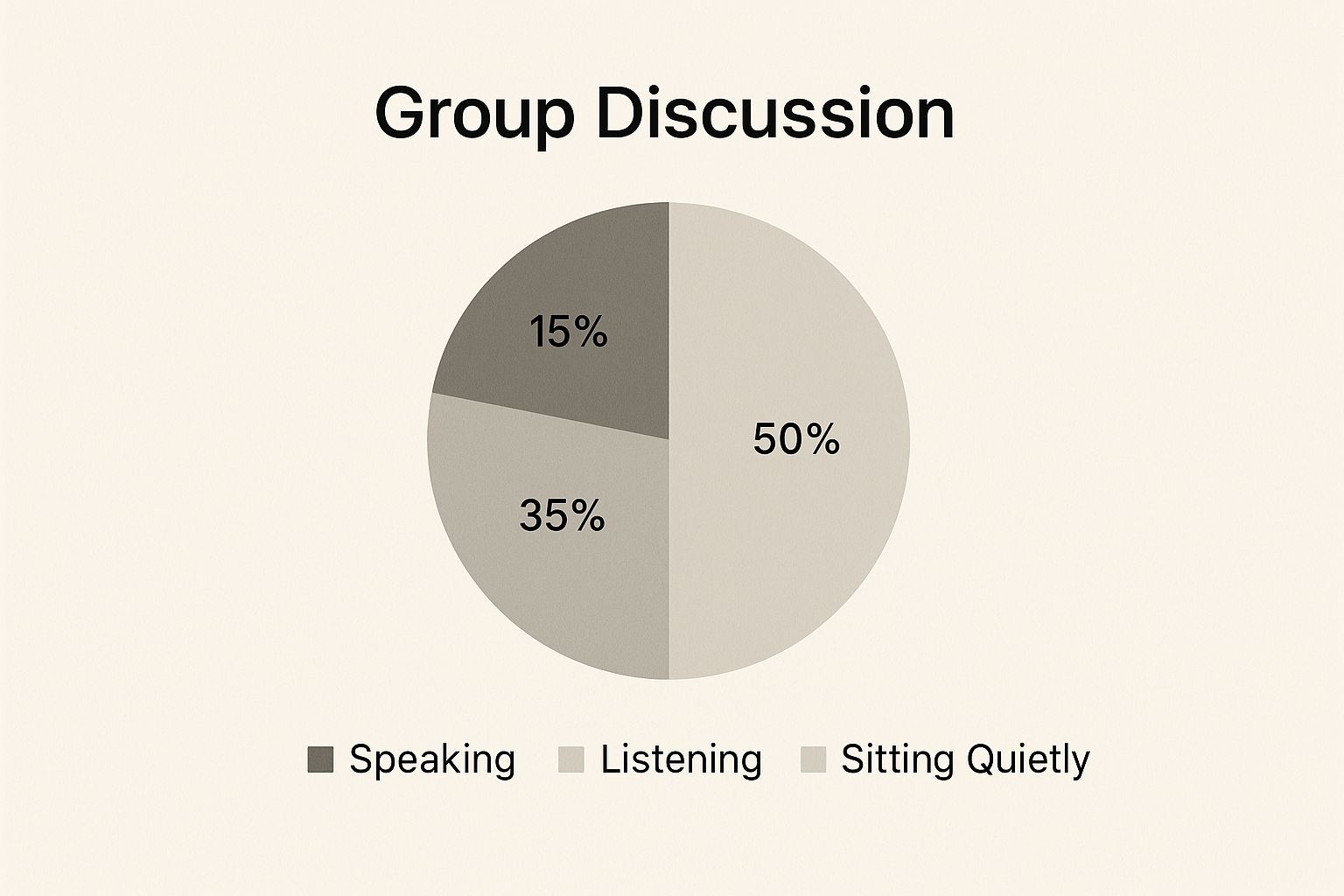
You are always in complete control of how much you participate. It’s completely normal for people to attend their first few meetings just to listen, and that’s perfectly okay. Listening can be just as powerful as sharing, especially when it helps you realise you’re not the only one going through this. There is absolutely no pressure to speak until you feel ready.
"The primary goal of your first meeting is simply to arrive and observe. Your presence is enough. The courage it takes to walk through the door is the biggest step, and it should be celebrated."
If you want to prepare, you could think about one small thing you might be willing to share if you feel comfortable—perhaps just what brought you to the group. But honestly, your main goal is just to show up and see how it feels. This first meeting is all about taking the fear out of the unknown so you can decide if it's the right space for you.
Anxiety Support Resources in Cheltenham
Knowing where to find help is one thing, but actually taking that first step can feel like a huge hurdle. For anyone living in or around Cheltenham, the good news is you don't have to look far. There are some brilliant local organisations ready to offer a welcoming hand and connect you with real, tangible support right on your doorstep.
Finding a local group isn't just about turning up for a meeting. It's about building connections with people who get it—people who understand the local area and what life is like here. That shared sense of community can make a support network feel so much more personal and relevant.
Key Organisations Offering Support
If you're wondering where to start, here are a few excellent local resources for finding anxiety support groups and other mental health services in Cheltenham:
The Independence Trust: This Gloucestershire-based charity is a real cornerstone for community mental health. They run a variety of services, including peer support groups where you can manage your wellbeing in a safe, understanding space.
Cheltenham and Gloucester Mind: As the local branch of the national Mind charity, they are a fantastic source of information, advocacy, and support. They're a great port of call for finding professionally vetted local groups and services you can trust.
Community-Led Initiatives: Don't forget to check out what's happening at local community centres and hubs. You'll often find smaller, informal peer-led groups that offer a different, but equally powerful, kind of support.
The Importance of Early Community Support
Getting support early on, especially for young people, can make a world of difference. Since 2017, a staggering 39.2% of 6 to 16-year-olds in England have experienced a decline in their mental health. Charities and local wellbeing programmes have shown just how effective early intervention can be. Often, these community groups are far more accessible than waiting for formal NHS services. You can read more about these vital mental health statistics and their impact on young people.
Connecting with a local group isn't just about finding help; it's about becoming part of a community that actively fosters resilience and understanding, right on your doorstep.
While peer groups offer an incredible sense of connection, sometimes you might need a more structured, one-on-one approach. If you're exploring different options, our guide on effective online counselling for anxiety offers a closer look at another valuable form of support. Making that first call or sending that first email can feel like a massive leap, but it’s always the first step toward feeling better.
A Few Common Questions About Support Groups
Stepping into a support group for the first time can feel a little daunting, and it’s completely natural to have a few questions. Knowing what to expect can make taking that first step feel much more manageable. Here are some straightforward answers to the most common queries I hear.
Do I Have to Tell My Whole Story?
Absolutely not. There is zero pressure to speak or share anything you're not comfortable with, especially during your first few meetings. Many people find it helpful just to listen and get a feel for the group dynamic at first.
The goal is for you to feel safe and supported. You can contribute when, and only if, you feel ready.
Are These Groups a Replacement for Therapy?
No, support groups are best seen as a companion to professional therapy, not a substitute for it. While they offer invaluable peer support and the comfort of shared experience, they aren't a form of clinical treatment.
Many people find that combining one-on-one therapy with a support group offers the best of both worlds: professional, tailored guidance alongside the deep understanding that only comes from others who truly get it.
"Confidentiality is a cornerstone of almost every support group. What's shared in the group is expected to stay in the group. This creates the foundation of trust and safety that allows everyone to open up."
What if I Don’t Like the First Group I Try?
That’s completely okay—in fact, it’s very normal. Every group has its own unique personality, focus, and way of doing things. It's not at all uncommon to try a couple of different ones before finding a place that feels like the right fit.
Don't let it discourage you. Think of it as part of the process, like trying on a few pairs of shoes before you find the one that fits perfectly. The most important thing is that you end up in a space where you feel comfortable and understood.
At Therapy with Ben, I provide a safe, confidential space to explore your feelings, whether that’s through face-to-face, online, or walk and talk therapy here in Cheltenham. If you're ready to take that next step, please visit my website to learn more about how I can support you.


Comments