


How to Manage Anxiety Naturally
Managing anxiety naturally isn't about finding a single magic bullet. It’s about weaving together a handful of powerful strategies that target your mind, your body, and the rhythm of your daily life. The most resilient approach combines mindfulness practices, regular physical movement, and supportive lifestyle changes to build a solid foundation against stress. This guide will give you a practical, real-world framework to do just that.
Finding Calm in a World of Noise
Let’s be honest, dealing with anxiety can feel incredibly isolating. As a therapist, I’ve seen first-hand how overwhelming it can become, often leaving you feeling stuck, powerless, and completely alone in your struggle. This guide is designed to move beyond generic, one-size-fits-all advice and offer a compassionate, practical framework to help you feel more in control.
We'll explore actionable strategies for your mind, body, and daily life, all grounded in real-world experience. You won't find any promises of a quick fix here. What you will discover are sustainable practices to build genuine resilience and find your footing when life feels turbulent.
Understanding the Scale of Anxiety
Feeling anxious is a normal, healthy human response. It’s your body’s alarm system. But when that alarm gets stuck in the ‘on’ position and the feeling becomes persistent and overwhelming, it can seriously impact your life. If this sounds familiar, you are far from alone.
In the UK, anxiety disorders are a significant public health challenge. On any given week in England, around 6% of the population is diagnosed with Generalised Anxiety Disorder (GAD). What’s more, recent surveys from 2022/23 show that a staggering 37.1% of women and 29.9% of men report high levels of anxiety, showing just how widespread these feelings are.
This isn't about trying to eliminate anxiety entirely—an impossible and unhelpful goal. It's about learning to navigate its waves with skill and confidence.
The aim is to build a new relationship with your anxiety, one where you are in the driver's seat, not the passenger. It's about acknowledging the feeling without letting it dictate your actions or define your worth.
Your Roadmap to a Calmer Mind
The journey to managing anxiety is deeply personal, but it always helps to have a map. We’re going to focus on several key areas, each offering a unique set of tools you can add to your personal toolkit for well-being.
This table gives you a snapshot of the core strategies we'll explore in this guide. Think of it as your roadmap, helping you see the path ahead and choose the tools that feel right for your personal journey.
Strategy Area | Core Techniques Discussed | Primary Benefit |
|---|---|---|
Mindful Awareness | Grounding techniques, present-moment focus, meditation basics | Reduces racing thoughts and helps you disengage from worry cycles. |
Physical Regulation | Diaphragmatic breathing, gentle movement, progressive muscle relaxation | Calms the nervous system and provides immediate physical relief from stress. |
Lifestyle Foundations | Nutrition for mental health, sleep hygiene, creating a calming environment | Builds long-term resilience by supporting your body's natural ability to manage stress. |
By weaving these different threads together, you create a safety net that is both strong and flexible, ready to catch you when you need it most.
Here's a little more on what we'll cover:
Mindful Awareness: Learning to ground yourself in the present is a cornerstone of anxiety management. We'll explore what mindfulness in therapy is and how it works to quieten a racing mind. For a deeper dive, exploring effective mindfulness activities for adults can provide powerful ways to find peace amid daily chaos.
Physical Regulation: Your body holds an incredible key to calming your nervous system. We will walk through simple breathing exercises and gentle movements that can offer immediate, tangible relief when you feel overwhelmed.
Lifestyle Foundations: We'll look at how the fundamentals—nutrition, sleep, and your daily environment—play a massive role in your mental well-being and emotional stability.
By the end of this guide, you’ll have a collection of practical, evidence-based methods you can start using today to feel more present, grounded, and capable.
Using Your Breath to Anchor Your Mind
When anxiety begins to spiral, it can feel like your mind is running a race with no finish line. In these moments, the most powerful and immediate tool you have isn't something outside of you, but within—your own breath. It sounds deceptively simple, but the physiological link between controlled breathing and a calm nervous system is profound.

During a bout of anxiety, your body flips into its "fight or flight" mode. This often leads to shallow, rapid breathing, which only cranks up the physical feelings of panic. By deliberately changing the rhythm and depth of your breath, you send a direct signal to your brain that the danger has passed. This simple act can help lower cortisol (the primary stress hormone) and kick-start your parasympathetic nervous system, the part responsible for rest and relaxation.
This section moves beyond just telling you to ‘breathe deeply’. We'll explore specific, practical techniques you can use anywhere, anytime, to ground yourself and get back a sense of control.
Mastering Diaphragmatic Breathing
Also known as belly breathing, this is the absolute foundation of most calming breathwork. Many of us, especially when stressed, breathe from our chest—short, shallow breaths that don't fully engage our lungs. Diaphragmatic breathing fixes this by using the large muscle at the base of your lungs (the diaphragm) to draw air deep into the body.
Picture this: you’re suddenly overwhelmed in a crowded supermarket. Your heart starts racing and your thoughts become a chaotic jumble. This is a perfect moment to practise.
Here’s how you can do it discreetly:
Place one hand on your chest and the other on your stomach, just below your ribcage.
Breathe in slowly through your nose for a count of four. As you do, really focus on letting your stomach expand and push your hand out. The hand on your chest should stay relatively still.
Hold the breath for just a moment.
Exhale slowly through your mouth for a count of six, feeling your stomach gently fall as you release the air.
This deeper, slower breathing pattern maximises oxygen exchange, which helps to slow your heartbeat and stabilise your blood pressure, offering almost immediate relief.
The Power of Box Breathing
Box breathing, sometimes called four-square breathing, is a brilliantly simple yet effective technique for resetting your nervous system. It’s a favourite of everyone from military personnel to athletes because of its ability to sharpen focus and manage stress under pressure. The structure is dead easy to remember, which is vital when your anxious mind is struggling to concentrate.
You can use this before a difficult conversation, during a stressful meeting, or even when you wake up in the middle of the night with racing thoughts.
The method involves four simple steps, each lasting for a count of four:
Breathe in slowly through your nose to a count of four.
Hold your breath for a count of four.
Breathe out slowly through your mouth for a count of four.
Hold the empty breath for a count of four.
Repeat this cycle four or five times, focusing entirely on the counting and the physical sensation of the air entering and leaving your body. The symmetrical nature of the exercise gives your mind a predictable pattern to latch onto, pulling it away from that anxious spiral.
By focusing on the rhythm of your breath, you give your mind a tangible anchor. It's a way of saying, 'Right here, right now, I am safe, and I am in control of this single action.'
Turning Everyday Moments into Mindful Pauses
You don't need to sit on a meditation cushion for an hour to get the benefits of mindfulness. The real skill in learning how to manage anxiety naturally is weaving these practices into the fabric of your day. Your breath is the perfect tool for turning routine activities into moments of calm presence.
Think about the simple act of making a cup of tea. Instead of rushing through it while your mind is elsewhere, turn it into a breathing exercise. As you wait for the kettle to boil, just stand and focus on a few rounds of diaphragmatic breathing. Feel the warmth of the mug in your hands. As you take that first sip, notice the aroma and the taste, all while keeping your breath slow and steady.
These small, intentional pauses can make a massive difference. They break the cycle of automatic, anxious thinking and remind you that you can always choose to return to a state of calm, one conscious breath at a time.
Moving Your Body to Quiet Your Mind
When you’re already running on the fumes of anxious energy, the idea of hitting the gym can feel completely overwhelming. So, let’s reframe what “exercise” even means. This isn’t about punishing workouts or chasing fitness goals. It’s about using movement as a powerful, natural medicine for your mind.

Something remarkable happens chemically when you move your body. Your brain releases endorphins, those fantastic mood elevators that act a bit like the body’s own painkillers and anti-anxiety agents. At the same time, physical activity helps to burn through cortisol, the main stress hormone that keeps you trapped in that relentless ‘fight or flight’ mode.
Even the gentlest movement can shift your entire physiology from high alert to a state of calm.
The recent spike in mental health struggles shows just how vital these natural tools are. Since the pandemic, the UK has seen a sharp rise in working-age adults reporting poor mental health. In fact, self-reported anxiety levels, which were once stable, climbed to around 23% in 2023. This makes accessible strategies like regular physical activity more crucial than ever. You can explore more data on the mental health trends in the UK to get the full picture.
Finding Joy in Gentle Movement
You really don’t need an intense workout to feel the benefits. The secret is finding something you genuinely enjoy, which makes it far more likely you'll stick with it. The goal here is to connect with your body, not to compete.
Here are a few ideas to get you started:
A Brisk 15-Minute Walk: Head to a local park or just wander around your neighbourhood. Try to focus on the rhythm of your steps and the feeling of fresh air on your skin. This is especially good as a "walk and talk"—something I often do with clients to blend movement with reflection.
Gentle Stretching at Your Desk: If you’re at a desk all day, set a timer for every hour. When it goes off, stand up and do a few simple stretches. Reach for the ceiling, gently twist your torso, and roll your neck and shoulders. It helps to break up tension before it settles in.
Gardening or Allotment Work: There’s something incredibly grounding about getting your hands in the soil. Activities like digging, weeding, and planting are rhythmic and mindful, pulling your focus away from racing thoughts and onto a tangible, rewarding task.
Dancing in Your Kitchen: Stick on your favourite song and just move. No choreography, no judgement. It’s a brilliant way to release pent-up energy and spark a little joy when you need it most.
Overcoming the Motivation Barrier
I get it. When anxiety has its grip on you, the thought of getting up and moving can feel like climbing a mountain. Your energy is at rock bottom and your mind is screaming at you to stay put where it feels ‘safe’. This is where self-compassion becomes your most important tool.
Start ridiculously small. Don't aim for a 5k run. Aim to put on your trainers and walk to the end of the street. That's it. And then, celebrate that small victory. Often, the hardest part is just getting started. Once you’re in motion, you might just find you want to keep going.
Your only goal is to feel a little bit better than you did before you started. Any movement, no matter how small, is a powerful statement that you are taking active steps to care for yourself.
Another great strategy is something called "temptation bundling"—pairing movement with something you love. For example, only allow yourself to listen to your favourite podcast or audiobook while you're out for a walk. This creates a positive association and can be a real motivator on days when you feel stuck. The key to figuring out how to manage anxiety naturally is discovering what works for you, not what you think you should be doing.
By Therapy-with-Ben
Nourishing Your Nerves Through Nutrition
It’s an angle that often gets missed, but what you eat has a direct and pretty powerful impact on your anxiety levels. The connection between your gut and your brain is a strong one, and learning to fuel your body with care is a huge part of learning how to manage anxiety naturally. This isn't about getting tangled up in restrictive diets; it’s about finding a sustainable way of eating that supports a stable, calmer mood.
The food we choose can either act as a balm for our nervous system or send it into overdrive. By making a few conscious choices, you can build a strong biological foundation that makes you far more resilient to stress and less vulnerable to the physical triggers of anxiety. Let's step away from confusing nutritional science for a moment and focus on some simple, practical changes you can actually make.
Stabilise Your Blood Sugar to Stabilise Your Mood
Ever felt that jittery, irritable, and anxious buzz a couple of hours after a sugary snack or a big coffee? That’s usually a blood sugar crash. When you eat refined carbs or sugary foods, your blood sugar spikes and then plummets. Your body then releases stress hormones like cortisol and adrenaline to try and get things back on an even keel.
This hormonal rollercoaster can feel almost identical to the physical sensations of a panic attack. It can create a nasty cycle where your diet is actively making your anxiety worse. The key is to switch to foods that give you a slow, steady release of energy instead.
Try to build your meals around these elements:
Complex Carbohydrates: Think whole grains like oats, brown rice, and quinoa. They break down slowly, which stops those sharp spikes and miserable dips in your blood sugar.
Lean Protein: Including things like chicken, fish, eggs, or lentils with every meal helps you feel fuller for longer and keeps your energy levels stable.
Healthy Fats: Foods like avocado, nuts, and seeds are brilliant for your brain health. They also contribute to a feeling of fullness, which helps reduce cravings for those sugary quick fixes.
A really simple swap is changing a sugary breakfast cereal for a bowl of porridge with some berries and a sprinkle of seeds. That small change can genuinely set a much more emotionally balanced tone for your entire day.
The Power of Anxiety-Calming Nutrients
Certain minerals and nutrients play a massive role in regulating your nervous system. Making a conscious effort to get more of them into your diet can have a noticeable calming effect over time. Two of the most important ones to focus on are magnesium and omega-3 fatty acids.
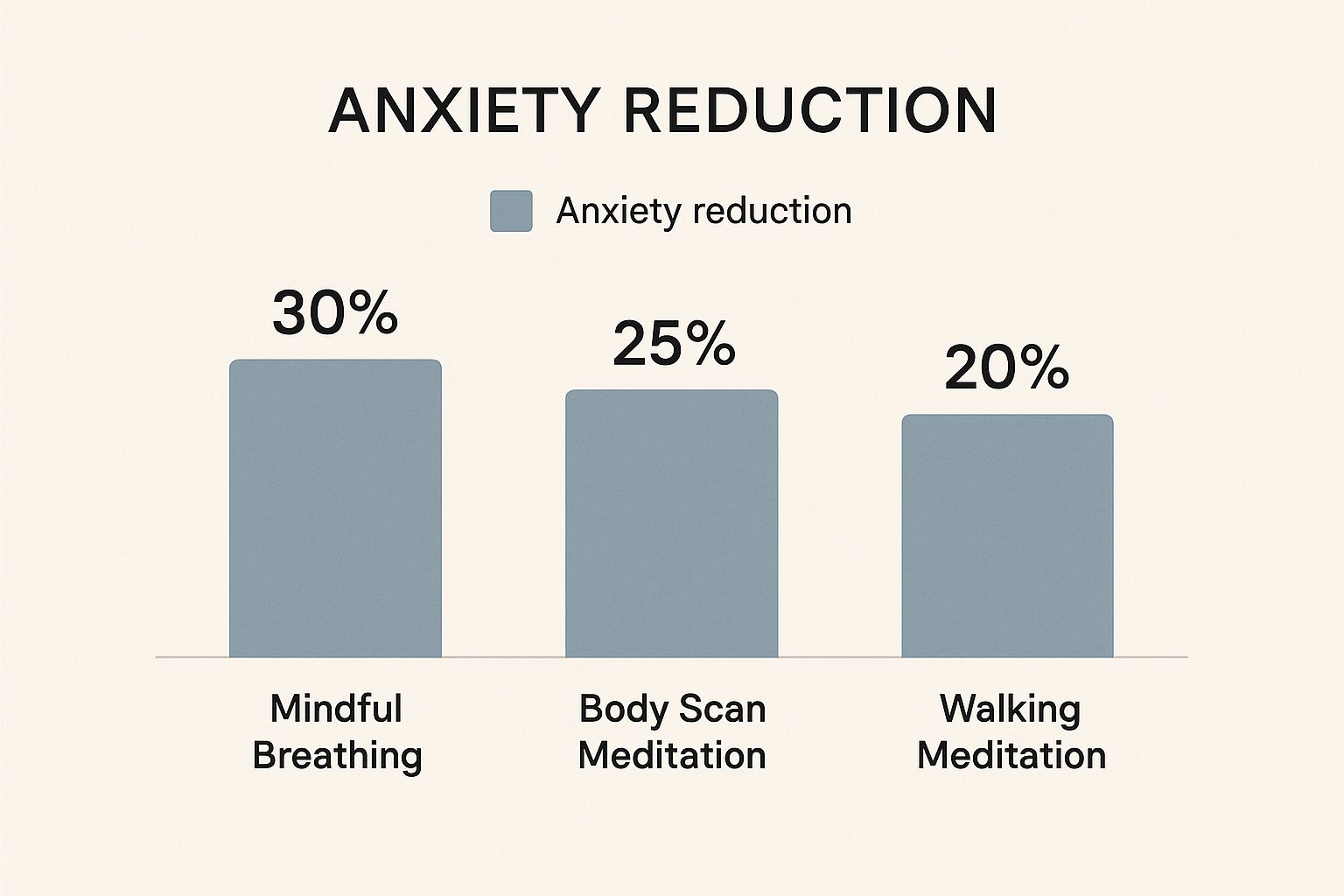
Magnesium is often called nature's tranquilliser, and for good reason. It helps regulate the neurotransmitters that promote a sense of calm and is essential for muscle relaxation. If you're running low, it can absolutely contribute to feelings of nervousness and tension. You can find it in dark leafy greens (like spinach), nuts, seeds, and even a bit of dark chocolate.
Omega-3 fatty acids, found in oily fish like salmon and mackerel, as well as in flaxseeds and walnuts, are vital for brain function. They help to reduce inflammation throughout the body, including in the brain, which research has linked to anxiety and other mood disorders.
Think of your diet as a form of proactive self-care. Every meal is an opportunity to send your brain and body a message of nourishment and support, building your resilience from the inside out.
Making small, consistent changes to what you eat can have a profound impact on your mental well-being. Here are some easy food swaps to get you started:
Anxiety-Calming Food Swaps
Instead Of This (Potential Anxiety Trigger) | Try This (Nerve-Nourishing Alternative) | Why It Helps |
|---|---|---|
Sugary Cereal or White Toast | Porridge with Berries & Seeds | Provides slow-release energy from complex carbs and healthy fats, preventing blood sugar crashes. |
Crisps or Biscuits | A Handful of Almonds or Walnuts | Rich in magnesium and omega-3s, which support brain health and calm the nervous system. |
Sugary Fizzy Drinks | Sparkling Water with Lemon or Herbal Tea | Hydrates without the sugar spike and subsequent crash. Chamomile tea is particularly calming. |
Large Caffeinated Coffee | Decaf Coffee or Green Tea | Reduces the intake of stimulants that can trigger a fight-or-flight response, like a racing heart. |
Milk Chocolate Bar | A Few Squares of Dark Chocolate (70%+) | Lower in sugar and a great source of magnesium, which helps with relaxation. |
These aren't rigid rules, but simple suggestions to help you start nourishing your nervous system more intentionally.
Reducing Stimulants Without Feeling Deprived
For many of us, caffeine and sugar are go-to coping mechanisms. They offer a temporary burst of energy or a moment of comfort. The problem is, they often make anxiety worse in the long run. Caffeine is a direct stimulant that can increase your heart rate and trigger feelings of panic, while sugar, as we've seen, messes with your blood sugar.
The idea isn't to cut them out completely overnight – that can feel like a punishment and is rarely sustainable. Instead, focus on mindful reduction and making some smart swaps.
If you drink several cups of coffee a day, try replacing just one with a decaf version or a calming herbal tea like chamomile. When you feel that afternoon slump and reach for a biscuit, try a handful of almonds and an apple instead.
These small, consistent changes help reduce your body's reliance on artificial stimulants, allowing your nervous system to find its own natural, calmer baseline. It’s an approach that makes looking after your mental health feel intuitive and supportive, not like another source of stress.
Creating an Environment That Promotes Calm
Your surroundings and daily habits are constantly shaping your mental state, often in ways you don't even realise. Learning how to manage anxiety naturally involves more than just techniques for acute moments of panic; it's about crafting a lifestyle that actively promotes calm rather than fuelling stress. Small, intentional shifts in your environment can really add up, leading to a significant drop in day-to-day anxiety.

This process starts with your physical space. A cluttered, chaotic room can feel overwhelming to your senses, subtly telling your nervous system that things are out of control. Tidying up isn’t just about making things look nice; it’s a powerful way to create external order that helps foster internal calm.
You don't need to tackle a massive decluttering project all at once. Just start with one small area, like a messy drawer or a pile of papers on your desk. The act of sorting and organising can be a very mindful practice in itself, bringing your focus to a simple, manageable task. To really get to grips with the impact of your physical surroundings, it’s worth exploring decluttering for mental health and anxiety reduction.
Crafting a Restorative Sleep Routine
We all know sleep is important, but a truly restorative bedtime routine goes way beyond just getting eight hours. It's about creating a sequence of actions that signals safety and relaxation to your nervous system, making it easier to switch off from the day's worries. An anxious mind often resists sleep, seeing it as an unstructured, open invitation for thoughts to run wild.
Your goal is to create a clear boundary between your stressful, active day and a peaceful night.
This means putting some real thought into the last hour before you plan to sleep. Instead of doom-scrolling on your phone or watching an intense TV drama, dedicate this time to activities that genuinely calm you down.
Dim the Lights: Lower lighting helps trigger the production of melatonin, the hormone that tells your body it's time for sleep.
Listen to Calming Music or a Podcast: Choose something soothing that doesn't require a lot of concentration.
Have a Warm, Caffeine-Free Drink: A chamomile tea can be wonderfully relaxing and a great signal to your body to wind down.
Do Some Gentle Stretches: Release any physical tension you're holding from the day. It’s amazing how much stress we hold in our shoulders and neck.
This consistent routine creates a powerful psychological cue that sleep is approaching, helping to quieten that anticipatory anxiety about not being able to rest.
Setting Healthy Digital Boundaries
In our hyper-connected world, our phones can be a constant source of low-level anxiety. The endless scroll of social media, the 24/7 news cycle, and the constant pings of notifications are all designed to keep our nervous systems on high alert. Setting firm digital boundaries isn't a luxury; it's an absolute necessity for mental wellbeing.
Start by being more intentional about how and when you consume information. You really don't need to be informed of every global crisis the second it happens.
Consciously choosing when to engage with the news and social media puts you back in control. It's about moving from being a passive recipient of anxiety-inducing content to an active curator of your own mental space.
Consider these practical steps:
Schedule Your 'Worry Time': If you find yourself constantly checking the news, allocate a specific, limited time for it each day (e.g., 15 minutes after breakfast). Outside of that window, resist the urge.
Curate Your Social Feeds: Unfollow accounts that make you feel inadequate, anxious, or angry. Your feed should be a source of inspiration and connection, not stress.
Turn Off Non-Essential Notifications: Do you really need to know instantly when someone likes your photo? Each notification is a small interruption that pulls you out of the present moment.
Fostering Genuine Human Connection
Finally, one of the most powerful buffers against anxiety is genuine, supportive human connection. When we feel isolated, our problems can seem much bigger and more overwhelming than they actually are. Just sharing what you’re feeling with a trusted friend or family member can provide immediate relief.
It’s not about finding someone to solve your problems for you. Often, it's simply the act of being heard and understood that makes all the difference.
Make a conscious effort to nurture these relationships. It could be as simple as scheduling a weekly phone call with a friend, arranging a walk with a family member, or joining a local group based on a hobby you enjoy. These connections remind you that you're not alone, building a vital support network that helps you feel safer and more resilient in the face of life's challenges.
By Therapy-with-Ben
Building Your Personal Anxiety Toolkit
We’ve covered a lot of ground together, exploring powerful strategies from breathing exercises and mindful movement to nutritional tweaks and calming your environment. Think of this not just as a summary, but as your personal action plan. The real art of learning how to manage anxiety naturally lies in figuring out which of these tools actually fit your life and your specific challenges.
The aim isn't to be perfect or to try and tackle everything at once. It's about building a flexible, personalised plan that you can genuinely stick with. This is all about consistent, compassionate practice.
Crafting Your Personal Plan
Take a moment to think back over what you've read. Which ideas sparked something in you? Maybe the thought of a brisk walk in the park felt much more doable than a structured gym session. Or perhaps the concept of stabilising your blood sugar really clicked.
To get started, ask yourself a few questions:
When I'm feeling anxious, what's the easiest thing I can reach for? Is it a simple breathing technique, or just stepping outside for five minutes of fresh air?
What's one small lifestyle change I could realistically make this week? Could you swap one coffee for a herbal tea, or dedicate ten minutes to tidying one small corner of your home?
What support do I already have around me? Is there a good friend you can call, or a local park you enjoy visiting?
Jot down just two or three strategies that feel right for you. This is the beginning of your toolkit—your go-to list for when you feel overwhelmed, and the proactive steps you can start weaving into your daily life.
Remember, managing anxiety is a journey, not a destination. These natural tools are your allies, but they are part of a larger picture. Embrace this process with self-kindness and patience.
This journey is ultimately about empowerment. You have the ability to create lasting, positive change by consistently applying these small, manageable practices. However, it's also vital to recognise that seeking professional support is a sign of incredible strength, not weakness.
If you feel stuck, understanding the ways therapy can help you manage anxiety could be a crucial next step in reclaiming your sense of calm and control. You don't have to navigate this alone.
Common Questions About Natural Anxiety Management
Embarking on a journey to manage anxiety naturally always brings up a lot of questions. It's completely normal to wonder about the process and what you can realistically expect. I’ve put together some answers to the queries I hear most often, to hopefully give you a bit more clarity and confidence as you move forward.
How Long Until These Methods Start Working?
This is probably the most frequent question I get, and the honest answer is that it really does vary for everyone. Some techniques, like the deep breathing exercises we talked about, can offer almost immediate, short-term relief. You can literally feel your heart rate slow down within minutes of practising proper diaphragmatic breathing during a moment of high anxiety.
But for the more profound and lasting changes from lifestyle shifts—things like nutrition, consistent movement, and mindfulness—it’s more helpful to think in terms of weeks and months. Consistency is absolutely the key. When you start weaving these practices into your daily routine, you'll likely notice a gradual but significant improvement in your baseline anxiety levels over a four-to-eight-week period.
Can I Use These Techniques with Therapy or Medication?
Absolutely. In fact, for many people, this is the most effective approach. These natural strategies are designed to be a powerful complement to professional mental health support, like Cognitive Behavioural Therapy (CBT) or prescribed medication. They are not intended as a replacement for professional medical advice, especially if you're dealing with a diagnosed anxiety disorder.
Think of them as essential tools in your overall wellbeing toolkit. It’s always a good idea to chat about any big lifestyle or dietary changes with your GP or therapist. This just ensures your entire support system is on the same page and that the strategies you’re using are safe and suitable for your specific situation.
What if I Still Feel Overwhelmed?
It's completely okay if these natural strategies alone don't feel like enough, particularly if your anxiety is severe or just won't let up. That is not a sign of failure. It’s an indication that you might need a bit more support, and reaching out is a true sign of strength. Many people find themselves stuck in unhelpful patterns, and you can learn more about breaking the anxiety and avoidance cycle in another of my posts.
If your anxiety is getting in the way of your daily life, your work, or your relationships, I’d strongly recommend speaking with a GP or a qualified mental health professional. They can help you explore other options that can work in harmony with the natural methods we've covered here.
Remember, the goal is to build a comprehensive support system that works for you. You don't have to manage this on your own.
If you're looking for personalised support on your journey to manage anxiety, Therapy with Ben offers a compassionate and supportive space to explore what's on your mind. Discover more about face-to-face, online, and walk and talk therapy options at https://www.therapy-with-ben.co.uk.


Comments