


ADHD and Sleep: Why Your Mind Won’t Switch Off at Night
Updated: Aug 30
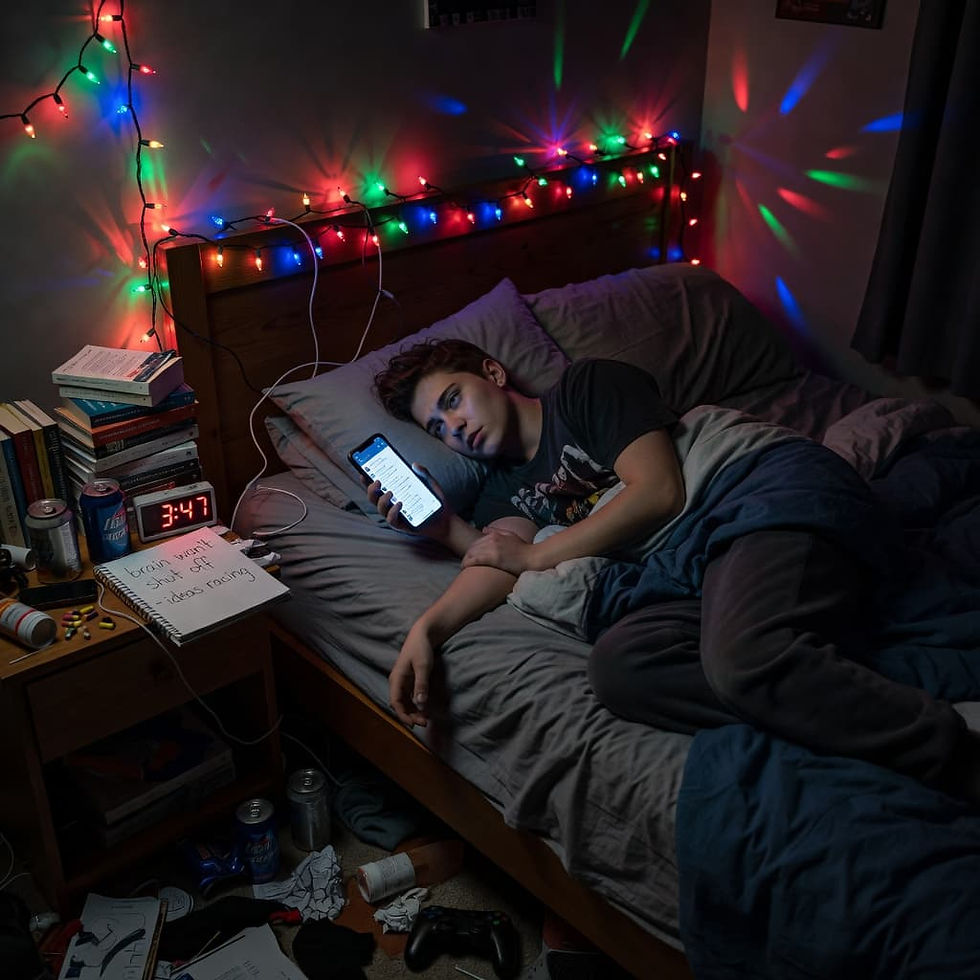
You can feel exhausted all day, then strangely alert as soon as the house becomes quiet. Your body wants rest, but your thoughts begin reviewing conversations, remembering unfinished tasks or producing ideas that suddenly seem too interesting to leave until tomorrow.
For some adults with ADHD, getting to sleep is not simply a matter of feeling tired. It also involves shifting attention, stepping away from stimulation and bringing the day to a close—transitions that may not happen as smoothly as other people seem to expect.
That does not mean every sleep problem is caused by ADHD. Anxiety, depression, medication, caffeine, pain, changing hormones and other health conditions can all affect sleep. But understanding your own pattern can make difficult nights feel less confusing and less like a personal failure.

Why an ADHD mind may stay active at night
Feeling exhausted and feeling ready for sleep are not always the same thing. You may be physically tired while your attention is still looking for somewhere to go.
During the day, work, messages, conversations and practical demands occupy a great deal of mental space. When those demands stop, everything that has been waiting in the background can become more noticeable.
You might start replaying the day. Did you sound rude in that conversation? Have you forgotten to reply to somebody? Was there something you were meant to do before tomorrow?
Planning can take over too. One thought about an appointment leads to deciding what to wear, what time to leave and whether you have remembered everything you need. Then an unrelated idea arrives—a project, a room you would like to reorganise or something you suddenly want to research.
The idea may not truly be urgent, but it feels alive and interesting. Compared with lying quietly in the dark, following it can be very appealing.
> A busy mind at bedtime often reflects difficulty changing mental gear, not a decision to remain awake.
Frustration can add another layer. You notice the time, calculate how little sleep remains and begin worrying about how you will manage tomorrow. The pressure to sleep makes you more alert, which leads to more clock-watching and more pressure.
Research has found an association between ADHD and a range of sleep difficulties, although there is no single “ADHD sleep pattern” and the experience varies considerably. This [overview of ADHD and sleep disturbance] explores some of those connections in more depth.
When quiet makes thoughts feel louder
One thing I have noticed in counselling work is that quiet does not always feel peaceful straight away. When a person has spent the day responding, coping or pushing through, stillness may be the first opportunity for their thoughts and feelings to catch up with them.
That does not necessarily mean something is deeply wrong. You may simply need a way to acknowledge what your mind is holding before asking it to settle.
A notebook beside the bed can help—not because every thought needs analysing, but because it gives unfinished matters somewhere else to live for the night. A few words such as “send invoice”, “pack bag” or “reply tomorrow” may be enough. The aim is not to produce a perfect plan. It is to reassure your mind that the thought does not need to be rehearsed until morning.
When bedtime is difficult to notice—or difficult to choose
Some people describe losing their sense of passing time as “time blindness”. You intend to begin getting ready for bed in ten minutes, but the activity in front of you continues to hold your attention.
You check one message and answer several more. You watch one episode and the next begins automatically. You start tidying a small area, find something that needs fixing and somehow begin a project at eleven o’clock at night.
When you finally look at the time, an hour has disappeared.
Stopping can be difficult in its own right. It means interrupting your attention, leaving something incomplete and moving towards an activity that offers less stimulation. Another alarm may help you notice the time, but it cannot always make the transition feel appealing.
This is why a useful evening routine needs more than a command to “go to bed”. It needs a visible route from one state to another.
Nighttime may be the only time that feels like yours
There is another reason people sometimes resist bedtime. When the day has belonged to work, family, study, chores or other people’s needs, late evening may be the first time nobody is asking anything from you.
The house is quieter. You can choose what to watch, read, make or think about. Sleep then feels less like welcome rest and more like giving up the only part of the day that was yours.
Sometimes this is called bedtime procrastination. The label can sound as though you are simply making a poor choice, but the pattern often makes more sense when you ask what staying awake provides.
Perhaps it gives you privacy, freedom, stimulation or time to follow an interest without interruption. Those are real needs. The difficulty is that meeting them only after everyone else has gone to bed means borrowing energy from the following day.
Rather than asking only, “Why don’t I go to bed earlier?”, you might ask:
- What am I finding at night that was missing from my day?
- Which activities are particularly difficult for me to stop?
- Am I sleepy, or merely exhausted and overstimulated?
- What thoughts tend to appear once everything becomes quiet?
- Does bedtime become harder after particular kinds of day?
These questions are not excuses for a pattern that is harming you. They help you understand what any healthier routine will need to take into account.
Build a landing strip rather than demanding an off switch
It can be tempting to imagine that a successful bedtime routine should make your mind stop instantly. For many people, that expectation simply creates another opportunity to feel that they are doing something wrong.
A more realistic aim is to create a short landing strip between the activity of the day and sleep.
Your version might involve:
1. Creating a visible stopping point. Dim a lamp, set a timer or finish with the same small action each evening. Link the cue to something you already do rather than relying on memory alone.
2. Reducing decisions. Put out what you need for the morning and keep the bedtime sequence short. A complicated routine is difficult to follow when you are already tired.
3. Giving unfinished thoughts somewhere to go. Write down reminders, worries or ideas briefly, without turning bedtime into a planning meeting.
4.Choosing lower-stimulation content. A familiar book, gentle music or a calm podcast may be easier to leave than scrolling, gaming or a programme designed to keep you watching.
5. Making the next step physically easy. Put devices out of reach, keep what you need nearby and make the bedroom comfortable before you become too tired to bother.
The [NHS guidance on sleeping better] also recommends a regular routine, a restful environment and reducing screen use before bed.
You do not need to change everything at once. Try one or two adjustments for several evenings and notice what happens. If they do not help, that is information—not evidence that you have failed.
Daylight and movement can also support the body’s sleep–wake rhythm. This does not require an ambitious exercise programme. A morning walk, some time outside at lunchtime or regular gentle activity may be more sustainable than a dramatic routine that lasts three days.
When something becomes your “off switch”
When settling does not happen naturally, it is understandable that people look for something that changes their internal state quickly.
Alcohol, cannabis or sleeping medication may seem to quieten thoughts, soften restlessness or create the feeling that the day has finally ended. For somebody who has struggled night after night, that change can feel like genuine relief.
Earlier in my own life, there were evenings when a few beers seemed like an easy way to create an off switch. I understand why people reach for something that changes how they feel when winding down does not happen easily.
Understanding why a coping strategy developed is not the same as saying that it is helping you well now. Short-term drowsiness and restorative sleep are not necessarily the same thing. Something that initially feels optional can also become harder to imagine sleeping without.
If this is familiar, shame is unlikely to make the pattern easier to change. A more useful question might be:
> What is this helping me move away from—and what need is it trying to meet?
Perhaps it offers relief from racing thoughts, anxiety, emotional intensity or the pressure of another unfinished day. Recognising that need can help you look for safer and more sustainable ways of responding to it.
Benzodiazepines and Z-drugs are associated with risks including tolerance, dependence and withdrawal. In January 2026, the MHRA strengthened UK safety warnings for these medicines. If you are concerned about prescribed sleeping or anxiety medication, speak with your GP, pharmacist or prescriber and do not stop taking it suddenly without professional advice. The [MHRA medicine safety guidance](https://www.gov.uk/government/news/mhra-strengthening-dependency-and-addiction-warnings-on-medicines-used-to-treat-pain-anxiety-and-insomnia) explains the updated warnings.
You can also speak with a GP or appropriate support service if alcohol or cannabis has become something you feel unable to relax or sleep without. You deserve an honest conversation that considers what the substance has been doing for you as well as any difficulties it is creating.
When sleep needs more than a new routine
Not every sleep difficulty can be resolved through an evening routine. Speak with your GP if poor sleep persists, causes significant distress or leaves you struggling to function during the day.
It is particularly important to seek medical advice if you snore heavily, gasp or appear to stop breathing during sleep, experience uncomfortable sensations in your legs, have unusually severe daytime sleepiness or notice a significant change in your mood.
Medication timing can affect sleep for some people. Discuss ADHD medication and any other prescribed medicines or supplements with your prescriber rather than changing the dose or timing yourself.
A simple sleep diary may help you notice patterns. Record approximate sleep and waking times, daytime naps, caffeine, medication timing and what you were doing during the final hour before bed. Keep it light. If tracking becomes another source of pressure, simplify it.
Counselling cannot replace medical advice about sleep, medication or substance use. It can, however, offer space to explore the emotional part of the pattern: the anxiety that arrives in quiet moments, shame about unfinished tasks, burnout, or the sense that nighttime is the only part of life that belongs to you.
If you would like to explore those patterns in a calm and non-judgemental space, you are welcome to [book a counselling session]. You do not need to have solved the sleep problem before talking about it.
A kinder way to understand your late-night mind
When you are still awake despite feeling exhausted, self-criticism can arrive very quickly. You may call yourself lazy, undisciplined or irresponsible, particularly when you know how difficult tomorrow will feel.
Understanding does not remove the consequences of lost sleep. It gives you a better place from which to respond.
Your late-night mind may be struggling with a transition. It may be trying to hold on to stimulation, solve unfinished problems or reclaim a little time that feels personally yours. It may have learnt to depend on an external off switch because no gentler route towards rest was available.
Once you understand the function of the pattern, you can begin making changes that address the need beneath it. That might mean protecting some enjoyable time earlier in the day, creating a more visible stopping point, writing down what your mind is trying to remember or seeking support for anxiety, medication or substance use.
You do not need a perfect routine or a perfectly quiet mind. You need a route towards rest that is realistic enough to use—and kind enough that one difficult night does not become another reason to fight with yourself.


Comments