


Chronic Illness Counselling: What It Can Offer
Chronic illness counselling offers space to talk about how long-term illness affects your feelings, relationships and daily life alongside medical care. You don't need a mental-health diagnosis to seek support, and needing support doesn't mean your physical symptoms are psychological.
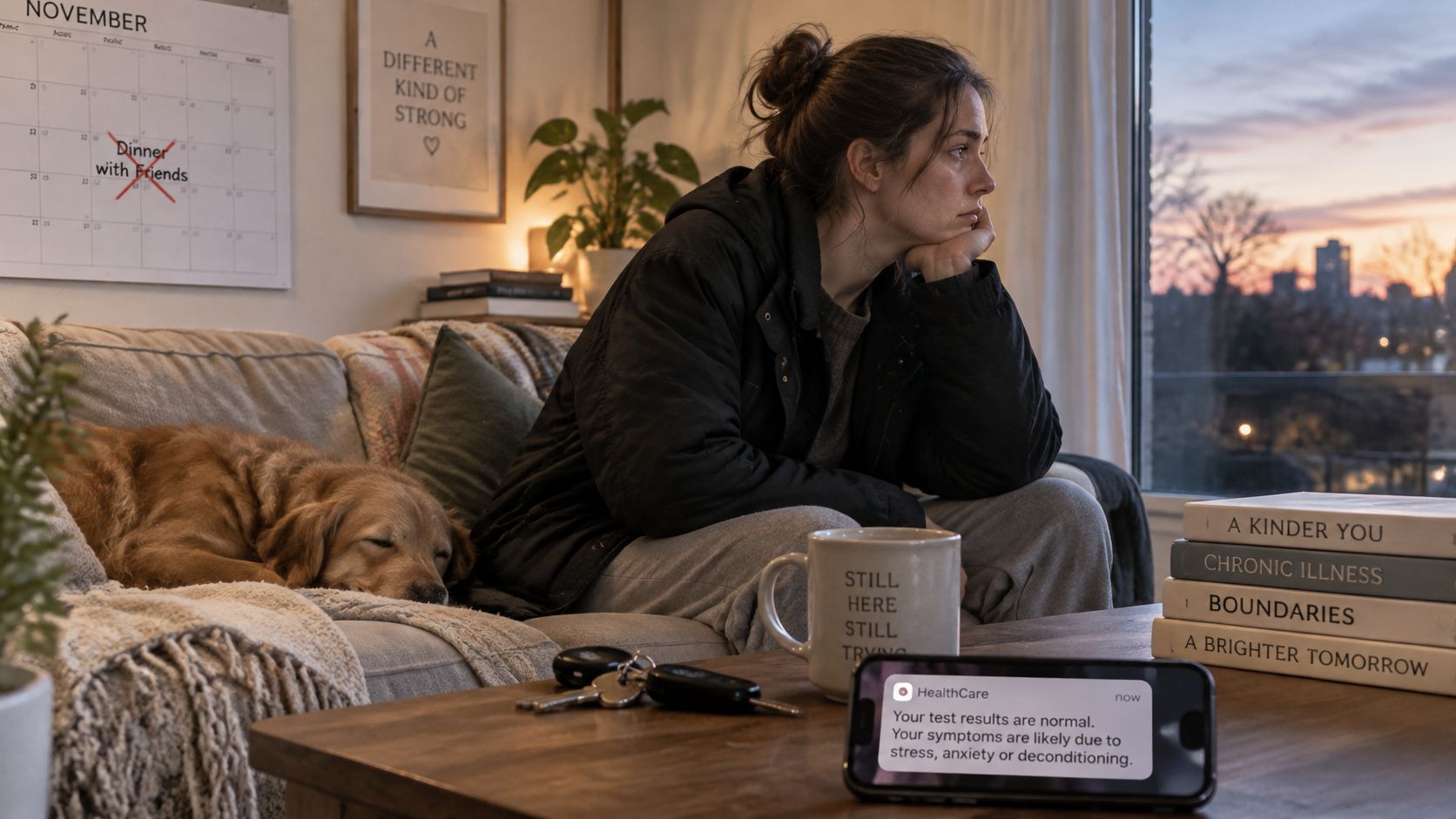
Perhaps you've come home from another appointment with a prescription to collect, messages to answer and plans you may have to cancel. You explained your symptoms, but not how frightened or worn down you feel.
You don't have to prove you're coping before asking for help. Counselling can take the emotional cost seriously without replacing medical care or guessing what causes your symptoms.
When Illness Changes More Than the Body
An appointment can mean arranging transport, recalling questions and explaining pain or fatigue nobody else sees. Even if it goes well, you may spend the afternoon recovering.
Chronic illness counselling gives you a regular conversation about mood, identity, relationships and an uncertain future. Your GP, specialist and prescribed care remain in place. Counselling addresses what medical appointments may not have time to explore.
The work around being unwell
The strain may be a job that no longer fits your capacity, guilt about asking for help or fear of a flare before a family event. Updating people can be exhausting, especially when they expect recovery or a clear answer.
An evidence review hosted by NHS England estimated that at least 30% of people with a long-term condition had a coexisting mental-health problem.
Needing emotional support doesn't make the physical illness less real.
A reassuring test result may not settle what it feels like to live in your body.
Sessions can take place in a counselling room, online across the UK or outdoors where walking is accessible and appropriate. You don't need a tidy explanation to begin.
What Chronic Illness Counselling Is For
What counselling can explore and what stays with medical care
Concern | Counselling can explore | Outside counselling |
|---|---|---|
Grief for a former life | Loss, anger and identity | Physical treatment |
Fear it is all in the mind | Feeling disbelieved | Diagnosis, tests and prescribing |
Fluctuating energy | Guilt, rest and cancelled plans | Clinical activity or medication advice |
Close relationships | Dependency, resentment and asking for help | Legal or safeguarding action beyond agreed limits |
Low mood or anxiety | Self-criticism and fear of the future | Emergency care for immediate risk |
Waiting for answers | Living with uncertainty | GP or specialist investigations |
You might miss spontaneity, work or making plans without calculating their energy cost. Counselling doesn't have to rush that grief towards gratitude or acceptance.
Being believed comes before techniques
Fear of dismissal matters. A UK long COVID study involving 14 participants, described by Medical Xpress, found that some feared accepting psychological support would undermine recognition of their physical illness. Psychological care needed to complement medical investigation and treatment.
That concern may resonate if you have ME/CFS, fibromyalgia, migraine, endometriosis or symptoms still under investigation. The starting point is your experience, not an assumption that emotion explains the illness. We can also discuss shame about resting or cancelling without setting activity levels or promising pain relief.
Support without taking over
Relationships can bring resentment, dependence or fear of becoming a burden. If you're thinking about practical support, Sunridge Medical's guide to support systems offers another resource.
Low mood and anxiety deserve attention, not an assumption that they're inevitable. Depression doesn't automatically mean confidentiality will be broken. Serious risk, suicidal thoughts or safeguarding concerns may require additional help; confidentiality limits are explained at the start, and immediate danger requires emergency care.
If counselling isn't the right help, I may signpost or refer you elsewhere. You can keep pursuing tests and treatment while talking about the anger and uncertainty of waiting.
How Heavy the Emotional Load Can Be
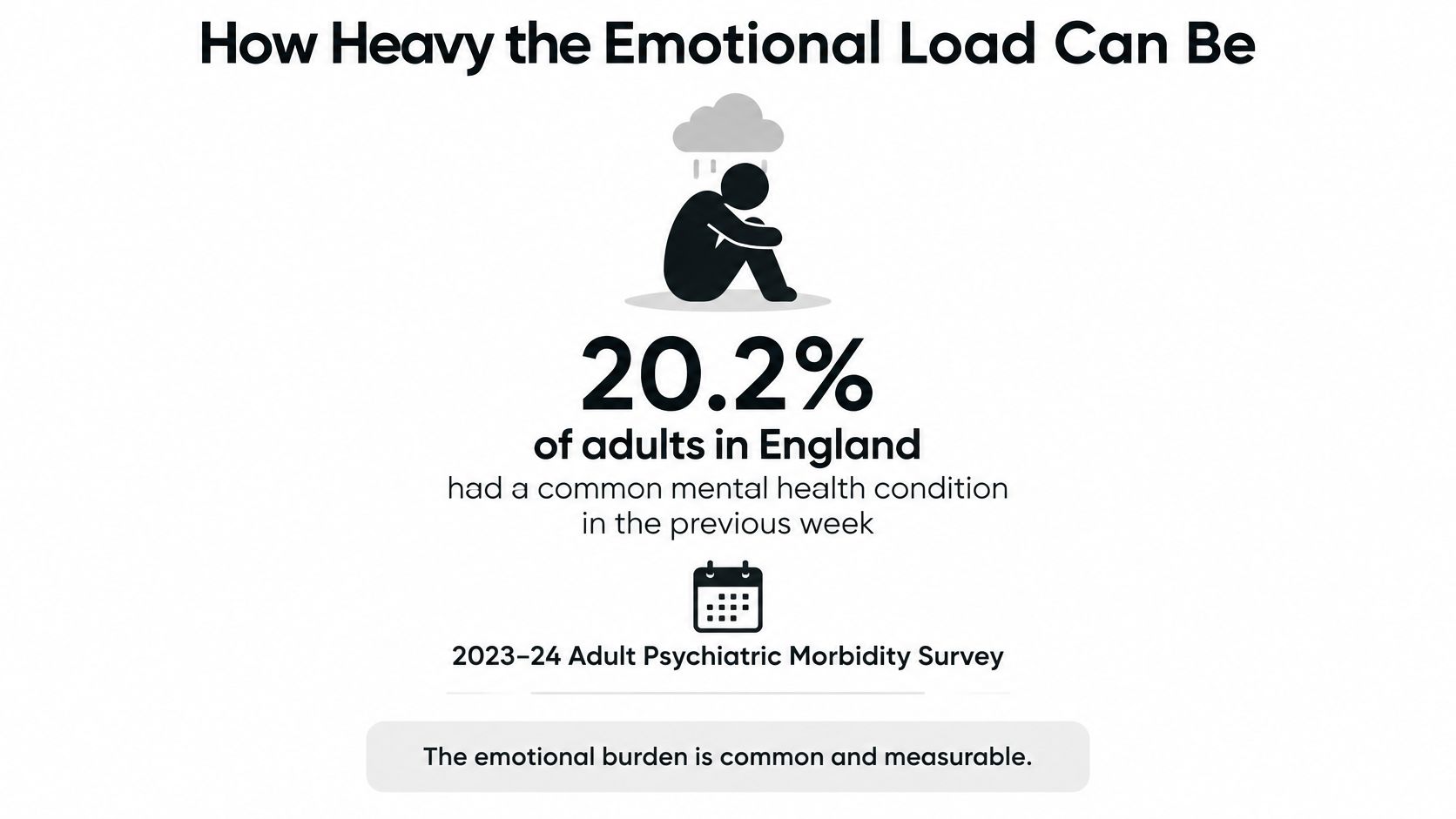
In the 2023-24 Adult Psychiatric Morbidity Survey, 32.9% of adults in England whose physical health condition limited their activities had a common mental-health condition, compared with 12.6% of those without a limiting physical health condition. Overall, 20.2% had one in the previous week.
This is an association, not proof that illness causes distress or that everyone needs counselling. The comparison concerns activity-limiting conditions, not simply having a diagnosis.
What limitation can feel like
Doing less can mean losing a familiar role: the reliable colleague, the organising parent or the friend who always says yes. Pain-disrupted sleep may leave less patience, while needing help from a partner can affect intimacy and independence.
Someone with a persistent wound may need clinical explanations as well as space to discuss ongoing treatment. The Vein and Wound Institute's explanation of why venous ulcers struggle to heal is medical reading to discuss with a clinician, not something counselling replaces.
Keeping decisions with you
The NHS comprehensive model of personalised care includes shared decision-making, care planning and supported self-management. Your involvement in decisions matters.
Counselling can help you explore how treatment feels or why consultations are intimidating. It doesn't write your care plan or choose treatment for you.
If watching is easier than reading, this video offers another way into the topic.
You shouldn't have to leave the physical reality outside counselling or your feelings outside medical appointments.
Therapy Names You May Already Have Heard
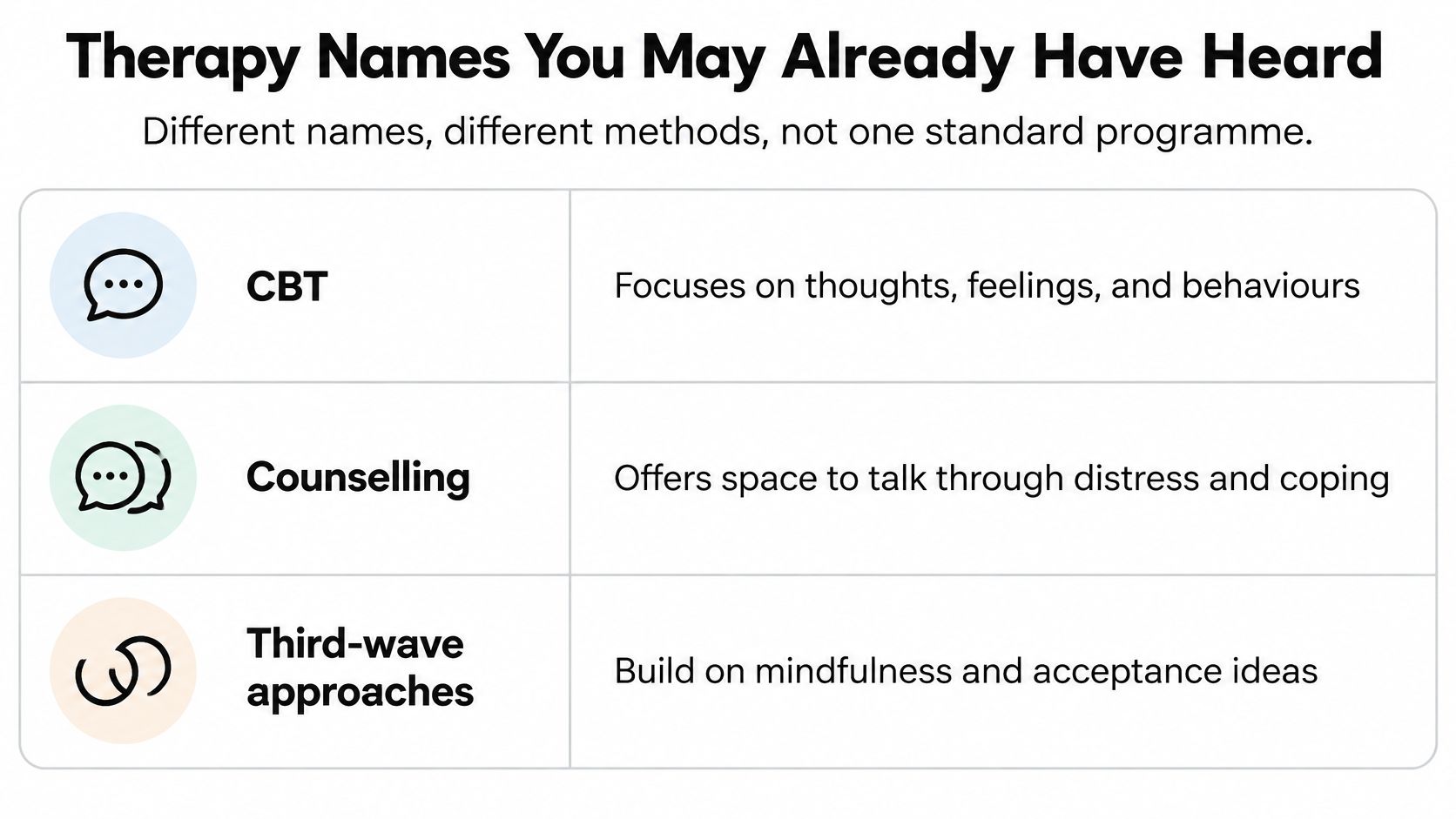
A GP letter or pain-clinic leaflet may mention therapies that work quite differently. Here's how they compare with my counselling.
Approaches people meet and how they differ from Ben's counselling
Approach | Usual focus | Where you might meet it | In Ben's practice |
|---|---|---|---|
CBT | Thoughts, feelings and behaviour | NHS Talking Therapies | Not offered |
ACT | Values alongside difficult feelings | Some health and pain services | Not offered as a programme |
Grief work | Losses without a clear ending | Bereavement and integrative counselling | Explored in conversation, not as a protocol |
Pacing | Matching effort to energy | Pain and fatigue services | Discussed, not prescribed |
Person-centred and psychodynamic | Experience, patterns, identity and relationships | Integrative counselling | Basis of the work |
Different names mean different kinds of work
CBT explores links between thoughts, feelings and behaviour. I don't provide CBT, exposure therapy or formal behavioural activation.
Acceptance and commitment therapy (ACT) concerns making room for difficult feelings while moving towards what matters. My explanation of acceptance and commitment therapy may clarify the term, but I don't offer ACT as a programme.
Grief work may include the loss of work, sport, fertility, spontaneity or trust in your body. In my counselling, we explore these through conversation, not prescribed stages.
Pacing is often discussed in pain and fatigue services. Clinical advice on activity belongs with professionals who understand your condition; counselling can explore how those limits affect you.
How my integrative counselling differs
I'm an integrative counsellor, drawing particularly on person-centred and psychodynamic approaches. We begin with your account of your experience, then may notice patterns in relationships, self-criticism or the roles you've taken on. Illness can make an old belief, such as being valuable only when useful, especially painful.
Understanding a feeling isn't the same as being given a technique.
I won't impose an interpretation; we can consider it together, and you can disagree. I also don't provide DBT, EMDR, IFS or specialist trauma treatments. If you want a structured therapy, another practitioner may be a better fit.
How Sessions Can Bend Around a Flare
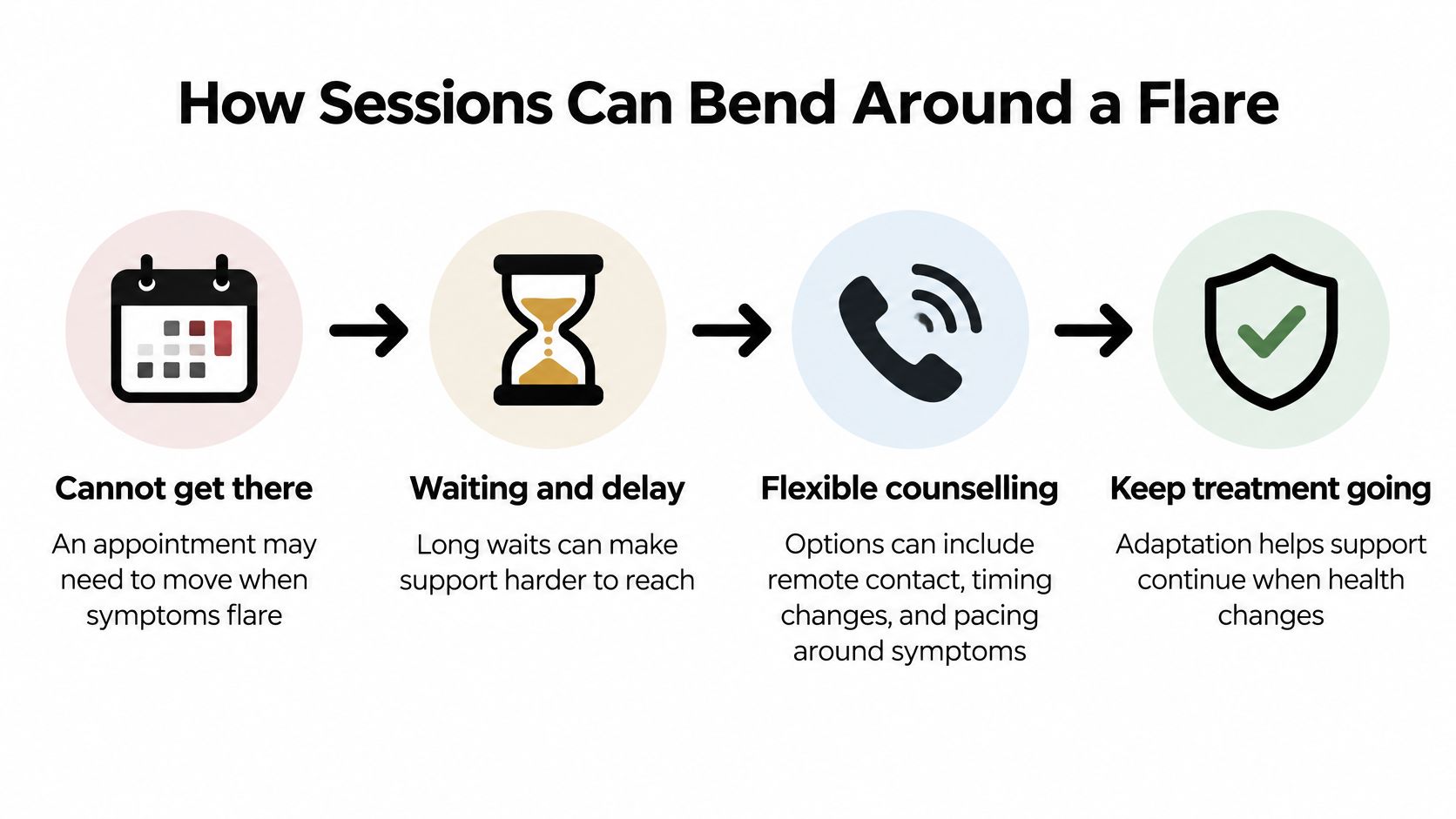
If a flare prevents you attending, contact your counsellor rather than pushing through to prove commitment. Agree cancellation notice, charges and any option to change format in advance.
The 2023-24 Adult Psychiatric Morbidity Survey's treatment findings found that 2.8% of adults had asked for but not received a particular mental-health treatment in the previous year, rising to 13.6% among adults with severe common-mental-health symptoms. These are figures about unmet treatment, not the effects of waiting.
The practical question is how to make agreed support reachable when your health changes.
Agree what a difficult day might need
At a first meeting, we can discuss what's changed, what you don't want assumed and how much talking feels manageable. Options to discuss might include a shorter check-in, a break, a pause or a different session frequency, subject to availability and a clear agreement.
Online counselling across the UK can save the energy a journey would take, though you still need privacy and enough capacity to participate.
Practical rule: Weekly attendance isn't a moral test, and feeling well in the morning isn't a promise about the afternoon.
If you feel able to attend at breakfast but are wiped out by lunchtime, shame about cancelling can itself be worth discussing.
Make between-session support small
Counselling isn't a prescribed self-management plan. If helpful, you can bring small observations into the conversation without making them homework:
Notice one drain. Jot down what exhausted you, if writing helps.
Define a minimum day. Allow for an essential task and something enjoyable within your capacity. Include walking only if appropriate for your condition and clinical advice.
Prepare cancellation words. Agree a brief message with someone close for days when explaining is too much.
A quiet café, garden or accessible community group may offer low-demand company. NHS social prescribing connects people with practical, social and community support alongside healthcare.
Condition-specific treatment remains separate. Lake City Physical Therapy's discussion of pelvic floor treatment for painful sex is for discussion with an appropriate clinician, not an exercise prescription from a counsellor.
Before starting, ask about cancellations, online sessions and whether the pace can change.
When Neurodivergence and Illness Overlap
You may spend an appointment appearing calm while the lights, noise and effort of explaining yourself become overwhelming. Then you get home and have little left.
For someone with autism or ADHD, diagnosed or suspected, alongside pain or fatigue, that unseen effort can be considerable. Sensory demands, timekeeping and appointments may complicate an already demanding week. Medication difficulties belong with your prescriber or pharmacist; counselling can address how they feel.
When the present echoes the past
Being disbelieved about illness may recall earlier accusations of overreacting or not trying. We can explore that connection without claiming neurodivergence explains your illness.
You don't need a diagnosis to begin therapy. My work includes anxiety, self-criticism, low mood, depression, life changes, relationship difficulties, autism, ADHD and masking.
My discussion of finding a neurodivergent-affirming therapist may help you consider what feels workable. A client with ADHD described feeling understood without having to apologise for how their brain worked.
A simpler way into the conversation
You can bring a brief note or begin with what's hardest to explain. On a difficult day, you might simply say:
"Today's a low-word, low-concentration day."
"That question feels like another demand to justify myself."
The aim is to understand what you're carrying, including the effort of making it look manageable.
Common Questions About Chronic Illness Counselling
Does counselling mean my symptoms are psychological?
No. We can discuss the emotional consequences without deciding what causes your physical symptoms.
Do I need a diagnosis first?
No. Your medical history can help me understand your circumstances, but I won't diagnose your condition.
Will my GP know I'm seeing a counsellor?
Not routinely. Sharing information is normally discussed with you, though confidentiality has limits when there's serious risk of harm.
Can I keep seeing my specialist?
Yes. Counselling isn't a reason to stop treatment or change prescribed medication.
Can I see a male counsellor?
Yes. I'm a male integrative counsellor working with adults of all genders. Your preference about a counsellor's gender matters.
What if I'm in a flare on the day?
Get in touch through the agreed contact route. Moving, changing or cancelling a session depends on the arrangement we've made.
Do I have to work towards accepting my illness?
No. We can explore anger, hope or uncertainty without setting a deadline for acceptance or treating further medical investigation as a problem.
Choosing a Counsellor You Can Actually Reach
The relationship needs to be useful and practically manageable, including on harder days.
Three ways to meet a counsellor
Format | May suit | Practical limits |
|---|---|---|
In person at Suite 1, Portland House, 4 Albion St, Cheltenham, GL52 2LG | Those who prefer a dedicated room | Travel, energy and waiting |
Walk and talk in Pittville Park, Cheltenham | Those who find sitting and eye contact difficult | Weather, mobility and park access |
Online counselling across the UK | Those who cannot easily travel | Privacy and a reliable connection |
I offer in-person counselling in central Cheltenham. Walk & Talk can make conversation easier, but may not suit mobility or exertion limits. Online work removes travel but needs a private space. Concessions are available for counselling students and people in financial difficulty, so you can raise cost before committing.
Look for a workable relationship
Consider whether you want open conversation rather than a set programme, whether the format remains possible during a difficult week and whether medical decisions stay with your doctor.
I'll explain confidentiality and its limits at the first meeting. If serious risk means information needs sharing, I'd aim to discuss it with you first. Unresolved concerns about my work can be taken to the BACP.
Ask about pace. Say what attendance may realistically look like.
Describe what hasn't helped. For example, being dismissed or offered advice too soon.
Allow a different outcome. A signpost elsewhere is valid if the fit isn't right.
You can call, text or WhatsApp on 07462 291471 to discuss format and pace. You don't need a complete account of your illness to make contact.
Therapy with Ben offers integrative counselling for the feelings, relationships and changes that can come with long-term illness, without explaining away physical symptoms. Visit Therapy with Ben to learn more and get in touch.


Comments