


Why Do I Wake Up with Anxiety and How to Find Calm
Author: Therapy-with-Ben
That jolting feeling of waking up with a racing heart and a cloud of dread is a deeply unsettling way to start the day. It’s a common experience, but that doesn't make it any less unpleasant. More often than not, what you're feeling is your body's own chemistry at work – a perfectly natural morning surge in the stress hormone cortisol, mixed with your mind chewing over worries from the day before or the day ahead.
It’s a sign your internal alarm system has become a bit too sensitive. But the good news is, it’s a pattern. And like any pattern, it can be understood and, more importantly, it can be changed.
The Four Pillars of Morning Anxiety
That first moment of consciousness should feel calm and restorative, but for many, it’s hijacked by that all-too-familiar sense of panic. If you’re asking yourself, "why do I wake up with anxiety?", it helps to stop seeing it as one single, mysterious problem.
Instead, think of it as a structure built on four interconnected pillars: your biology, your mind, the quality of your sleep, and your daily lifestyle choices. Each one leans on the others. When one is off-kilter, it can easily destabilise the rest, creating a cycle that feels tough to escape.
This guide is here to walk you through why this happens and, crucially, what you can do about it. By digging into the biological and psychological roots of this feeling, we can start to demystify it and find a clear, supportive path toward calmer, more peaceful mornings.
The Interconnected Causes
Getting a handle on these four pillars is the first real step toward taking back control. Let's briefly break them down:
Biology: Your body runs on an internal clock, and hormonal shifts are part of its daily rhythm. The Cortisol Awakening Response (CAR), for instance, is designed to help you wake up, but when it’s exaggerated, it can trigger anxiety before your feet even hit the floor.
The Mind: Your brain doesn't just switch off when you fall asleep. It’s busy processing memories, sifting through the previous day's stresses, and anticipating the next one. This overnight activity can leave a residue of anxiety waiting for you when you wake.
Sleep: The quality of your rest is everything. Fragmented, disrupted, or simply poor-quality sleep means your brain and body don't get the chance to properly recharge. This leaves you far more vulnerable to stress and anxiety the next day.
Lifestyle: What you do during the day has a huge impact on how you feel in the morning. Things like work stress, what you eat and drink in the evening, and your daily habits all directly influence your nervous system and hormonal balance.
To give you a clearer picture, here’s a quick summary of how these factors come together.
Key Drivers of Morning Anxiety at a Glance
Factor Category | Common Examples |
|---|---|
Biology | Cortisol Awakening Response (CAR), blood sugar fluctuations, hormonal changes. |
The Mind | Unresolved stress from the previous day, worrying about the day ahead, subconscious processing. |
Sleep | Poor sleep quality, sleep apnoea, inconsistent sleep schedule, bad dreams. |
Lifestyle | High stress levels, evening alcohol or caffeine, poor diet, lack of exercise. |
This table just scratches the surface, but it shows how different parts of your life can feed into that anxious feeling in the morning. We'll explore each of these in much more detail.
The concept map below helps to visualise how these four key areas are woven together.
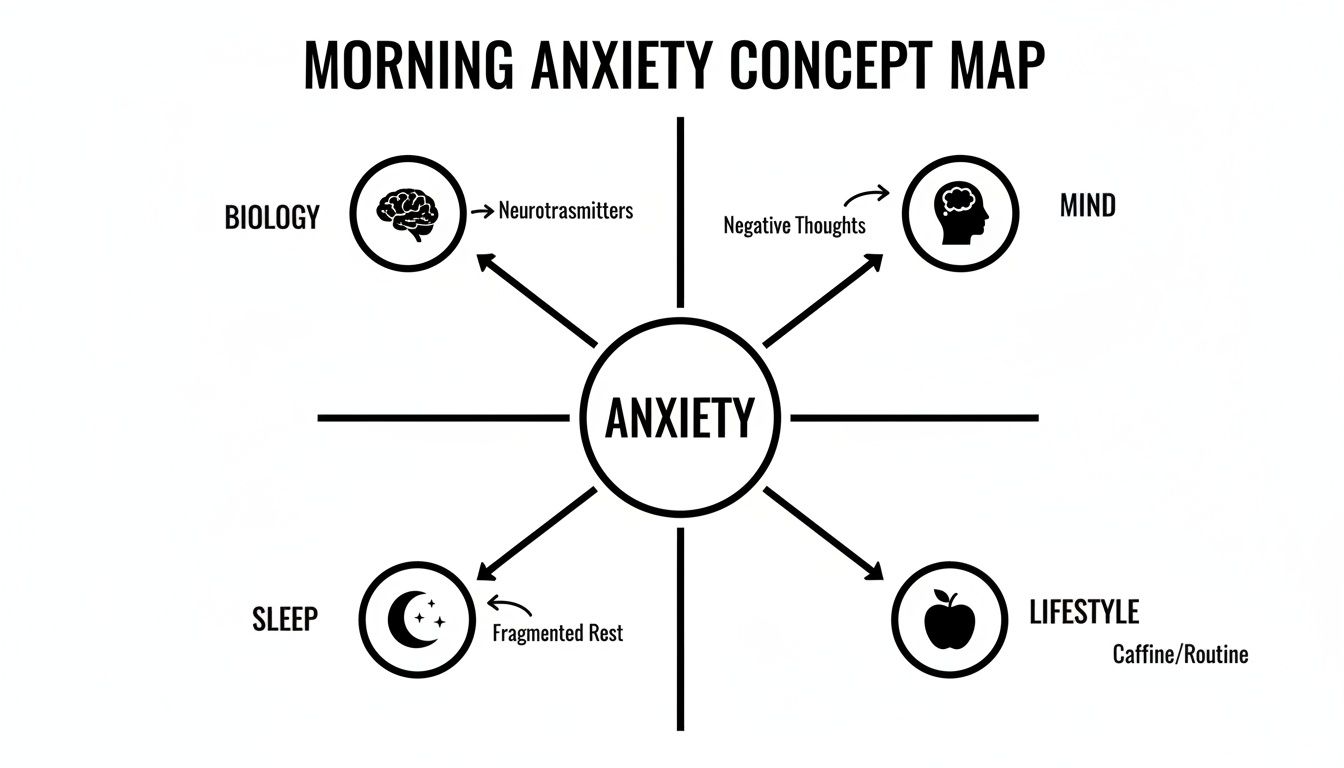
As you can see, morning anxiety is rarely down to just one thing. It's almost always a web of interconnected factors. Think of this as your starting point for untangling that web, understanding the 'why', and finding real, practical strategies to bring lasting relief to your mornings.
Your Body's Natural Alarm Clock
Waking up to a sudden jolt of anxiety can feel like your own mind is turning against you. But often, the real cause isn't your thoughts at all – it's your body's complex internal chemistry. It helps to think of your body as having a natural, hormone-powered alarm clock, one designed specifically to get you up and moving.
The hormone driving this system is called cortisol. It gets a bad rap as the "stress hormone," but it's absolutely vital for regulating your sleep-wake cycle. Every single morning, your body releases a surge of it to wake you up and get you ready for the day.
The Cortisol Awakening Response Explained
This morning surge has a name: the Cortisol Awakening Response (CAR). It's a completely normal, predictable biological event. For most people, it’s a gentle and helpful nudge out of sleep, signalling to the brain and body that it’s time to shift from rest mode into alert mode.
Think of the CAR as the volume dial on your morning alarm. In a well-regulated system, the volume starts low and climbs gradually, waking you gently. But if you’re already dealing with a lot of stress or are prone to anxiety, your whole system can become sensitised.
For you, this hormonal surge might feel less like a gentle nudge and more like a fire alarm blaring at full blast. This sudden jolt can kick your sympathetic nervous system—your body’s ‘fight or flight’ mechanism—into gear before you've even opened your eyes. The result? A racing heart, shallow breathing, and a mind flooded with dread, all because your natural alarm clock is cranked up way too high.
"Understanding the Cortisol Awakening Response is key. It reframes morning anxiety not as a personal failing, but as a biological process that has become overly sensitive. It’s a physical reaction, not a reflection of your strength or character."
This means the physical feelings often come first, triggering the anxious thoughts, not the other way around. Realising this can be incredibly empowering. It’s not your fault; it’s your physiology.
The Role of Blood Sugar Levels
Another powerful biological player here is your blood sugar (glucose). Your brain needs a constant stream of energy to function, even when you're asleep. If you eat dinner early or have something sugary before bed, your blood sugar can spike and then crash during the night.
This drop, known as hypoglycaemia, is read by your body as a threat. In response, it pumps out stress hormones like cortisol and adrenaline to get your glucose levels back up to where they should be.
This hormonal release can easily pull you out of sleep, leaving you feeling:
Shaky or trembling: A direct physical result of the adrenaline surge.
Irritable and on edge: Your brain is on high alert because of the perceived energy crisis.
Sweaty or with a pounding heart: Classic signs that your ‘fight or flight’ response has been activated.
This whole process sets the stage perfectly for morning anxiety. You wake up already feeling physically unsettled and on high alert, which makes you much more vulnerable to the effects of that morning's Cortisol Awakening Response.
Getting to know these interconnected biological triggers is the first step toward feeling more in control. When you understand the physical symptoms of anxiety, you can start to see them not as proof that something is wrong with you, but as signals from your body that need a bit of attention.
How Night-Time Worries Fuel Morning Dread

While your body’s chemistry definitely sets the stage, it’s often your mind that writes the script for morning anxiety. The psychological side of this is every bit as powerful as the biological one, turning what should be a peaceful transition into a stressful start to the day. Your brain doesn't just switch off at night; it’s busy processing events, emotions, and unresolved stress from the day before.
Think of your mind like a computer running essential updates overnight. It's sorting through memories, filing away information, and trying to solve problems you didn't quite get to. Sometimes, this process runs smoothly. Other times, it leaves behind a residue of stress and worry that’s waiting for you the moment you wake up.
The Problem of Anticipatory Anxiety
One of the most common psychological culprits is what we call anticipatory anxiety. This is that habit of waking up and almost immediately running through a mental list of all the day’s potential stressors. Before your feet have even hit the floor, your mind is already rehearsing a difficult conversation, worrying about a deadline, or imagining all the things that might go wrong.
This isn't just a fleeting thought; it can become a deeply ingrained mental habit. Over time, your brain actually learns to associate waking up with this immediate flood of worry. The first moments of your day become a trigger for high alert, making you feel overwhelmed before you've even had a chance. This cycle directly connects your waking moments to a sense of dread, hijacking any chance of a peaceful start.
Your Subconscious Mind at Work
Even if you go to bed feeling relatively calm, your subconscious mind keeps churning away. Unresolved conflicts, lingering work stress, or money worries don't just disappear when you fall asleep. They’re often processed during your sleep cycles, particularly during REM sleep when dreaming is most vivid.
This overnight processing can mean you wake up with the emotional echo of those stresses, even if you can’t put your finger on a specific cause. It’s that vague but heavy feeling that something is wrong. Your mind has been wrestling with these issues, and you're left with the emotional aftermath in the morning, often without the conscious memory of the struggle. Understanding this pattern is the first step to breaking it.
The Sleep-Anxiety Connection in the UK
The link between poor sleep and anxiety isn't just an idea; it's a significant public health issue here in the UK. Research from the Mental Health Foundation shows that the average UK adult only gets three days a week of good quality sleep. In fact, one in seven adults (14%) report they don't get the sleep they need to function well on any day in a typical week.
What’s keeping Brits awake? Stress and an overactive mind are the biggest culprits, with around three in five (59%) people saying these factors make it hard to fall asleep. You can find more insights from the Mental Health Foundation on the UK's sleep challenges here.
This data highlights a crucial cycle: psychological stress disrupts sleep, and disrupted sleep intensifies psychological stress, especially in the morning. Nearly half of UK adults (48%) report that poor sleep has led to them feeling more anxious in the past month alone.
This creates a vicious circle where night-time worries prevent proper sleep, and the resulting fatigue makes you more vulnerable to anxiety the next morning. Your brain, deprived of the chance to recharge, starts the day at a disadvantage, with a heightened sensitivity to stress. By acknowledging how your thought patterns and sleep quality are intertwined, you can begin to take targeted steps to improve both and pave the way for calmer mornings.
Immediate Techniques to Calm Morning Anxiety
When you wake up and your heart is already hammering against your ribs, long-term plans feel like they’re a million miles away. You don’t need a five-year plan; you need something that works right now. The real goal here is to hit the brakes on that panic cycle and gently coax your nervous system out of high alert. Think of these techniques as your first-aid kit for a rough morning.
The trick is to pull your focus out of the whirlwind of future worries and plant it firmly in the here and now. By tuning into your senses and taking control of your breath, you send a powerful message back to your brain: you're safe. This directly counters the ‘fight or flight’ response that’s been accidentally triggered. When morning anxiety hits, having a few quick strategies up your sleeve can make all the difference, like these 7 tips for calm anxiety fast.
The 5-4-3-2-1 Grounding Technique
This is a brilliantly simple but powerful sensory exercise. It works by forcing your brain to pay attention to your immediate surroundings, which doesn't leave much room for anxious thoughts to run wild. The best part? You can do it without even getting out of bed.
Take a slow, deep breath and gently look for:
5 things you can see: Really notice the small details. It could be the texture of your duvet, the way the morning light catches the wall, a book on your bedside table, or the colour of your ceiling.
4 things you can feel: Bring your attention to physical sensations. Maybe it's the weight of the blanket on your legs, the softness of the pillow under your head, or the cool air on your skin.
3 things you can hear: Listen closely. You might pick up on the distant hum of traffic, the gurgle of a radiator, birdsong outside, or simply the sound of your own breathing.
2 things you can smell: This can be subtle. Perhaps it's the fresh scent from your laundry detergent on the sheets or the faint aroma of coffee being made downstairs.
1 thing you can taste: Just notice the taste in your mouth. You could also keep a glass of water handy and take a sip, focusing purely on that sensation.
This whole process anchors you back into the present moment, reassuring your nervous system that there isn't actually a threat right here, right now.
Control Your Breathing, Control Your Body
When you’re anxious, your breathing naturally becomes shallow and quick, which just pours fuel on the fire of panic. By deliberately slowing it down, you can essentially hack your body’s own relaxation response. Diaphragmatic breathing—or belly breathing—is especially good for this.
"Slowing your breath is one of the fastest ways to communicate safety to your nervous system. It directly activates the parasympathetic 'rest and digest' system, acting as a natural brake on the anxiety response."
A really easy one to remember, even when your mind is racing, is box breathing.
Breathe In: Inhale slowly through your nose for a count of four, feeling your belly gently rise.
Hold: Softly hold that breath for another count of four.
Breathe Out: Exhale slowly through your mouth for a count of four, feeling your belly fall.
Hold: Hold your breath again at the end for a final count of four.
Repeat this cycle for a minute or two. The simple rhythm gives your mind something to focus on and helps calm your body right down, offering some immediate relief when you wake up with anxiety. These grounding methods are a great first step. For a bit more guidance, you can also explore some of the practical ways to calm yourself in more detail. Building these tools into your immediate response can truly change the tone of your entire morning.
Building a Morning Routine for Lasting Calm

While the grounding techniques we've talked about are your first line of defence, the real, lasting change comes from building small, consistent habits. It's about shifting your focus from simply reacting to anxiety to proactively creating a life where it’s less likely to get a foothold in the first place. This isn't about grand gestures; it's about gently retraining your brain and body through daily routines.
And that process doesn’t actually start when your alarm goes off. It begins the night before. One of the most powerful things you can do to influence how you feel tomorrow morning is to create a calm, predictable ‘wind-down’ routine tonight. This sends a clear signal to your nervous system that it’s time to shift from the high alert of the day into a state of rest and repair.
Crafting Your Wind-Down Evening Ritual
The goal here is simple: create a clear buffer between the day's stresses and your sleep. This isn't about adding more tasks to your to-do list, but about consciously choosing activities that calm you down.
A simple but effective evening plan could look like this:
Limit Screen Time: That blue light from phones and tablets really can mess with your body's production of melatonin, the sleep hormone. Try to put all screens away at least an hour before you plan to sleep.
Avoid Stimulants: We all know caffeine can stay in your system for hours. And while a glass of wine might feel like it helps you drift off, alcohol actually disrupts your deep sleep later in the night, often contributing to that restless, anxious feeling.
Choose a Gentle Activity: Instead of scrolling, pick up a physical book. Listen to some calming music. Or maybe just do a few light stretches to release the physical tension you've been holding onto all day.
This intentional slowing down prepares your mind for the kind of restful, restorative sleep that is so fundamental to keeping morning anxiety at bay.
The link between waking up anxious and the UK's wider mental health picture is hard to ignore. According to the Office for National Statistics, 18% of all UK adults have experienced moderate to severe depressive symptoms – conditions that often go hand-in-hand with anxiety. What's striking is that the highest rate was among young adults aged 16 to 29, at 26%, which really points to a generational struggle. On top of this, data shows that four in ten UK adults (38%) say poor sleep harms their mental health at least once a week.
Designing a Gentle, Phone-Free Morning
Just as a wind-down routine is crucial, so is a gentle 'wake-up' routine. That moment you open your eyes is a vulnerable one; your brain is literally shifting between states. If the first thing you do is grab your phone and flood your mind with news, emails, and social media, it's like throwing a bucket of ice-cold water on your still-settling nervous system.
The aim, instead, is to create a peaceful buffer between sleep and the demands of the day. This teaches your brain that waking up can be a calm and safe experience, not an emergency siren. To really build this foundation, it helps to understand how to create a morning routine that actually sticks.
Imagine what a difference it could make to start your day with just five or ten minutes of intentional quiet. It's a small change, but the impact can be profound.
Simple Steps for a Calmer Start
Your morning routine doesn't need to be complicated or take ages. In fact, the best ones are simple, enjoyable, and easy to stick with. Why not try incorporating one or two of these?
Mindful Sipping: Before anything else, make yourself a warm, caffeine-free drink like herbal tea or hot water with lemon. Find a spot by a window and just focus on the warmth and the sensation of drinking, without any other distractions.
Five Minutes of Stretching: You don't need a full-blown yoga session. A few gentle stretches in bed or on the floor is all it takes to wake up your body slowly and release any stiffness from the night.
Journaling a Brain Dump: Keep a notepad by your bed. As soon as you wake up, scribble down any worries or to-do list items that are already swirling in your head. Getting them out of your mind and onto paper can create an immediate sense of mental space.
Mindful Breathing: Just sit on the edge of your bed and practise the box breathing technique we talked about earlier for a couple of minutes. It’s a great way to set a calm tone before the day's pressures even begin.
By consistently bringing these small habits into your life, you aren't just managing anxiety—you are actively reshaping your entire relationship with your mornings.
When to Seek Professional Support for Anxiety

While the self-help strategies we've covered are genuinely powerful tools, sometimes you just need a guide to help you find your way. If you find you’re consistently waking up with anxiety, and it’s starting to cast a shadow over your daily life, your relationships, or your work, it might be time to think about professional support.
We wouldn't hesitate to see a doctor for a physical problem that just won't go away, and our mental well-being deserves exactly the same level of care. Reaching out for therapy isn't a sign of weakness; it's a proactive and courageous step towards getting your peace of mind back.
How Counselling Can Make a Difference
Counselling offers a confidential space to safely explore what’s really going on at the root of your morning anxiety. It's a chance to properly understand your unique triggers and learn how to break the cycle of unhelpful thoughts that keep the worry going.
A therapist can help you:
Identify the Real Causes: We can work together to uncover what’s really fuelling your anxiety, whether it’s coming from past experiences, current life pressures, or just deeply ingrained beliefs.
Develop Personalised Strategies: This is about moving beyond generic advice. We'll find and build coping mechanisms that are specifically tailored to you and your situation.
Challenge Negative Thoughts: Learning to reframe anxious thoughts is a huge part of therapy. We might explore an approach like Acceptance and Commitment Therapy, which helps you accept your thoughts and feelings without letting them run the show.
The impact of untreated anxiety and the sleep problems it causes is a serious issue here in the UK. New data shows that over a third of Britons are chronically sleep-deprived. In severe cases, this can lead to an estimated lifetime financial burden of over £4.2 million per person. This figure isn’t just about money; it reflects increased health risks, lost productivity, and a general decline in well-being, with morning anxiety being a major factor. You can read more about the UK sleep crisis on wecovr.com.
The real goal of therapy is to give you the insight and the tools to not just manage anxiety, but to build a life where your mornings feel peaceful and full of potential again.
Finding the Right Therapeutic Path for You
Support isn't one-size-fits-all, and finding the right fit is key to making progress. Thankfully, modern therapy is flexible and can fit around your life.
Whether that means convenient online counselling from your own home or my unique 'Walk and Talk' therapy sessions here in Cheltenham—which combine gentle movement with our conversation—there is a path forward. The most important thing is simply taking that first step and reaching out.
Frequently Asked Questions About Morning Anxiety
It’s completely normal to have questions when you’re trying to get to the bottom of morning anxiety. Below, I’ve answered some of the most common queries I hear, which should help clear things up and build on what we’ve already covered.
Is It Normal to Wake Up with Anxiety Every Day?
Waking up with a sense of dread during a particularly stressful week is one thing, and it happens to most of us. But waking up with anxiety every single day is a very clear signal that something is out of balance. It’s a sign that your body’s stress response system might be stuck in the ‘on’ position.
This daily pattern isn’t something you just have to live with or accept as your new normal. Think of it as your body’s way of flagging that it’s time to look a little deeper at the root causes – whether that’s chronic stress, certain lifestyle habits, or an underlying anxiety condition. The good news is, with the right support and strategies, it's very treatable.
Can Evening Food or Drink Cause Morning Anxiety?
Oh, absolutely. What you eat and drink in the hours before you go to sleep can have a massive impact on how you feel when the alarm goes off. Some things are notorious for setting the stage for that all-too-familiar morning panic.
Sugary Snacks: A late-night biscuit or bowl of sugary cereal can cause your blood sugar to spike, then crash while you’re asleep. Your body registers this sudden drop as a threat, pumping out stress hormones like cortisol and adrenaline to fix it, which can leave you feeling shaky and on edge when you wake.
Alcohol: A glass of wine might feel relaxing at first, but alcohol is a major culprit for disrupting deep, restorative sleep later in the night. This leads to a restless, unrefreshed feeling that leaves you far more vulnerable to anxiety in the morning.
Caffeine: It’s a powerful stimulant, and its effects can linger for hours. That late-afternoon or evening coffee can easily keep your system on high alert, contributing directly to a feeling of anxiety when you wake up.
How Quickly Can a New Routine Improve Morning Anxiety?
This really varies from person to person, but it’s not unusual for people to feel a noticeable difference within the first week of consistently using grounding techniques and creating a calmer morning ritual. Often, this initial relief comes from simply reclaiming a sense of control over your mornings.
More profound, lasting change, where peaceful mornings become your default, usually takes a bit longer – think several weeks to a few months. Consistency and patience are everything here. You’re gently retraining your brain and body, and that’s a process that deserves time.
If you find you’re consistently waking up with anxiety and it's getting in the way of your life, getting professional support can make all the difference. At Therapy with Ben, we can work together to explore what’s really going on and build personalised strategies to help you find a lasting sense of calm.
To find out more or to book a session, please visit my website: https://www.therapy-with-ben.co.uk.


Comments