


Which Type of Counselling Is Right for You? A Complete Guide
Trying to find the right type of counselling can feel a bit like you’ve been handed a map with no compass. You've got all these different paths—Cognitive Behavioural Therapy (CBT), psychodynamic, integrative—and it's easy to feel a bit lost before you've even started. But here's the most important thing to remember: there's no single 'best' therapy out there. The right one is the one that feels right for you.
Why There Is No One-Size-Fits-All Approach

Think of different therapeutic models as different routes up the same mountain. Your goal is the summit—feeling better, stronger, more like yourself. Some routes are direct, well-trodden paths that give you practical tools to manage the climb right now. Others are more scenic, winding trails that invite you to explore the landscape of your past to understand how you got to where you are today.
Neither route is better than the other; it all depends on what you need from the journey. The real magic happens when you find a path that fits your personality, the specific challenges you're facing, and what you want to get out of it. This guide is here to act as your compass, giving you a clearer view of the main approaches available.
Understanding the Therapeutic Landscape
Counselling isn’t just one thing; it's a rich and varied collection of ideas and methods. Each approach offers a unique way of looking at your experiences and a different set of tools to help you create change. The main differences usually boil down to a few key things:
Focus: Some therapies zoom in on your thoughts and behaviours, while others take a deeper dive into your emotions and past experiences.
Structure: Sessions can be very structured, almost like a workshop with clear exercises, or they can be much more free-flowing, led by whatever you bring to the room.
Duration: Some approaches are designed for short-term, goal-focused work, while others are better suited for longer-term personal exploration and growth.
It’s also helpful to get your head around some of the terminology. People often use 'counselling' and 'psychotherapy' interchangeably, but many professionals see them as having slightly different focuses. If you’re curious about that, I’ve written a post explaining the difference between counselling and psychotherapy explained in more detail.
At the end of the day, the 'best' type of counselling is the one that clicks with you, guided by a therapist you feel you can genuinely trust. It's that relationship between you and your therapist that often becomes the most powerful catalyst for change.
With this in mind, you can feel more confident as you explore the different options we’ll cover next. My hope is that it empowers you to make a choice that feels right for your own journey.
Understanding the Main Counselling Approaches
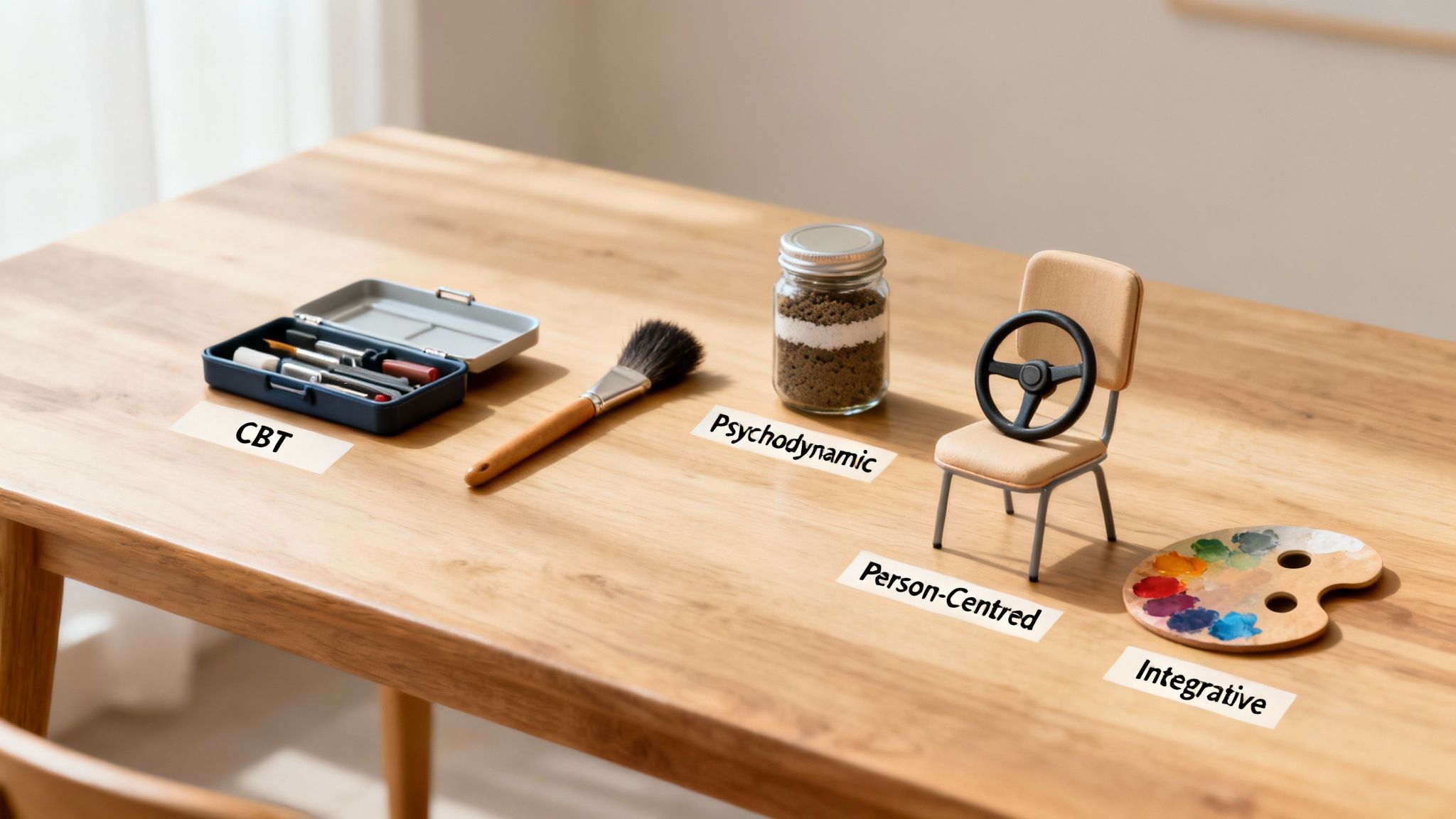
When you start looking into any type of counselling, you’ll quickly find a few core approaches that act as the backbone for most therapists. Each one offers a different way of looking at your problems and a unique set of tools to help you move forward. Knowing a bit about these can help you figure out what might click with your personality and what you want to achieve.
Think of it this way: some therapies are like being given a practical, step-by-step manual for a specific problem. Others are more like a creative workshop, giving you the space to explore and find your own way through. Let's break down the most common ones you'll likely come across.
Cognitive Behavioural Therapy (CBT)
Cognitive Behavioural Therapy, or CBT, is probably one of the most well-known forms of counselling out there. It’s a very practical, structured, and goal-focused approach that concentrates on the here and now. The central idea is simple: your thoughts, feelings, and actions are all linked.
Imagine your mind is like a garden. Sometimes, unhelpful "weeds" – those nagging negative thoughts – start to grow and can take over, affecting how you feel and what you do. CBT is like a set of gardening tools that helps you spot these weeds, understand why they're there, and learn how to replace them with more positive, helpful "plants."
What it treats: CBT is particularly good for anxiety, depression, panic attacks, phobias, and obsessive-compulsive disorder (OCD).
Typical session: A CBT session feels very collaborative. You and your therapist will work as a team to pinpoint specific issues, set clear goals, and you'll often have small tasks or exercises to try between sessions.
Duration: It's usually a short-term therapy, often lasting somewhere between 6 and 20 sessions.
Psychodynamic Therapy
Where CBT focuses on the present, psychodynamic therapy takes a deeper look into your past. This approach is a bit like an archaeological dig into your personal history, exploring how your early life and unconscious feelings might be shaping your behaviour and relationships today.
The thinking here is that many of our current struggles are rooted in old, unresolved conflicts. By bringing these unconscious patterns out into the open, you can gain a much deeper insight into yourself and break free from their hold. It's less about quick fixes and much more about profound, lasting self-awareness.
Psychodynamic therapy helps you connect the dots between your past and your present, offering a richer understanding of why you are the way you are. This awareness is often the first step towards real change.
If you're curious about other ways to manage specific issues, you might find it useful to explore effective therapeutic interventions for anxiety, which can often be used alongside these broader approaches.
Person-Centred Therapy
Person-centred therapy puts you firmly in the driver's seat. This whole approach is built on the belief that you are the expert on your own life and that you have an inbuilt ability to grow and heal.
The therapist isn't there to give advice or tell you what to do. Instead, their role is to create a safe, supportive, and non-judgemental space where you can explore your own feelings and discover your own answers. It's a deeply respectful and empowering type of counselling where the relationship you build with your therapist is the main thing that helps you change.
What it treats: It's really helpful for a whole range of issues, like low self-esteem, relationship problems, bereavement, or simply for personal growth.
Typical session: Sessions are very much led by you. You talk about whatever feels important on the day, and the therapist listens with real warmth and understanding.
Duration: The length is flexible and is decided by you and your needs, so it could range from a few months to a few years.
Exploring Specialised and Modern Therapies
Beyond the foundational approaches, the world of counselling is always evolving. It's grown to include some really focused, specialised methods as well as more modern, flexible ways of working that fit today's lifestyles.
This shows just how adaptable therapy can be. It's not just about matching a technique to a problem; it's also about finding a format that genuinely works for you, whether that's tackling deep-rooted issues, sorting out relationship dynamics, or simply finding a more convenient way to talk.
Therapies for Specific Challenges
Sometimes, a broad approach isn't quite enough. When you're dealing with the lingering effects of trauma or the complex web of family relationships, a more targeted therapy can make a world of difference. These are designed to get right to the heart of very specific issues.
Trauma-Focused Therapies (like EMDR): Eye Movement Desensitisation and Reprocessing (EMDR) is a powerful way to help people heal from traumatic memories. Imagine a traumatic memory is like a computer file that’s been saved incorrectly; it’s corrupted, and it keeps popping up unexpectedly, causing all sorts of distress. EMDR uses things like guided eye movements to help your brain re-process and file that memory properly. The goal is to take the intense, immediate emotional charge out of it, so it becomes just a memory of a past event, not something that feels like it's happening right now.
Couples and Family Therapy: Instead of looking at a problem as belonging to one person, these therapies see it as part of a whole system of relationships. The real work is in untangling communication knots, understanding the roles everyone plays, and finding healthier ways of being together. The therapist acts as a neutral party, making sure everyone gets a chance to be heard and helping the family or couple move forward.
It’s important to remember that 'trauma' doesn't just mean a single, catastrophic event. It can be any past experience that was deeply distressing and continues to have a hold on your well-being today.
Thinking about how you handle difficult experiences is key. You can dig a bit deeper into a related idea in our article on what is Acceptance and Commitment Therapy, which explores the power of accepting tough feelings instead of constantly battling them.
Modern and Flexible Counselling Options
Life is busy, and getting to a therapist's office isn't always practical. Thankfully, counselling has adapted, offering options that bring support to you, wherever you are.
The demand for this kind of accessible support is clear. In the UK, NHS data from England shows a rolling total of 671,644 completed courses of NHS Talking Therapies in the 12 months to December 2024. That's a jump of about 10% compared to before the pandemic. With NHS waiting lists getting longer, community-based options like these have become more important than ever. You can read more about the rise in demand for talking therapies on the NHS website.
Online Counselling: This lets you have your sessions from home, or anywhere you feel comfortable, using video calls, phone, or even text-based services. It's a brilliant solution if you've got a packed schedule, live a long way from a therapist, or just feel more at ease opening up from your own space.
Walk and Talk Therapy: A fantastic alternative to the traditional therapy room, this type of counselling gets you moving. The simple act of walking in nature while you talk can be incredibly grounding. It often makes difficult conversations feel less intense and harnesses the calming, restorative power of being outdoors to help ease stress and anxiety.
How to Choose the Right Type of Counselling
With so many different approaches out there, figuring out which type of counselling is right for you can feel like a pretty big decision. The good news is, you don’t need to be an expert to make a good choice. Honestly, the best place to start is just by having a think about what you’re hoping to get out of it.
Are you looking for practical, structured tools to get a handle on specific things like anxiety or those nagging negative thought patterns? If so, something like CBT could be a brilliant fit.
Or maybe you’re more interested in digging a bit deeper, exploring the roots of your feelings and understanding how your past is shaping your present. In that case, you might find psychodynamic therapy more rewarding.
There’s no right or wrong answer here; it’s all about what feels right for you. Your personality and what you’re comfortable with play a huge part, too. Some people really click with a clear, goal-focused structure, while others prefer the freedom and gentle guidance of a person-centred approach.
Key Factors to Consider
Running through a few practical questions can bring a lot of clarity. Taking a moment for a bit of self-reflection can really help narrow down the options and find a path that feels properly aligned with what you need right now.
Your Goals: What do you want to change? Are you looking for relief from symptoms, a path to personal growth, or support in navigating a specific life event?
Your Preferred Style: Do you want a therapist who offers direct guidance and maybe even homework, or would you prefer someone who acts as a supportive listener while you find your own answers?
Practicalities: Don't forget the real-world stuff. Think about your budget, your schedule, and whether you’d prefer to meet in person, online, or even try something like walk-and-talk sessions.
This decision tree might help you visualise which modern therapy could line up with what you're focusing on, whether that’s trauma, relationships, or lifestyle challenges.
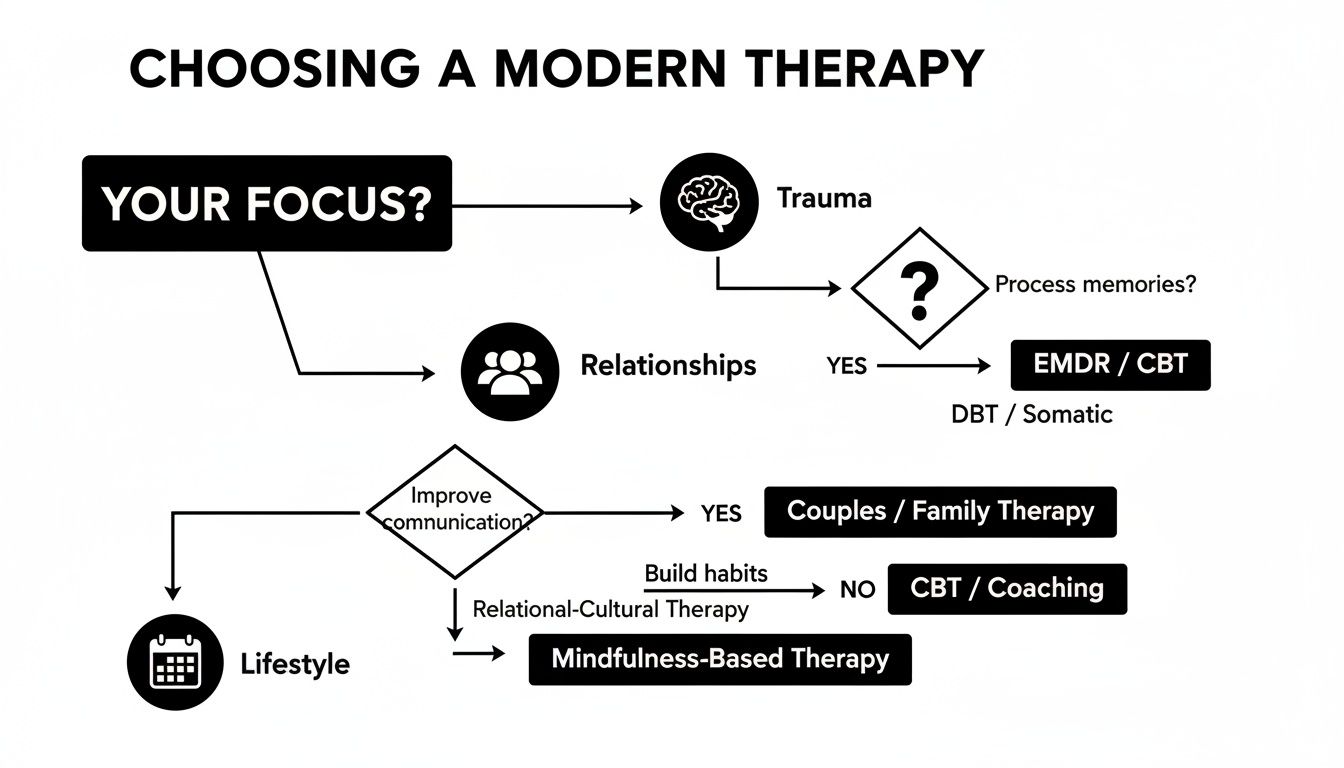
As you can see, different starting points often lead to specific therapeutic approaches that are really well-suited for those particular needs.
The Most Important Factor of All
While the type of therapy is important, study after study consistently shows that the single biggest factor in successful therapy is the therapeutic relationship. This is the connection you build with your counsellor—that gut feeling of trust, safety, and being properly heard and understood.
No matter which type of counselling you choose, feeling comfortable and connected with your therapist is what will ultimately make the biggest difference. It’s this alliance that creates the foundation for real, lasting change.
It’s completely normal to feel a bit hesitant about starting this whole process. In fact, UK data shows that while roughly 1 in 4 adults in England experience a mental health problem each year, only about one in eight get any kind of treatment. In one survey, 22% of people said the stigma around it was a key reason for not seeking help. You can read more about mental health perceptions at Priorygroup.com.
Trust your gut during that first chat or initial session. Finding the right person is every bit as crucial as finding the right approach. For a bit more guidance on this, have a look at our practical guide on how to choose a therapist in the UK.
Finding Personalised Support with Therapy with Ben

Knowing the different therapy models is one thing, but finding a counsellor who can actually make them work for you is what really counts. Here at Therapy with Ben, whether you're based in Cheltenham or we connect online, my focus is always on creating an experience that meets you exactly where you're at.
I don’t believe any single type of counselling has all the answers. It’s why I take an integrative perspective in my work. This simply means I draw on different therapeutic ideas to shape an approach that fits your personality, your situation, and what you want to achieve. It’s a flexible, collaborative way of working where you are always at the centre.
Walk and Talk Therapy in Cheltenham
For anyone local to Cheltenham, I offer Walk and Talk therapy. It’s a really powerful alternative to being in a traditional therapy room. By taking our sessions outdoors into local parks and green spaces, we get to tap into the calming, grounding effects of nature and movement.
I find this approach is particularly helpful for people wrestling with anxiety, depression, or going through big life changes. Sometimes, the simple act of walking side-by-side, rather than sitting face-to-face, makes it that bit easier to open up and work through difficult feelings. It creates a less intense, more dynamic space.
We’ve seen a rise in common mental health issues across the UK, which has definitely increased interest in these kinds of approaches. In England, the proportion of adults with a common mental health problem hit 20.2% in 2023–24. The figures were even higher for women (24.2%) compared to men (15.4%). This trend helps explain why methods that directly address anxiety, like integrative and walk-and-talk therapy, have become so valuable. You can discover more insights about these UK mental health trends if you’re interested.
Flexible Online Counselling
I’m also very aware that busy schedules and distance can make it tough to get support. Because of that, I offer flexible online counselling. This allows you to have your therapy sessions from the comfort of your own home, fitting them around your work and life commitments without the stress of travel.
Whether we meet in a park or online, my commitment is to provide a safe, non-judgemental space where you feel heard, understood, and empowered to move forward.
If you’d like to explore how we could work together, please feel free to get in touch for an initial chat.
Some Common Questions About Starting Counselling
Deciding to give counselling a go is a big step, and it’s perfectly normal to have a few questions swirling around before you jump in. Getting some clear, straightforward answers can make a world of difference, helping you feel more confident and ready for what’s ahead. Let's walk through some of the most common queries people have when they start thinking about which type of counselling might be right for them.
A lot of people I speak to wonder if what they're going through is "serious enough" for therapy. The simple truth is, you don't need to be at rock bottom to benefit from a bit of support.
How Do I Know If I Need Counselling?
Realising you might need some support is a very personal thing, but there are definitely some common signs. You might feel like you're stuck in a rut, completely overwhelmed by your emotions, or just find that the ways you used to cope aren't cutting it anymore. Maybe you're navigating a big life change, keep repeating the same unhelpful relationship patterns, or just have that nagging feeling that something isn't quite right.
Counselling offers a dedicated space to explore all of this without any judgement. It’s really for anyone who wants to understand themselves a bit better, find healthier ways of thinking and feeling, or simply get some clarity on where they're heading. You don’t need a specific diagnosis; just wanting things to be different is more than enough reason to start.
What Is the Difference Between Counselling and Psychotherapy?
You'll often hear these two terms used as if they're the same thing, and while there's a huge amount of overlap, they can have slightly different angles. Think of it like this:
Counselling often hones in on specific, present-day issues. It might be shorter-term and more focused on goals, helping you find practical ways to navigate challenges like bereavement, work stress, or a difficult life transition.
Psychotherapy tends to dig a bit deeper. It’s about exploring those long-standing emotional patterns and understanding how past experiences might be shaping how you act and feel today. This is often a longer journey, aimed at creating profound self-awareness and lasting change.
In reality, the line between them is often blurry. Many therapists, myself included, will weave elements of both approaches into our work, depending on what you need. The most important thing isn't the title, but finding a professional you genuinely connect with.
How Long Does Counselling Take?
This is one of the first questions most people ask, and the honest answer is: it really depends. There's no one-size-fits-all timeline for therapy. How long it takes is completely down to your individual needs, the complexity of what you're dealing with, and what you hope to get out of it.
A key principle of good therapy is that it moves at your pace. The goal isn't to race towards a finish line, but to create meaningful, sustainable change in a way that feels right for you.
Some people find a handful of focused sessions is all they need to work through a particular problem. Others benefit from longer-term support as they explore deeper patterns and build new foundations. Your journey is unique, and the right amount of time is whatever you need to feel stronger and more resilient.
When you're ready to get started, figuring out how online appointment scheduling software works can make the practical step of booking those first few sessions a lot smoother.
At Therapy with Ben, my focus is on creating a supportive space that’s tailored to you. That might be face-to-face sessions here in Cheltenham, flexible online appointments, or even getting out in nature with Walk and Talk therapy. To find out more about how I can support you, please visit https://www.therapy-with-ben.co.uk.


Comments